




25% of Adults Have Untreated Decay: What That Means for You
One in four U.S. adults is living with an untreated cavity, a statistic that speaks volumes about our nation’s oral health. If you’ve ever put off a filling or skipped a dental appointment, you’re not alone. Roughly 25.9% of adults under 45 have untreated tooth decay.
Untreated decay isn’t just a number on a report; it often means daily pain, difficulty chewing, and a higher risk of serious infections. Cavities that go unchecked can lead to abscesses (serious infections) that make it hard to eat, work, or even concentrate.
In extreme cases, these infections can spread and become life-threatening.
What does this mean for you? It’s a reminder that even small dental problems can snowball into serious health issues if left untreated.
- Oral health impacts daily life
Untreated cavities can cause pain and infections that interfere with eating, speaking, and even learning or work performance. You or someone you know might be struggling silently with these issues.
- Disparities put some at higher risk
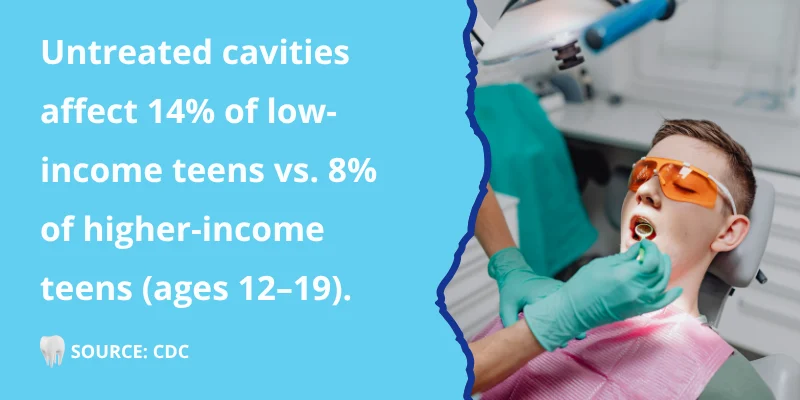
Untreated cavities were more common among adolescents aged 12 to 19 from low-income households (14%) than among adolescents from higher-income households (8%).
Research shows that 20% of working‑aged U.S. adults (ages 20–64) report having an unmet oral health care need, meaning they needed dental care in the past year but couldn’t get it. It was found that this unmet need is strongly linked to income: adults below 200% of the Federal Poverty Guideline report unmet needs nearly three times more often (36.2%) than higher-income adults (11.2%).
- A local perspective
Champaign County mirrors these national challenges. In a recent community survey, over one-quarter of Champaign County residents reported dissatisfaction with their access to affordable dental care.
This suggests that cost and access barriers leave many local adults (especially in smaller towns like Rantoul) without timely treatment, increasing the likelihood of untreated decay. When one in four adults has an unresolved dental issue nationally, it’s a call to action for our community to expand affordable dental services and outreach.
The takeaway: Untreated decay is widespread and consequential. The statistic may be 25%, but in human terms, that’s every fourth person, possibly a coworker, a neighbor, or you, dealing with preventable pain.
Tackling this issue means improving access to care. Communities in Champaign County are responding; for instance, mobile clinics and safety-net dental programs are working to reach underserved adults.
By recognizing the signs of dental problems early and seeking care, you can prevent a small cavity from becoming a big health crisis.
And on a community level, supporting initiatives that provide low-cost or free dental care can help ensure that no one has to live with the pain of untreated decay.
Protect your oral health today by scheduling a visit with CU Dentist in Champaign, IL. Support local programs and ensure everyone has access to quality dental care.
35% Skip Yearly Dental Visits: The Hidden Costs to Your Health
How long has it been since your last dental check-up? If it’s been over a year, you’re in sizable company.
About 1 in 3 adults in America do not visit a dentist annually. In fact, only roughly 65% of adults had a dental exam or cleaning in the past year, meaning 35% skipped their yearly visit.
It’s easy to understand why people put off appointments: busy schedules, dental anxiety, or tight budgets can all be factors. But missing routine care has hidden costs that can hit both your well-being and your wallet.
Why do regular check-ups matter?
Because prevention is always easier and cheaper than the cure. Dentists can spot small problems, like a tiny cavity or mild gum inflammation, before they turn into major headaches. Consider these points about skipping dental visits:
- Minor issues become major problems
What’s a small cavity today could become a root canal or extraction tomorrow. Neglecting regular cleanings and exams often means that decay or gum disease progresses unnoticed. One community dental report noted that when problems aren’t caught early, they escalate into more complex (and expensive) treatments.
A simple filling might cost a couple of hundred dollars, but a root canal or dental implant can run into the thousands. In Champaign County, dentists see this pattern frequently: patients who avoided the dentist for years show up with severe pain requiring urgent, costly treatment that could have been prevented.
- Emergency visits and lost productivity
Skipping preventive care doesn’t mean you avoid dental costs; it often just delays them until they’re urgent.
Every year, Americans lose an estimated 164 million work hours and 51 million school hours due to dental problems. Think about that, cavities and toothaches are not only health issues, but also economic ones. When dental pain gets out of hand, people may end up in the emergency room.
The NIH reports that about 2 million Americans visit ERs each year for dental issues, costing over $2 billion annually. These ERs usually can only provide temporary relief, like painkillers, not definitive dental treatment. The result? More time off work or school for follow-up dental visits and a hefty bill that could dwarf the cost of a simple cleaning.
- Local impact: Champaign and Rantoul
In Champaign County, about 66% of residents reported seeing a dentist within the past year, according to a recent health survey. That’s on par with the national average, which is encouraging.
However, nearly 1 in 10 local respondents admitted it had been over five years since their last dental visit. In communities like Rantoul, limited dental offices and transportation challenges can make it harder for residents to see a dentist regularly.
When people delay care, we see more dental emergencies at local clinics and more missed days at work or school in our area. The costs of those delays, in pain, time, and money, are very real for Champaign County families.
The bottom line: making time for that yearly dental visit pays off. Regular check-ups and cleanings might feel like a hassle, but they save you from far greater pain and expense down the road.
If cost is a concern, check if you qualify for programs like the state Medicaid adult dental benefits or community clinics (Champaign-Urbana’s Promise Healthcare and the SmileHealthy program offer reduced-cost care to those in need).
And if you’re one of the 35% skipping yearly dental care, ask yourself, what’s holding you back? Addressing those obstacles, whether it’s scheduling, fear, or financing, can protect your health.
As the saying goes, an ounce of prevention is worth a pound of cure, and nowhere is that more true than in dentistry.
Don’t let cost or fear keep you from care. Schedule an appointment with CU Dentist in Champaign, IL or Rantoul, IL and explore options for affordable, preventive dental care.
99% of Illinois Has Fluoridated Water: A Prevention Success Story
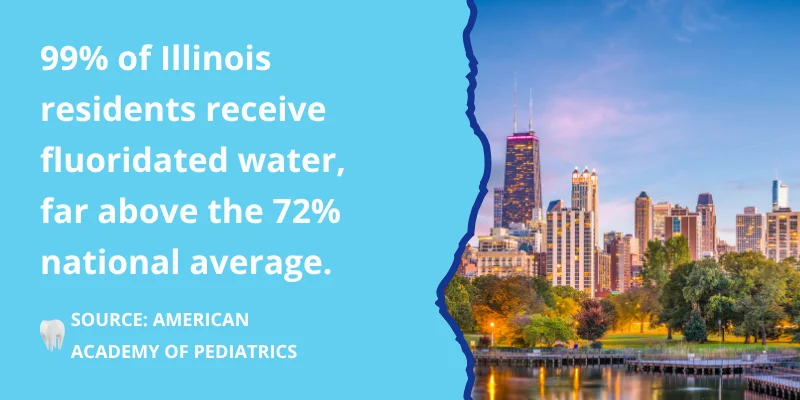
Not every public health story is grim. Here’s a bright spot: approximately 99% of Illinois residents on public water systems receive fluoridated water, a rate far above the national average (about 72%).
This is more than just a trivia fact, it’s a big reason why Illinois communities have seen better dental outcomes over the years.
Fluoride, often called “nature’s cavity fighter,” is added to community water in tiny, safe amounts to strengthen teeth and prevent decay. For Illinois, which has mandated fluoridation in water supplies for decades, it’s a point of pride and a clear public health win.
In Champaign County, water fluoridation has been embraced and celebrated. The Champaign-Urbana Public Health District has repeatedly honored local water systems, including smaller towns like Rantoul, Fisher, and Royal, for perfectly maintaining optimal fluoride levels year after year.
Rantoul’s water department, for instance, was recognized for several consecutive years of excellence in fluoridation, ensuring residents get the cavity-fighting benefits every time they drink tap water.
These efforts matter: experts note that drinking fluoridated water from birth can reduce tooth decay by 40% to 65% over one’s lifetime.
What does this mean for you and your family? It means every time you fill a glass from the faucet in Champaign or Rantoul, you’re getting a dose of prevention.
The Centers for Disease Control and Prevention named water fluoridation one of the 10 great public health achievements of the 20th century for a reason. It’s cost-effective and reaches everyone in the community, rich or poor, rural or urban.
According to the American Dental Association, this measure has tangible community benefits: fewer cavities, fewer missed school days for kids, and fewer missed work hours for adults due to dental issues.
In other words, fluoridation doesn’t just save teeth, it saves time and money for society at large.
To put it in perspective, Illinois’s near-99% fluoridation rate dwarfs the ~72% U.S. average, and it shows in our cavity rates.
Studies indicate that fluoridated water prevents at least 25% of tooth decay in children and adults even in an era of fluoride toothpaste and other sources. By keeping almost all of our public water supplies optimally fluoridated, Illinois communities like Champaign and Rantoul are cutting down on decay across all age groups.
Public health leaders often point out that for every $1 invested in fluoridation, as much as $38 is saved in dental treatment costs down the road, a huge return on investment benefiting all of us via lower healthcare costs.
The key takeaway: Champaign County’s water is not just quenching thirst, it’s protecting smiles. This prevention success story is something we can all celebrate, and ensure continues.
It’s important to stay informed and support local policies that keep our water fluoridated at the optimal level (about 0.7 ppm today). Fluoridation is safe, effective, and benefits everyone regardless of income or access to regular dental care.
So the next time you pour a glass of tap water, take pride in knowing that our community is at the forefront of a proven public health measure, one that has given countless Illinois children and adults a healthier, cavity-free start.
Families can build lifelong habits early with guidance from our family dentistry for children resource.
Nearly 1 in 5 Seniors Have Lost All Their Teeth: The Long-Term Costs of Neglect
Imagine reaching your golden years only to struggle to chew your food or smile because of missing teeth. For millions of older Americans, this is reality. Nearly one in five adults aged 65 or older has lost all their natural teeth.
That figure, almost 20% of seniors, reflects a lifetime of oral health disparities and, often, inadequate access to care. Even more striking, about 1 in 6 older adults currently have untreated tooth decay, meaning dental problems persist into old age.
Tooth loss isn’t just about vanity or inconvenience; it has serious implications for nutrition, overall health, and quality of life for seniors.
Why are so many seniors edentulous (toothless)?
A big factor is that dental care for adults, especially seniors, has historically been hard to get. Consider this: Medicare (the federal health insurance for seniors) does not include routine dental coverage, and nearly half of Medicare beneficiaries have no dental insurance at all.
Many retirees live on fixed incomes, and paying out-of-pocket for dental services can be prohibitive, so problems go untreated for years. By the time they seek help, extraction may be the only option left for decayed teeth.
Over decades, one by one, teeth are lost. National data confirm this cycle: older adults with lower incomes or who lack insurance have far higher rates of complete tooth loss.
In fact, older Americans who are Black or Mexican American have 2 to 3 times the rate of untreated cavities as their White counterparts, reflecting cumulative effects of unequal access to care.
The impact on seniors’ well-being is profound. Losing teeth can lead to nutritional deficiencies (imagine the healthy foods you can’t eat easily without teeth, like fresh fruits and vegetables).
It’s also linked to worse health outcomes, for example, gum disease and oral infections in seniors can complicate conditions like diabetes or heart disease.
There’s even evidence of connections between oral health and cognitive health. So this isn’t just about teeth; it’s about overall healthy aging.
Here in Champaign County, we have a growing senior population, and their oral health needs are a concern for our community.
While Illinois’s Medicaid program does cover adult dental services (including dentures) to some extent, many seniors either don’t qualify or are unaware of these benefits.
Local public health efforts, such as the Champaign-Urbana Public Health District’s dental clinics, have expanded to serve older adults who lack a private dentist.
There are also periodic “Senior Smile” days and outreach programs aimed at getting dentures or treatments to low-income seniors.
But challenges remain, transportation to clinics, physical mobility issues, and the sheer backlog of untreated issues make it tough for some older residents in places like Rantoul or Mahomet to get the care they need.
What can we do? Awareness and early action are key. If you’re approaching retirement, plan for your dental care just as you would for healthcare, consider supplemental dental insurance or savings for dental work.
For families with older relatives, encourage them not to ignore loose or painful teeth; early treatment could save their teeth. Community-wise, supporting programs that provide affordable dentures, cleanings, and check-ups to seniors can drastically improve someone’s quality of life.
After all, everyone deserves to eat, speak, and smile comfortably in their later years. The statistic “nearly 1 in 5 seniors have no teeth” is alarming, but with better preventive care throughout life and improved access, the next generation of seniors could keep their teeth longer.
By ensuring our parents and grandparents get proper dental care now, we can help them live healthier, happier lives, and that’s a goal every community should share.
Conclusion: Turning Data into Action for Healthier Smiles
From the 25% of adults with untreated cavities to the 164 million work hours lost annually to dental issues, the data paints a clear picture: oral health is integral to public health, economic productivity, and community well-being.
For Champaign County, from the urban center of Champaign to smaller communities like Rantoul, these national trends carry local significance. The good news is we’re not starting from scratch. Illinois’ successes, like near-universal water fluoridation and strong school dental programs, show that public health measures make a difference.
Meanwhile, local initiatives are narrowing the gaps: federally qualified health centers and health department clinics are expanding affordable dental services, and community water systems are committed to cavity prevention in every sip.
But knowing the numbers is only half the battle. Now it’s up to us, as individuals, families, and community members, to turn this insight into action.
What can you do? Start with your own oral health habits: prioritize regular dental visits and encourage your loved ones to do the same, especially those who may be anxious or underserved. Support community efforts, whether that’s volunteering at a free dental clinic, advocating for public health funding, or simply sharing information about programs (like Medicaid dental coverage or low-cost clinics) with a neighbor who needs them.
If you’re a local leader or employer, consider the ripple effects of oral health in your community. Policies like adding dental benefits, promoting fluoridated water, or school-based dental screenings can yield healthier, happier constituents and employees.
Above all, spread the word. Something as simple as sharing these statistics and facts with others can elevate oral health’s importance on our community’s agenda.
When parents learn that untreated decay can affect a child’s school performance, or when adults realize how closely linked oral health is to conditions like diabetes and heart disease, attitudes begin to change. Oral health moves from a “nice-to-have” to a must-have component of overall wellness.
In summary, the state of our smiles in Champaign County reflects both challenges and progress. We’ve seen where we lag (like access to affordable care for that 35% skipping check-ups and the vulnerable seniors who need better support) and where we lead (like fluoridation and community prevention efforts).
Now, it’s our collective responsibility to fill the gaps. Let’s use this knowledge as a catalyst to strengthen the connection between national trends and local action.
By doing so, we can ensure that the next set of statistics tells a story of healthier teeth, longer lives, and a community that truly values a reason to smile.
Take Charge of Your Oral Health Today!
Join CU Dentist in Champaign or Rantoul in creating a healthier community. Schedule your dental check-up now and help turn these insights into action for brighter, stronger smiles.
Together, we have the power to make cavities rarer, smiles brighter, and our whole community healthier. That’s something worth aspiring to, and definitely worth sharing.
References:
- https://www.cdc.gov/oral-health/data-research/facts-stats/fast-facts-cavities.html
- https://www.cdc.gov/nchs/fastats/dental.htm
- https://www.cdc.gov/oral-health/data-research/facts-stats/fast-facts-cavities.html
- https://www.cdc.gov/oral-health/php/infographics/disparities-low-income.html
- https://carle.org/2020-2022/Carle-Foundation-Hospital/Champaign-County-2020-2022-Community-Health-Needs-Assessment.pdf
- https://www.cdc.gov/nchs/fastats/dental.htm
- https://dentistsondemand.com/the-high-cost-of-neglect-why-preventative-dental-care-is-essential-for-businesses/
- https://www.ada.org/resources/community-initiatives/fluoride-in-water
- https://dentistsondemand.com/the-high-cost-of-neglect-why-preventative-dental-care-is-essential-for-businesses/
- https://carle.org/2020-2022/Carle-Foundation-Hospital/Champaign-County-2020-2022-Community-Health-Needs-Assessment.pdf
- https://c-uphd.org/press-release/2010.html?start=18
- https://www.c-uphd.org/press-release/2008/illinois-communities-top-honors-for-maintaining-fluoride-levels.html
- https://niioh.org/learn-share/