



Wondering if there is a real difference between getting your wisdom teeth out at 25, 35, or 45? There is, and it comes down to how your mouth changes as you get older.
The older you get, the more your jawbone and tooth roots change, which can make wisdom teeth removal more involved and recovery a bit slower.
At a young age, your third molars often have roots that are not fully set, so extraction tends to be simpler.
By 35 and 45, your bone is denser and roots may be longer or curved, which can affect how your oral surgery is planned.
This does not mean waiting is a bad choice for everyone. Your oral health, tooth pain management, and how your wisdom teeth are positioned all play a part in deciding the right time for you.
This article explains how wisdom teeth removal age can affect the procedure, when it may be fine to keep your wisdom teeth, and how to plan a safe extraction at any
Key Takeaways
- Your age affects how complex wisdom tooth extraction can be and how long recovery may take.
- Denser bone and longer tooth roots in older adults can make removal more involved than in younger patients.
- Whether you keep or remove your wisdom teeth should depend on your specific oral health, not just your age.
The Short Answer on Timing
Your age plays a big role in how easy or hard wisdom teeth removal will be. The younger you are, the simpler the surgery tends to be, while waiting longer can mean more planning and a longer recovery time.
Why Removal Is Often Easier in the Late Teens and Early Twenties
If you’re in your late teens or early twenties, your wisdom teeth are still in a good spot for removal.
This is because wisdom teeth typically develop between the ages of 17 and 25, and during this window, the roots haven’t fully formed yet.
Softer roots mean your dentist or oral surgeon can remove the teeth more easily. Your jawbone is also more flexible at this age, which lowers your risk of complications.
Early wisdom tooth removal during this stage often means a shorter recovery. You’ll likely feel back to normal faster than if you wait until your bone and roots fully mature.
What Changes Around Age 25
By the time you turn 25, your wisdom teeth roots have usually finished forming. This means your teeth are more firmly anchored in your jaw than they were a few years earlier.
Fully formed roots can make extraction a bit more involved. Your dentist may need to take extra care during surgery to avoid affecting nearby nerves or teeth.
Your jawbone density also starts to increase around this age. Denser bone holds your teeth more securely, but it can also make the extraction process slightly more complex compared to when you were a teenager.
Why Age 35 and 45 Require More Individualized Planning
Once you reach your mid-thirties or forties, wisdom teeth removal becomes more personalized. Your bone density continues to increase with age, so your surgeon may need to use different techniques than they would with a younger patient.
At this stage, your dentist will likely want more detailed imaging, like X-rays or a CT scan, to map out your jaw structure.
This helps them plan a safer approach and avoid nearby nerves or sinuses.
Recovery time can also take longer at this age. Your body doesn’t heal quite as fast as it did in your twenties, so you may need extra rest and follow-up care after your procedure.
Why It Is Never Automatically Too Late for Treatment
Even if you’re older, it doesn’t mean removal is off the table. Many people in their 40s, 50s, and beyond still have their wisdom teeth removed safely with the right planning.
Your dentist will look at your specific case, including your bone density and overall health, before recommending a plan. This step-by-step approach helps reduce risks no matter your age.
Waiting longer might mean a more careful process, but it can still support your long-term oral health.
What Makes an Extraction More Complex Over Time
As you get older, your body changes in ways that make wisdom tooth removal trickier.
Your roots grow longer, your jawbone gets harder, and teeth can shift into positions that are harder to reach.
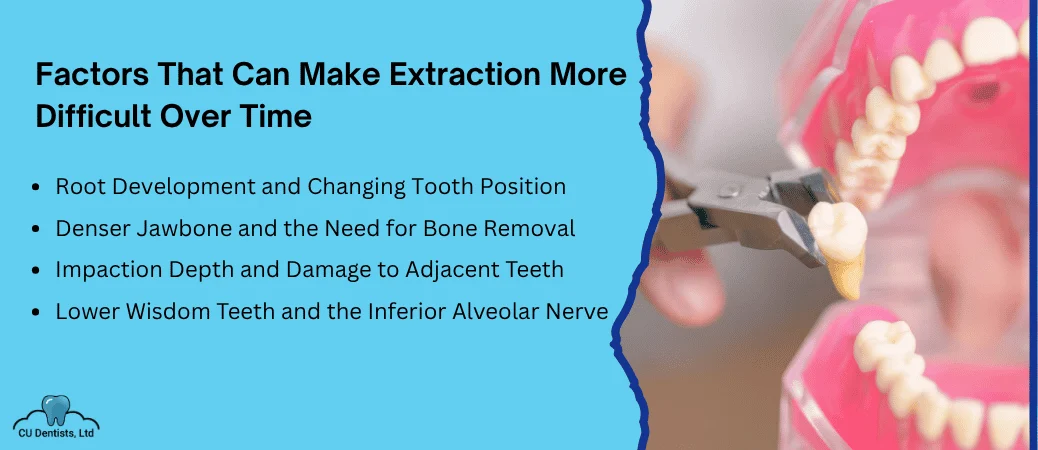
Root Development and Changing Tooth Position
When you’re young, your wisdom tooth roots are still forming. This actually works in your favor.
Partly formed roots are shorter and have blunt tips. This makes them less likely to break during removal.
By the time you reach your mid-thirties or forties, your tooth roots have usually finished growing.
They may also curve or hook in ways that make them harder to pull out in one piece.
Your tooth position can shift too. Impacted wisdom teeth that stayed stuck at an angle for years don’t move on their own.
In some cases, nearby teeth shift instead, changing how everything fits together in your mouth.
Denser Jawbone and the Need for Bone Removal
Your jawbone gets denser and less flexible as you age. When you’re a teenager, your bone is softer and easier to work with.
By your thirties or forties, that same bone has hardened. This means your dentist may need to remove more bone tissue just to reach the tooth.
More bone removal means a longer procedure and more healing time afterward.
Harder bone also doesn’t bend or give the way younger bone does during surgery. This can add steps to the process and may call for a surgical extraction instead of a simple one.
Impaction Depth and Damage to Adjacent Teeth
Wisdom teeth that stay impacted for decades don’t just sit there quietly. They can slowly press against the teeth next to them.
This pressure sometimes causes damage to adjacent teeth, including bone loss, decay, or even resorption of the root next door.
The longer a tooth stays impacted, the more time it has to cause this kind of harm.
Deeper impactions are also simply harder to reach. Your dentist may need to use tooth sectioning, cutting the wisdom tooth into smaller pieces, to remove it without damaging the teeth around it. This adds time and complexity compared to removing a tooth that erupted normally.
Lower Wisdom Teeth and the Inferior Alveolar Nerve
Your lower jaw has a nerve running through it called the inferior alveolar nerve. This nerve controls feeling in your lower lip, chin, and part of your tongue.
As you age, your wisdom tooth roots often grow closer to this nerve or even wrap around it. This raises the risk of nerve damage during extraction.
If nerve injury happens, you might notice numbness or tingling in your lip or chin that can last for weeks, months, or in rare cases, longer.
Your dentist will usually order imaging like a CT scan for older patients to check exactly how close the roots sit to this nerve before planning your surgery.
When Keeping Wisdom Teeth May Be Reasonable
Not every wisdom tooth needs to come out. If yours is fully erupted, properly positioned, and easy to clean, keeping it may work fine for your oral health.
Your dentist can help you figure out if watching and waiting is a safe choice for you.
Signs a Fully Erupted Tooth Can Be Monitored
A wisdom tooth may be safe to keep if it has fully broken through your gums and sits in line with your other teeth.
You should be able to reach it with a toothbrush and floss without much trouble.
There should be no pain, no bad breath coming from that spot, and no bleeding gums around it. Your bite should feel normal, and the tooth should not be pushing against its neighbor.
If your dentist checks the tooth and sees no signs of decay or gum disease, that is a good sign it can stay.
Good oral hygiene habits, like regular brushing and flossing, make it easier to keep the tooth healthy over time.
Hidden Problems That Can Develop Without Pain
A wisdom tooth can look and feel fine while a problem grows underneath the surface. Cysts can form around the roots without causing any pain at first.
Left alone, cyst formation can lead to bone loss in your jaw. This kind of damage often happens slowly, so you may not notice it until it has already progressed.
Infection is another risk that can build up quietly. Tooth decay can also spread to the tooth next to it without any warning signs.
This is why dentists don’t rely on how you feel alone. They check your mouth on a regular basis to catch problems early, before they turn into bigger issues that need more complex treatment.
How Regular Exams and Imaging Guide Watchful Waiting
If you and your dentist decide to keep an eye on your wisdom teeth instead of removing them, regular checkups become part of the plan.
During these visits, your dentist will look closely at your gums and teeth for any changes.
Dental x-rays play a big role here. They let your dentist see below the gumline, where problems like bone loss or early decay can hide.
Digital imaging gives an even clearer picture of the tooth’s position and roots. This helps your dentist spot small changes early, before they turn into pain, infection, or damage to nearby teeth.
Sticking to your scheduled exams gives you the best chance of catching any issues while they are still easy to treat.
Planning the Safest Procedure
Good planning starts with a full check of your teeth before any decisions are made. Your dentist will look at how your teeth sit, take images, and figure out the best way to remove them based on your age.

What a Dentist Looks for During the Evaluation
Your dentist will start with a visual exam and x-rays to see how your wisdom teeth sit under your gums. Digital imaging gives a clear view of the roots, nerves, and jawbone around each tooth.
This step matters more as you get older. By age 35 or 45, roots often grow longer and curve more, which can make removal trickier.
Your dentist checks for things like bone density, how close the teeth sit to nerves, and any signs of infection or crowding.
Based on what they find, they’ll tell you if you can have the teeth removed safely at your current age or if you need extra care. This first check helps set up a safer, smoother plan.
When to See an Oral and Maxillofacial Surgeon
Not every wisdom tooth needs a specialist, but many do, especially as you get older. If your dentist spots impacted teeth, curved roots, or teeth close to a nerve, they’ll likely send you to an oral and maxillofacial surgeon.
This type of doctor focuses on oral and maxillofacial surgery, which covers complex tooth and jaw issues.
Your regular dentist may handle a simple removal for a fully erupted tooth, but harder cases call for more training and tools.
Simple Extraction Versus Surgical Extraction
Not all wisdom tooth removals are the same. A simple extraction works when the tooth has already broken through the gum and sits in an easy spot to reach.
A surgical extraction is needed when the tooth stays under the gum or bone, or when the roots curve in ways that make removal harder.
This type involves a small cut in the gum and sometimes removing a bit of bone.
Age plays a big role here. Younger patients, often between 17 and 25, tend to have straighter, shorter roots, which makes simple extractions more common.
By your mid-30s or 40s, surgical extraction becomes more likely due to fuller root growth and denser bone.
Choosing Local Anesthesia, IV Sedation, or General Anesthesia
Your comfort level and the complexity of your case guide which type of anesthesia works best. Here’s a quick breakdown:
- Local anesthesia: Numbs only the area around the tooth. Best for simple, quick extractions.
- IV sedation: Keeps you relaxed and calm while staying conscious. Often used for surgical extractions or nervous patients.
- General anesthesia: Puts you fully to sleep. Common for complex cases, multiple teeth, or higher anxiety levels.
Your surgeon will talk with you about your health history and the tooth’s position before picking anesthesia.
As you age, more support during surgery may be recommended since procedures tend to take longer and involve more tissue.
Recovery Expectations at Different Ages
Your recovery time depends a lot on your age when you have your wisdom teeth removed.
The healing process, how long swelling lasts, and your risk for complications like dry socket all change as you get older.
The First Week: Swelling, Bruising, and Jaw Stiffness
Your first week after surgery looks different depending on your age. If you’re 25, you’ll likely notice swelling and mild bruising for about three to four days, then feel mostly back to normal by day seven.
At 35, expect swelling to last a bit longer, maybe five to six days, along with more noticeable jaw stiffness. Your body just doesn’t bounce back as fast as it did in your early twenties.
By 45, inflammation tends to peak later and linger longer. You might deal with jaw stiffness for a full week or more, and some soreness when opening your mouth wide can stick around even after the swelling goes down.
Pain levels also tend to feel more intense with age, so don’t hesitate to use your prescribed pain medication as directed.
Protecting the Blood Clot and Avoiding Dry Socket
No matter your age, protecting the blood clot in your extraction site is your top job during the first few days.
This clot protects the bone and nerves underneath, and losing it too early leads to a painful condition called dry socket.
Older patients face a higher risk of dry socket, partly because of denser jawbone and slower healing.
If you’re over 35, be extra careful to avoid sucking motions like using straws, smoking, or spitting forcefully for at least three to four days.
Dry socket causes a dull, throbbing pain that often starts two to three days after surgery. If this happens, call your dentist right away, since it needs a special dressing to heal properly.
Food, Oral Hygiene, and Activity During Healing
Soft foods are your best friend for the first few days after surgery. Think mashed potatoes, yogurt, smoothies (no straw!), and scrambled eggs.
s you get older, you may need to stick with soft foods a little longer since gum tissue heals slower.
Good oral hygiene matters just as much as food choices. Gently rinse with warm salt water starting the day after surgery, and avoid brushing directly over the extraction site for the first few days.
Keep an eye out for bleeding gums, which are normal at first but should taper off quickly.
If you’re over 40, ease back into normal activity slowly, since your body needs more time to recover its energy after surgery.
Symptoms That Need Prompt Dental Care
Some symptoms mean you need to call your dentist right away, no matter your age. Watch for these warning signs:
- Fever or chills, which can signal infection
- Pus or foul taste coming from the extraction site
- Numbness or tingling in your lips, chin, or tongue that doesn’t go away, which may point to nerve irritation
- Heavy bleeding that doesn’t slow down after applying gentle pressure
- Severe pain that gets worse instead of better after day three
If you’re 35 or older, pay extra attention to nerve-related symptoms since nerves sit closer to fully developed tooth roots. Catching these signs early helps your dentist treat problems before they get worse.
Making a Practical Treatment Decision
Your age affects how complex the surgery is, but it doesn’t have to stop you from making a smart choice.
Talking to the right people and understanding your costs will help you plan the best time for removal.

Questions to Ask Before Scheduling Removal
Before you book your surgery, ask your dentist or oral surgeon a few key questions. This helps you know what to expect and avoid surprises.
Start with these:
- Are my wisdom teeth impacted, and how close are the roots to my nerves?
- Will I need local anesthesia, IV sedation, or general anesthesia?
- How many days should I plan for recovery?
- What are the risks specific to my age and jaw size?
- Do you recommend a general dentist or an oral surgeon for my case?
Your answers will guide your timeline. If your teeth are fully impacted or close to a nerve, you’ll likely need a specialist. Getting clear answers now can prevent problems and help you avoid unexpected tooth pain later.
Coordinating Care With Orthodontic Treatment
If you’re wearing braces or have had orthodontic work, timing matters. Wisdom teeth can shift your other teeth if they come in wrong or push against your jaw.
Your orthodontist and dentist should work together on this. They can check if your wisdom teeth are affecting your bite or crowding your other teeth.
This is especially true if you had braces as a teen and still have your wisdom teeth now.
Ask your orthodontist if removal could help protect your results. In many cases, taking out wisdom teeth before or after orthodontic treatment prevents your teeth from shifting again.
This step supports your long-term oral health and keeps your smile stable for years to come.
Understanding Dental Insurance and Out-of-Pocket Costs
The cost of wisdom teeth removal depends on factors such as the number of teeth being removed, whether they are impacted, and the complexity of the procedure. Insurance benefits can also vary depending on your individual plan.
At CU Dentists, our team can help you better understand the financial side of your recommended treatment.
You can review our insurance and financing information to learn more about payment options and planning for your care.
Knowing what to expect before your procedure can make it easier to focus on your treatment and recovery.
Frequently Asked Questions
You probably have some specific questions about how age affects your own wisdom teeth situation. Here are answers to the most common ones people ask at 25, 35, and 45.
Is 25 too old to have wisdom teeth removed?
No, 25 is not too old at all. Many people have this surgery in their mid-twenties without any major problems.
Your recovery might take a little longer than it would have at 18, but the procedure itself is still routine.
Wisdom teeth removal after age 25 is safe and common, though you may notice slightly higher risks and a longer healing time compared to your teen years.
Is it safe to remove wisdom teeth at age 35?
Yes, it is safe, but your dentist will want to plan carefully. By your mid-thirties, your jawbone is denser and your tooth roots are fully formed, which can make the surgery a bit more involved.
You might be having this surgery now because of an infection, a cyst, or damage to nearby teeth.
In fact, wisdom teeth symptoms showing up at age 35 are common, especially when these back teeth were slow to erupt or started causing trouble later in life.
Is it a good idea to remove wisdom teeth at age 45?
It can still be a good idea, even at 45. Age alone does not rule out the surgery, but your oral surgeon will look closely at your bone density and overall health before moving forward.
You will likely need a more experienced surgeon and a longer recovery window.
Older adults can still safely have wisdom teeth extracted, though the process and healing time will look different than it would for someone in their twenties.
Why does wisdom teeth removal become more difficult with age?
As you get older, your jawbone becomes denser and less flexible. This makes it harder for your surgeon to remove the tooth and for your bone to heal afterward.
Your tooth roots also become fully developed over time, which can make them more likely to curve or wrap around nerves.
Age plays a major role in how complex the extraction becomes, which is why an experienced oral surgeon matters more as you get older.
Can wisdom teeth still come in at age 25 or later?
Yes, wisdom teeth can still erupt at 25 or even later. Everyone’s mouth develops on its own timeline, and some people simply have late bloomers when it comes to these back molars.
Your jaw may also be too small to give the teeth enough room to come in fully. Wisdom teeth often end up crowded or impacted because modern jaws frequently don’t have enough space for them, no matter your age.
What are the risks of keeping impacted wisdom teeth as an adult?
Leaving impacted wisdom teeth in place can lead to ongoing pain and swelling. Bacteria can also get trapped around the tooth, which raises your risk of infection.
Over time, an impacted tooth can crowd or damage the teeth next to it. It may also lead to cysts that harm the surrounding bone.
Delaying extraction can lead to worsening problems like infection, crowding, and damage to nearby teeth, so it helps to talk with your dentist sooner rather than later.