


After you’ve had cosmetic dentistry, taking care of your new smile is just as important as the procedure itself. Ignoring aftercare can lead to sensitivity, damage, or even fading of your results.
Your daily habits, like brushing gently and watching what you eat, play a big role in how well your smile heals and stays bright.
Following your dentist’s specific instructions can make a big difference, especially if your treatment involved veneers, whitening, or bonding.
Staying connected with your dental professional also matters. Regular checkups help spot any issues early and keep your smile in top shape.
Key Takeaways
- Caring for your smile after treatment protects your results and health.
- Gentle daily habits help your cosmetic work heal and last.
- Regular dental visits keep your smile strong and trouble-free.
Why Cosmetic Dentistry Aftercare Matters
Taking care of your teeth after cosmetic dentistry is key to keeping your results looking great and your mouth healthy. Proper care helps avoid damage, keeps your smile bright, and supports your confidence.
Skipping aftercare can lead to problems that affect both your oral health and your smile.

Prolonging Treatment Results
After you get veneers, whitening, or any other cosmetic dental work, the right aftercare helps make your results last longer. Brushing gently with a soft toothbrush and using fluoride toothpaste protects your new smile from cavities and staining.
Avoiding hard or sticky foods prevents chipping or loosening of dental work like crowns or veneers. Drinking plenty of water helps wash away food particles and keeps your mouth fresh.
Following your dentist’s instructions about when to come back for checkups also helps catch small issues before they become big problems.
Still deciding between cosmetic treatments? Compare porcelain veneers vs teeth whitening based on goals, upkeep, and smile concerns.
Risks of Poor Aftercare
Neglecting aftercare can cause your cosmetic treatment to fail sooner. You might face stains, chips, or even infections around the dental work.
Poor oral hygiene increases plaque buildup, which can lead to gum disease and tooth decay. Without proper care, your teeth may become sensitive or painful.
Bad habits like chewing on ice or biting nails can crack veneers or crowns. If left untreated, these problems might require costly repairs or replacements.
Impact on Oral Health and Self-Esteem
Good aftercare protects more than your teeth, it supports your overall oral health. Healthy gums and strong teeth prevent discomfort and the need for extra treatments.
When your teeth look good and feel healthy, your self-esteem often improves. A beautiful smile can boost your confidence in social and professional settings.
Taking care of your cosmetic dental work helps you keep that confidence for years. Maintaining your oral health also reduces the risk of future dental problems that can affect your smile and well-being.
Want to boost your smile and confidence? Discover how maintaining good oral health can improve both your smile and self-esteem. Learn more with CU Dentist today.
Daily Oral Hygiene for Cosmetic Dentistry Patients
To keep your new smile bright and healthy, your daily care needs to focus on gentle but thorough cleaning. Paying attention to how you brush, floss, and choose your oral care products makes all the difference in protecting your dental work.
Effective Brushing And Flossing Techniques
Research shows that brushing composite restorations with charcoal-based or highly abrasive toothpaste can significantly increase surface roughness, which can lead to staining and decreased gloss over time.
After cosmetic work, be cautious with abrasive or highly pigmented toothpastes, they might harm the finish of your restorations.
Therefore, use a soft-bristled toothbrush to avoid scratching or damaging veneers, crowns, or bonding. Brush gently with small, circular motions, not harsh back-and-forth scrubbing.
Aim to brush for at least two minutes, twice a day. Flossing is just as important.
Carefully slide the floss between your teeth and curve it around each tooth in a C-shape. Avoid snapping the floss down hard, which can hurt your gums or dental work.
This routine helps remove plaque and food particles without harming your cosmetic treatments.
Choosing Mouthwash and Fluoride Toothpaste
Pick a fluoride toothpaste to strengthen your natural teeth and protect against decay around any dental work. Avoid toothpastes with abrasive ingredients that can wear down veneers or smooth surfaces.
A mouthwash can help reduce bacteria and freshen breath. Choose an alcohol-free option to avoid drying out your mouth.
Some mouthwashes also contain fluoride, which adds extra protection. Using the right mouthwash and toothpaste supports your daily cleaning and helps maintain your smile’s shine.
Establishing a Consistent Oral Hygiene Routine
A systematic review and meta‑analysis found that fair or poor oral hygiene is strongly linked to an increased risk of periodontitis. Specifically, individuals with poor oral hygiene had 5× higher odds of developing periodontitis compared to those with good hygiene.
Therefore, set specific times for brushing and flossing so you don’t skip these steps. Getting into a habit helps keep your mouth clean and your cosmetic dentistry lasting longer.
Try using reminders, like placing your toothbrush where you’ll see it or setting an alarm. Consistency makes caring for your smile easier and prevents buildup that can cause problems.
Stick to this daily routine to protect your investment and keep your teeth healthy.
Treatment-Specific Aftercare Guidelines
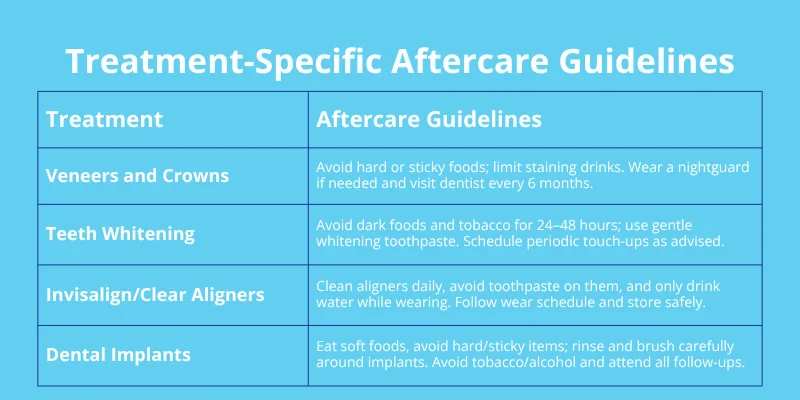
Taking care of your new smile means following special steps based on the treatment you received. From keeping your veneers strong to helping dental implants heal well, each type of cosmetic dentistry needs its own care.
Veneers and Crowns Maintenance
Veneers and crowns need gentle care to stay intact and look natural. Avoid biting hard objects like ice or pens, as this can chip or crack them.
Sticky foods can also loosen veneers, so be careful with those. Limit drinks like coffee, tea, and red wine, as they can cause discoloration around the edges.
Even though porcelain veneers resist staining better than your natural teeth, it’s smart to protect them by cutting back on these substances. If you grind your teeth at night, wearing a nightguard will help prevent cracks in your veneers and crowns.
Also, visit your dentist every six months for checkups and cleanings to catch any early problems.
Caring for Teeth Whitening Results
After teeth whitening, your teeth are more prone to stains for a short time. Avoid dark foods and drinks like coffee, tea, soy sauce, and berries for 24 to 48 hours to keep your new brightness.
Use a gentle whitening toothpaste to slowly maintain your shade without hurting enamel. Stay away from tobacco since smoking will quickly dull your whitened teeth.
To keep your smile bright in the long term, schedule periodic touch-up treatments. Depending on your habits, these may be at home or in the dental office.
Invisalign and Orthodontic Treatment Tips
If you have Invisalign or other clear aligners, keeping them clean is important. Rinse and gently brush your aligners every time you take them off.
Avoid toothpaste on them because it can wear down the plastic. Don’t eat or drink anything but water while wearing your aligners.
Food and drinks can stain or warp them, affecting the success of your treatment. Stick to your dentist’s wear schedule, usually 20 to 22 hours a day, to ensure your teeth move as planned.
Store your aligners safely in their case when you’re not using them to avoid loss or damage.
Patients starting treatment can also learn about the full clear aligner treatment process and what each stage involves.
Dental Implant Healing and Care
After getting dental implants, follow your dentist’s instructions carefully for the best healing. This usually means rinsing with saltwater, eating soft foods, and avoiding hard or sticky foods that can disturb the implants.
Brush and floss carefully around the implant area to prevent infection, as the gums and bone need to stay healthy. Unlike natural teeth, implants don’t get cavities, but the surrounding tissue can still have problems.
Avoid tobacco and alcohol as these slow healing and raise the chance of failure. Attend all follow-up visits to make sure your implants are properly integrating with your jawbone.
Get guidance tailored to your cosmetic dental procedure to protect your results and keep your smile healthy. Connect with CU Dentists in Rantoul or Champaign to learn more.
Foods, Drinks, and Lifestyle Choices
Taking care of your smile after cosmetic dentistry means being careful about what you eat and drink. Your daily choices can protect your dental work and keep your smile looking great for longer.
Best and Worst Foods for Your Smile
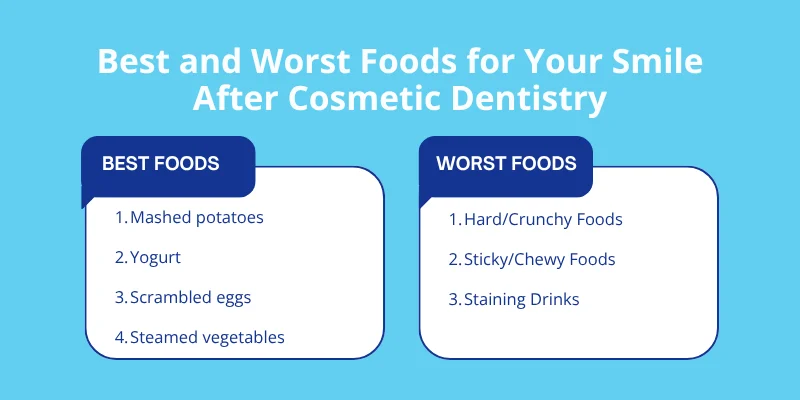
Choose soft foods like mashed potatoes, yogurt, scrambled eggs, and steamed vegetables. These are gentle on new restorations, such as veneers, crowns, or bonding.
Avoid crunchy, hard foods such as popcorn kernels, hard candies, ice cubes, and chips. These can cause cracks or chips in your dental work.
Sticky and chewy foods like caramel, gum, and dried fruit can pull on fillings or crowns, increasing the risk of decay. Also, stay away from dark-colored drinks like coffee, tea, and red wine, as they can stain your smile quickly.
How Dietary Habits Affect Aftercare
Your diet directly affects the strength and appearance of your smile makeover. Acidic foods like citrus fruits, pickles, and tomatoes can wear down enamel and weaken bonding materials.
That makes your dental work less durable. Drinks that are very hot or very cold may cause tooth sensitivity and slowly damage bonding.
Using a straw with colored drinks can reduce staining by limiting contact with your teeth. Switching to protein-rich foods like grilled chicken and fish supports healing.
Eating cheese and bananas can also help keep your mouth healthy.
Smoking, Tobacco, and Their Effects
Smoking and tobacco use harm your oral health by staining teeth and dental work, weakening gums, and increasing the risk of infections.
These habits slow down healing after cosmetic treatments and can cause your smile makeover to fail sooner. Tobacco can also raise your chances of gum disease.
Quitting smoking or avoiding tobacco products improves long-term results and keeps your dental work looking fresh. It also keeps your mouth feeling healthier overall.
Learn more about foods to avoid after cosmetic dental treatments at Young Dental Health.
Professional Support and Long-Term Care
Keeping your cosmetic dental work in great shape takes more than just brushing and flossing. Professional help plays a big role in making sure your smile stays healthy and beautiful over time.
Staying on top of dental visits, watching for any problems, and knowing when to reach out to your dentist will protect your investment and oral health.
Regular Dental Checkups and Cleanings
You should visit your dentist every six months, or as your dentist suggests, for checkups. These visits help keep your teeth and gums healthy and protect your cosmetic dentistry results.
During checkups, your dentist will clean your teeth to remove plaque and stains you can’t get rid of at home. They will also check the condition of any veneers, crowns, or implants you have.
If small issues are caught early, fixes can be easier and less expensive. Professional cleanings keep your smile looking its best while lowering the risk of gum disease, which can affect how well your cosmetic dental work lasts.
Monitoring for Complications
After cosmetic dental treatment, it’s important to watch for signs that something may be wrong. This includes pain, swelling, changes in the way your teeth fit together, or sensitivity that lasts more than a few days.
If you notice chips, cracks, or your dental work feels loose, these need prompt attention. Ignoring problems can lead to more damage or infections, which can affect your overall oral health.
Your dentist will guide you on what to expect after your procedure and how to spot issues early. Staying aware helps keep your smile beautiful and your dental work intact.
When to Contact Your Dentist
If you experience sharp pain, bleeding gums, or any discomfort that lasts beyond the usual healing period, call your dentist. Also, if you notice changes like looseness in crowns or veneers, chipped teeth, or constant sensitivity, don’t delay getting professional advice.
After cosmetic treatments, unexpected problems can happen. Quick action can prevent bigger repairs and keep your smile looking good.
Always follow your dentist’s instructions on who to contact and when. Prompt communication is key to protecting your investment and your oral health.
Have questions or need urgent guidance? Schedule a visit at CU Dentists now to speak directly with our team and ensure your cosmetic dental results stay flawless.
Frequently Asked Questions
Taking care of your teeth after cosmetic dental work means choosing the right foods, keeping good brushing habits, and knowing when to watch for issues.
It also helps to follow rules on how soon you can return to daily routines and use special oral care products.
How can I maintain my smile after cosmetic dental treatment?
Stick to good oral hygiene by brushing and flossing regularly. Avoid habits like chewing on ice or hard objects that can damage your dental work.
Visiting your dentist for regular check-ups helps keep your smile in great shape.
What are the best foods to eat following a cosmetic dental procedure?
Choose soft foods like yogurt, mashed potatoes, and smoothies right after your treatment. Avoid sticky, hard, or very hot foods that could harm your dental work or irritate your mouth.
Drinking plenty of water helps keep your mouth clean.
Can you give me tips for brushing and flossing after cosmetic dental work?
Use a soft-bristled toothbrush to protect sensitive areas around your dental work. Brush gently at least twice a day.
Floss carefully to avoid damaging your new smile. If your dentist suggests special toothpaste, use it as directed.
How long should I wait before resuming normal activities after cosmetic dentistry?
Wait at least 24 hours before eating solid foods or doing strenuous activities. Follow your dentist’s advice since some treatments may need a longer healing time.
Avoid activities that may cause pressure or injury to your mouth.
What signs should I watch for that might indicate a problem after cosmetic dental care?
Look out for persistent pain, swelling, bleeding, or unusual discomfort. If your dental work feels loose or damaged, contact your dentist quickly.
Are there specific oral hygiene products recommended for post-cosmetic dentistry?
Your dentist might recommend a non-abrasive toothpaste and a soft toothbrush to help prevent damage to your dental work. Sometimes, mouth rinses or special flossing tools help keep your mouth clean without causing harm.