




Feeling nervous about getting dental implants is completely normal. About 25% of people experience dental anxiety, and the thought of oral surgery can make those feelings even stronger.
You might worry about pain, needles, or losing control during the procedure.
The good news is that dental implant anxiety can be managed with the right tools and support, allowing you to move forward with confidence toward a healthier smile.
Modern dentistry offers many ways to help you feel comfortable and relaxed. From simple breathing exercises to sedation options, you have more control than you might think.
Understanding what causes your fear and learning practical ways to address it can make all the difference.
This guide will walk you through proven methods to calm your nerves and show you what really happens during the implant process.
Key Takeaways
- Dental anxiety often comes from fear of pain, past bad experiences, or feeling out of control during treatment
- Open communication with your dentist and learning relaxation techniques can significantly reduce your stress before surgery
- Sedation options like nitrous oxide or oral sedatives provide extra comfort for patients with moderate to severe anxiety
Learn about overcoming fear of dental implants and explore stress-free treatment options.
Understanding Dental Implant Anxiety
Dental implant anxiety affects many people who need tooth replacement, causing physical symptoms and sometimes preventing them from getting necessary treatment.
The fear stems from multiple sources and can seriously impact both your dental health and daily life.
What Causes Dental Anxiety Around Implants
Fear of dental implants often comes from past negative experiences at the dentist. If you’ve had painful procedures before, it’s natural to worry about future treatments.
The surgical nature of implant placement creates additional concerns. Unlike routine cleanings, dental implant anxiety involves more complex worries about surgery, recovery time, and long-term outcomes.
Fear of pain ranks as one of the top reasons people avoid implants. You might worry about discomfort during the procedure or the healing period afterward.
Loss of control while sitting in the dental chair makes some patients feel vulnerable and anxious.
Previous bad experiences with unprofessional or unfriendly dental staff can also trigger anxiety. Some people develop dental phobia after traumatic dental visits, especially during childhood.
Common Symptoms of Dental Implant Anxiety
Physical symptoms often appear when you think about or prepare for dental implant surgery. Your body responds to the stress in noticeable ways.
You might experience:
- Sweating or feeling hot
- Shaking or trembling hands
- Racing heartbeat
- Trouble breathing normally
- Feeling dizzy or lightheaded
Emotional signs include panic attacks before appointments and overwhelming dread when scheduling consultations. Some people struggle with sleep problems the night before their procedure.
Avoidance behavior represents a major symptom of managing dental anxiety. You might postpone appointments repeatedly, cancel at the last minute, or refuse to book consultations altogether.
This pattern prevents you from getting the dental care you need.
Impact on Oral Health and Quality of Life
Avoiding dental implants due to anxiety creates serious long-term problems. Missing teeth can lead to bone loss in your jaw, which makes future implant placement more difficult and expensive.
Your remaining teeth may shift into empty spaces, causing bite problems and additional tooth loss. Infections can develop in areas with missing teeth, spreading to other parts of your mouth.
The financial cost increases when you delay treatment. Simple procedures become complex surgeries that require more time and money to fix properly.
Your daily life suffers too. You might feel embarrassed about your smile and avoid social situations. Eating becomes difficult without a full set of teeth, limiting your food choices and nutrition.
Overcoming dental anxiety helps you break this cycle and restore both your oral health and confidence. Taking action now prevents these complications from worsening over time.
Addressing Fears: Myths and Realities of Dental Implants
Many fears about dental implants stem from outdated information and misunderstandings about the procedure.
The reality is that modern implant surgery has become highly predictable, with minimal discomfort and excellent long-term outcomes.
Debunking Pain and Discomfort Myths
One of the biggest worries patients have is about pain during and after the procedure.
The truth is that dental implant procedures are performed under local anesthesia, so you won’t feel anything during surgery.
Most patients report only mild soreness afterward, similar to having a tooth extracted. Over-the-counter pain medication typically manages any discomfort well.
What to expect for pain levels:
- During surgery: No pain due to anesthesia
- First 24-48 hours: Mild to moderate soreness
- Days 3-7: Decreasing discomfort
- After one week: Minimal to no pain
Your dental implant center will provide detailed aftercare instructions to keep you comfortable. Many patients are surprised at how manageable the recovery actually is compared to what they imagined.
Understanding the Dental Implant Success Rate
Dental implants have success rates over 95 percent, making them one of the most reliable dental procedures available. This high success rate reflects decades of research and refinement in implant technology.
Failure is rare and usually happens due to factors like untreated gum disease or smoking.
When you work with an experienced dentist who properly evaluates your oral health beforehand, your chances of success are excellent.
The benefits of dental implants include preventing jawbone deterioration, which happens when tooth roots are missing.
Unlike dentures or bridges, implants stimulate your jawbone just like natural teeth, preserving your facial structure and bone density for years to come.
Modern Surgical Techniques and Technology
Today’s dental implant surgery looks nothing like procedures from even ten years ago. Advanced 3D imaging allows your dentist to plan every detail before surgery begins, reducing risks and improving precision.
Computer-guided implant placement ensures your implants go exactly where they should. This technology makes the procedure faster, more accurate, and less invasive than traditional methods.
Modern advances that improve your experience:
- Digital scans instead of uncomfortable molds
- Guided surgery for precise placement
- Smaller incisions that heal faster
- Same-day temporary teeth in many cases
These innovations mean less time in the dental chair and quicker healing.
Your dentist can show you exactly what will happen using digital models, taking away the fear of the unknown that makes many patients anxious.
Contact us to get support for overcoming fear of dental implants and ask your questions.
The Dental Implant Process: What to Expect
Understanding each phase of treatment helps reduce uncertainty and builds confidence.
The process involves careful planning, precise placement, natural healing, and straightforward aftercare that protects your investment.
Step-by-Step Breakdown of Implant Placement
The dental implant procedure follows a clear sequence that typically spans several months. Your dentist starts by surgically placing a titanium post into your jawbone where the missing tooth root used to be.
During the dental implant procedure, you’ll receive local anesthesia to numb the area completely. Many patients also choose sedation options if they feel particularly nervous.
Most people report feeling pressure rather than pain during implant placement.
After the post is secured in your jawbone, osseointegration begins. This is when your bone naturally grows around the titanium implant over three to six months.
During this healing period, you might wear a temporary tooth replacement.
Once osseointegration is complete, your dentist attaches a small connector piece called an abutment. This sits on top of the implant and holds your final tooth.
The last step involves placing your custom-made crown that matches your natural teeth in color and shape.
Initial Consultation and Planning
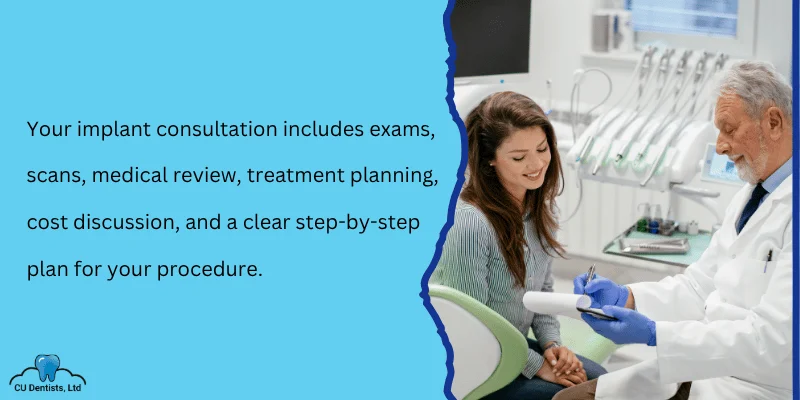
Your dental implant treatment begins with a thorough examination before any work is done. Your dentist will take X-rays or 3D scans to check your jawbone density and determine the best placement angles.
This appointment is purely about talking and planning. You’ll discuss your medical history, any medications you take, and your expectations for the final result. Your dentist will explain the timeline and answer all your questions.
The consultation also covers costs, insurance coverage, and financing options. You’ll leave with a complete treatment plan that outlines each appointment and what happens at each stage.
This is your chance to voice concerns and make sure you feel comfortable with the dental team handling your care.
Aftercare Instructions and Recovery Tips
Following your provider’s aftercare instructions is critical for successful healing. You’ll need to eat soft foods for the first few days and avoid chewing directly on the implant site.
Common aftercare guidelines include:
- Apply ice packs to reduce swelling in the first 24 hours
- Take prescribed or over-the-counter pain medication as directed
- Rinse gently with warm salt water after meals
- Avoid smoking, which slows healing significantly
- Don’t use straws, as suction can disturb the surgical site
Mild soreness and swelling are normal responses. These symptoms usually fade within three to five days.
Follow-up appointments let your dentist monitor healing and check that osseointegration is progressing properly.
Contact your dentist immediately if you experience severe pain, excessive bleeding, or signs of infection.
Most patients return to normal activities within a day or two after the dental implant process begins.
Managing Dental Anxiety Before and During Surgery
Building a strong relationship with your dental team and using proven relaxation methods can significantly reduce stress around implant procedures.
Open communication combined with mental and physical preparation techniques helps you stay calm throughout the treatment process.
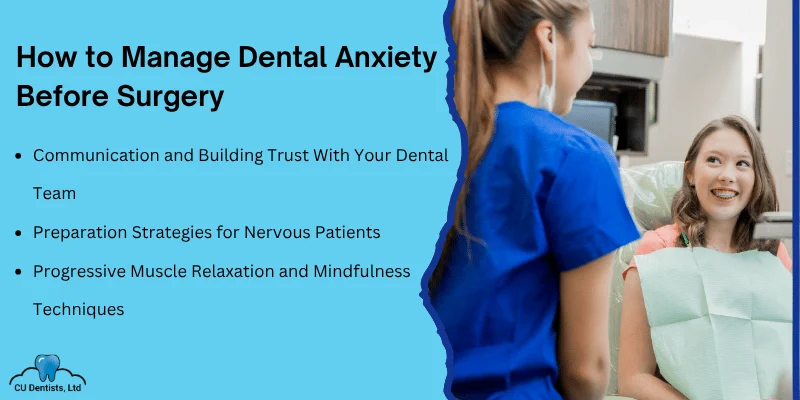
Communication and Building Trust With Your Dental Team
Your dental team is your most important partner in managing dental anxiety. Being honest about your fears allows them to create a personalized treatment plan that addresses your specific concerns.
Share your anxiety triggers with your surgeon during your first consultation. Tell them about past negative experiences, fear of needles, or worries about pain.
Ask questions about every step of the procedure so you know exactly what to expect.
Request that your dental team explain what they’re doing throughout the surgery. Some patients find comfort in knowing what’s happening, while others prefer distraction. Let your team know which approach works better for you.
Key topics to discuss:
- Your anxiety symptoms and triggers
- Pain management options
- Sedation choices available
- Hand signals you can use during the procedure
- Expected recovery timeline
Preparation Strategies for Nervous Patients
The weeks before your surgery offer time to build mental and physical resilience. Strategies to manage patients with dental anxiety include establishing healthy routines that support emotional well-being.
Start with basic self-care habits. Get seven to eight hours of sleep each night leading up to your appointment. Exercise regularly to reduce stress hormones in your body.
Eat balanced meals and limit caffeine on surgery day.
Practice positive visualization exercises. Spend five minutes daily imagining yourself completing the procedure successfully and enjoying your new smile afterward.
This trains your brain to associate the surgery with positive outcomes rather than fear.
Consider working with a therapist who specializes in anxiety disorders if your fear feels overwhelming. Professional support can provide additional coping strategies tailored to your needs.
Progressive Muscle Relaxation and Mindfulness Techniques
Progressive muscle relaxation helps release physical tension that builds up when you feel anxious. This technique involves tensing and relaxing different muscle groups throughout your body.
Start with your toes and work upward. Squeeze your toes tightly for five seconds, then release completely. Move to your calves, thighs, stomach, hands, arms, shoulders, and face.
Notice how different relaxation feels compared to tension.
Practice this technique daily in the weeks before surgery. You can also use it in the waiting room or dental chair to manage dental anxiety during treatment.
Mindfulness breathing exercises keep you grounded in the present moment rather than worrying about what might happen.
Try the 4-7-8 breathing method: breathe in through your nose for four counts, hold for seven counts, and exhale through your mouth for eight counts. Repeat this cycle four times.
Meditation apps can guide you through calming exercises before and after your appointment. Even five minutes of focused breathing activates your body’s relaxation response and counters anxiety symptoms.
Sedation and Pain Management Options
Modern dentistry offers multiple ways to keep you comfortable during dental implant surgery. Your dentist can tailor pain control methods to match your specific anxiety level and medical needs.
Local Anesthesia and How It Works
Local anesthesia numbs the specific area where your dentist will place the implant. Your dentist injects the medication directly into your gum tissue around the treatment site.
This blocks nerve signals from reaching your brain, so you won’t feel pain during the procedure.
You’ll stay fully awake and aware with local anesthesia. Most patients only feel pressure or mild sensations while the dentist works. The numbness typically lasts two to four hours after your appointment ends.
Local anesthesia works well for patients with mild anxiety. It’s the most basic form of pain management for dental implants. Your dentist may combine it with other sedation options if you need extra help relaxing.
Sedation Dentistry: Nitrous Oxide, Oral, and IV Sedation
Nitrous oxide, also called laughing gas, helps you feel calm and relaxed during treatment. You breathe it through a small mask over your nose.
The effects wear off quickly after your dentist removes the mask, so you can drive yourself home.
Oral sedation involves taking a pill before your appointment. This medication makes you drowsy and less anxious, though you’ll remain awake.
You’ll need someone to drive you to and from the dental office.
IV sedation delivers medication directly into your bloodstream through a small needle in your arm. You’ll enter a deeply relaxed state while staying technically awake.
Most patients remember little to nothing about the procedure afterward. This option works well for significant dental anxiety and longer procedures.
Each sedation option offers different levels of relaxation:
- Nitrous oxide: Mild relaxation, quick recovery
- Oral sedation: Moderate relaxation, slower recovery
- IV sedation: Deep relaxation, minimal memory of procedure
General Anesthesia for Complex Cases
General anesthesia puts you completely asleep during your dental implant surgery. An anesthesiologist monitors your vital signs throughout the entire procedure. You won’t have any awareness or memory of what happens.
Dentists typically reserve general anesthesia for complex cases. This includes patients who need multiple implants placed at once or those with severe dental phobia.
Some medical conditions may also require this deeper level of sedation.
You’ll need several hours to recover after general anesthesia. Someone must drive you home and stay with you for the rest of the day.
This option costs more than other sedation methods but provides complete comfort for patients who need it.
Personalizing Sedation Based on Anxiety Levels
Your dentist will review your medical history, current medications, and oral health to determine the safest approach. Be honest about your anxiety level during this conversation.
The more your dentist knows, the better they can help you.
Patients with mild nervousness often do well with just local anesthesia or nitrous oxide. Moderate anxiety may call for oral sedation combined with local anesthesia.
Severe dental anxiety or fear of pain typically responds best to IV sedation.
Your dentist may adjust sedation options based on the length and complexity of your procedure. A single implant might need less sedation than placing several implants at once.
Talk openly with your dental team to find the right balance of comfort and safety for your specific needs.
Maintaining Confidence and Long-Term Success
Your journey doesn’t end when the procedure is complete. Taking care of yourself after surgery and keeping your eyes on the positive results ahead will help you stay confident and ensure your implants thrive for years to come.

Tips for Reducing Post-Operative Discomfort
Post-operative discomfort is normal, but you can manage it effectively with the right approach.
Your dentist will likely prescribe pain medication or recommend over-the-counter options to keep you comfortable during the first few days.
Apply ice packs to your face for 15-20 minutes at a time during the first 24-48 hours. This reduces swelling and numbs the area naturally.
Stick to soft foods like yogurt, mashed potatoes, and smoothies for the first week to avoid putting pressure on the surgical site.
Keep your head elevated when sleeping to minimize swelling. Rinse gently with warm salt water after 24 hours to keep the area clean. Avoid using straws, smoking, or spitting forcefully, as these actions can disrupt healing.
Follow your dentist’s instructions about brushing and flossing around the implant site. Most discomfort fades within a week, but call your dentist if you experience severe pain or unusual symptoms.
Staying Motivated: Focusing on the Benefits
Remembering why you chose dental implants helps you push through any temporary challenges. The benefits of dental implants extend far beyond appearance, giving you practical advantages that improve your daily life.
You’ll regain the ability to eat your favorite foods without worry once healing is complete.
A restored bite means you can chew comfortably and speak clearly without the shifting or slipping that comes with other tooth replacement options.
Key benefits to keep in mind:
- Natural look and feel that blends with your existing teeth
- Protection for your jawbone, preventing bone loss over time
- No need to remove them for cleaning like dentures
- Long-lasting solution that can work for decades with proper care
Your confidence will grow as you see the final results taking shape. Many patients report feeling more comfortable smiling and socializing after their implants heal completely.
Establishing a Support System and Celebrating Progress
Having people around you who understand your journey makes a real difference. Talk to family members or friends about your concerns and let them know how they can help during recovery.
Join online communities or local support groups where you can connect with others who have gone through the same experience.
Hearing success stories from real patients can ease your worries and give you practical tips.
Schedule follow-up appointments as recommended and don’t hesitate to contact your dental team with questions. They’re your partners in this process and want you to succeed.
Mark your milestones:
- First week of healing completed
- Stitches removed
- Return to normal eating
- Final crown placement
Celebrate each step forward, no matter how small it seems. Taking progress photos can help you see how far you’ve come. Reward yourself when you reach important checkpoints in your recovery timeline.
Frequently Asked Questions
Many patients wonder about pain levels, sedation choices, and what happens during their first visit. Understanding the timeline and safety measures can help you feel more prepared.
What should I expect during a dental implant consultation if I’m feeling anxious?
Your first visit focuses on getting to know you and your concerns. The dentist will examine your mouth and take X-rays to plan your treatment.
This is the perfect time to talk openly about your fears with your dental team. They can adjust their approach based on your needs.
You won’t have any procedures done at this appointment. It’s all about gathering information and making a plan that works for you.
Does getting a dental implant hurt, and how is pain typically managed?
The actual implant placement is done with local anesthesia, so you won’t feel pain during the procedure. Most patients report feeling pressure but not discomfort.
Post-operative discomfort is typically minimal and can be managed with over-the-counter pain medications. Many people compare it to having a tooth pulled.
Your dentist will give you clear instructions for pain management after surgery. Most patients return to normal activities within a few days.
What sedation options are available for nervous dental implant patients?
Nitrous oxide, also known as laughing gas, helps you feel calm while staying fully awake. It wears off quickly after your appointment.
IV sedation allows you to remain awake but deeply relaxed during the procedure. Most patients remember little to nothing afterward.
Oral sedation involves taking a pill before your appointment to reduce anxiety. General anesthesia is available for extreme cases where you need to be completely unconscious.
How can I calm my nerves before and during the dental implant procedure?
Learning about each step of the process can significantly reduce your fear. Ask your dentist to explain what will happen in simple terms.
Practice deep breathing exercises in the days leading up to your appointment. Bring headphones to listen to music or podcasts during the procedure.
Tell your dental team if you need a break during treatment. They can pause at any time to help you feel more comfortable.
How long does the dental implant process take from start to finish, and what are the steps?
The entire process typically takes three to six months from start to finish. This timeline allows for proper healing between steps.
First, the implant post is placed into your jawbone during a surgical appointment. You’ll then wait two to six months for the bone to fuse with the implant.
After healing is complete, an abutment is attached to the implant post. Finally, your custom crown is placed on top to complete your new tooth.
What are the most common risks or complications, and how can I feel confident about safety?
Infection at the implant site is rare but can happen if proper aftercare isn’t followed. Your dentist will give you specific cleaning instructions to prevent this.
Nerve damage is uncommon when the procedure is done by an experienced professional. Careful planning with X-rays and scans helps avoid this issue.
Implant failure happens in less than 5% of cases and usually occurs when the bone doesn’t fuse properly. Choosing a qualified specialist and following all post-operative instructions greatly reduces your risk.