



Missing teeth create problems that go far beyond your appearance. When you lose a tooth, your ability to chew food properly decreases, and the remaining teeth can shift out of position. This affects how your upper and lower teeth come together when you bite down.
Dental implants work by replacing both the visible tooth and the root beneath your gums, which helps restore your bite to its natural function and prevents further damage to your mouth.
Unlike dentures or bridges, implants are anchored directly into your jawbone. This gives you the same chewing power you had with your natural teeth.
The benefits extend to your overall oral health too. Dental implants help preserve bone health by stimulating your jawbone just like natural tooth roots do. They also keep your other teeth from drifting into empty spaces, which protects your bite alignment and reduces your risk of TMJ disorders.
Key Takeaways
- Dental implants replace missing tooth roots and restore full chewing strength like natural teeth
- Implants prevent jawbone loss and keep remaining teeth from shifting out of position
- Proper bite restoration with implants reduces jaw pain and supports long-term oral health
Schedule a bite restoration consultation in Champaign, IL to see if implants are right for you.
How Missing Teeth Impact Your Bite and Oral Function
When you lose even one tooth, it creates a chain reaction that affects how you chew, how your remaining teeth fit together, and the health of your jawbone. The gap left behind disrupts the balance your mouth depends on for proper function.
Effects on Bite Strength and Chewing Efficiency
Your bite strength drops significantly when you’re missing teeth. Each tooth plays a role in breaking down food, and when one is gone, the remaining teeth have to work harder to compensate.
This reduced chewing efficiency means you might struggle with tougher foods like steak or raw vegetables. You may find yourself avoiding certain foods or not chewing thoroughly enough, which can affect your digestion.
When your chewing power decreases, your body has to work harder to process larger food particles.
The teeth next to the gap bear extra pressure during eating. This uneven distribution of force can wear them down faster than normal. Over time, you might experience discomfort or pain in these overworked teeth.
For a more detailed breakdown of healing, hygiene, and food restrictions, read our full mouth dental implants post-surgery care guide.
Consequences for Bite Alignment and Stability
The teeth surrounding a gap don’t stay in place. They gradually shift and drift into the empty space, which throws off your entire bite alignment.
Your teeth on the opposite jaw may also move. They can start to erupt or grow longer into the space where nothing is blocking them anymore. This creates an uneven bite that affects how your upper and lower teeth come together.
These shifting teeth disrupt your bite and make chewing less efficient. Your jaw might compensate by moving differently, which can strain your jaw joints. Some people develop clicking, popping, or pain in their jaw as bite stability decreases.
Risks of Bone Loss and Deterioration
Your jawbone needs stimulation from tooth roots to stay healthy. When you lose a tooth, that area of bone no longer receives the pressure it needs from chewing.
Bone resorption begins within the first year after tooth loss. The jawbone in that area starts to shrink and deteriorate because it’s not being used. This bone loss can eventually change the shape of your face, creating a sunken appearance around your mouth.
The bone deterioration doesn’t stop on its own. It continues over time and can affect neighboring teeth, making them less stable. As the bone weakens, nearby teeth may become loose or shift position. This affects your dental health far beyond just the missing tooth itself.
Visit our Rantoul, IL dental team to restore your bite and chewing strength with implants.
Dental Implants: The Foundation of Bite Restoration
Dental implants work as artificial tooth roots that fuse with your jawbone through a natural process. This creates a stable foundation that supports replacement teeth and restores up to 100% of your natural biting power.
Components of a Dental Implant System
A dental implant consists of three main parts that work together to replace your missing tooth. The titanium post serves as your new tooth root and gets placed directly into your jawbone during a surgical procedure. This dental post is typically made from medical-grade titanium because your body accepts it without rejection.
The abutment is the middle piece that connects the titanium implant post to the visible part of your tooth. Your dentist attaches this connector piece once the implant has bonded with your bone. It sits just above your gum line and provides the anchor point for your replacement tooth.
The crown is the custom-made tooth replacement that looks and functions like your natural tooth. Your dentist designs it to match your other teeth in color, shape, and size. The crown attaches to the abutment and completes your dental implant system.
Osseointegration and Jawbone Health
Osseointegration is the process where your jawbone grows around and fuses with the titanium tooth root. This biological bonding typically takes 8 to 16 weeks but creates a permanent connection between the implant and your bone.
Your jawbone needs stimulation from chewing to stay healthy and maintain its density. When you lose a tooth, the bone in that area starts to deteriorate because it no longer receives pressure from biting and chewing. Dental implants preserve jawbone density by transmitting chewing forces into the bone just like natural tooth roots do.
This bone preservation prevents the sunken facial appearance that often develops after tooth loss. The artificial tooth root keeps your jaw strong and maintains your natural face shape over time.
Why Implants Are Superior to Traditional Dentures
Dental implants restore natural bite strength while traditional dentures only provide 25 to 60% of normal biting power. You can eat all your favorite foods with implants without worrying about slippage or discomfort.
Traditional dentures sit on top of your gums and don’t stop bone loss in your jaw. They can slip when you talk or eat and often require messy adhesives to stay in place. Dentures also need replacement every 5 to 10 years as your jaw shape changes.
Implants function independently without affecting your other teeth. Bridges and dentures often require grinding down healthy teeth for support. Titanium implants improve bite alignment and chewing power while preserving your remaining natural teeth and promoting long-term oral health.
Book a consultation to evaluate your bite and tooth replacement options.
Restoring Bite Strength and Chewing Power with Implants
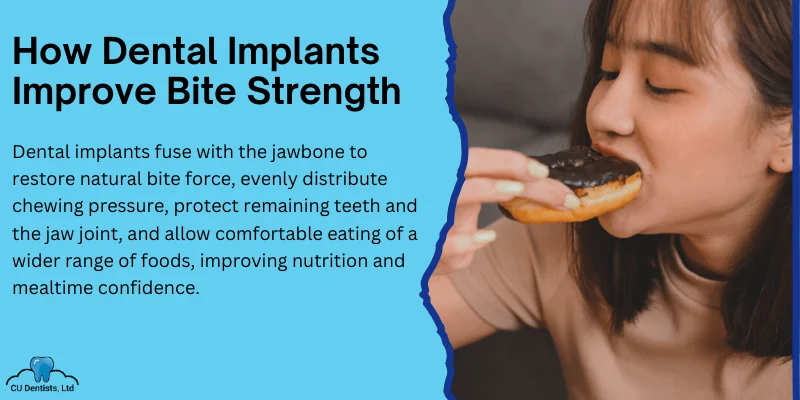
Dental implants give you back the ability to bite and chew with the same force as natural teeth. They restore bite function by anchoring into your jawbone and spreading pressure evenly across your mouth.
How Implants Restore Natural Bite Force
When you lose teeth, your chewing force drops significantly. Dentures only give you about 25% of your natural bite strength. Dental implants are different because they fuse with your jawbone, just like natural tooth roots.
This creates a stable bite that can handle the same pressure as your original teeth. Molar implants rebuild strong chewing ability by replacing the back teeth that do most of the heavy work when you eat. Most people with implants can bite with nearly 100% of their natural chewing power once healing is complete.
The titanium post acts as an artificial root. It transfers force directly into the bone, which keeps the jaw strong and healthy.
Balanced Force Distribution and Chewing Efficiency
Missing teeth force the remaining teeth to handle more pressure than they should. This creates an uneven bite that can cause pain and damage over time.
Implants restore bite balance by replacing missing teeth with stable, root-supported replacements that prevent shifting. When your bite is balanced, chewing efficiency improves dramatically. You can break down food more completely, which helps with digestion.
Each tooth in your mouth has a job. Implants fill the gaps and let all your teeth work together the way they’re supposed to. This reduces strain on your jaw joint and protects your remaining natural teeth from extra wear.
Enjoying a Wider Range of Foods
With restored chewing power, you can eat foods that were difficult or impossible before. Tough meats, crunchy vegetables, and chewy foods become manageable again.
Many people with missing teeth or dentures avoid certain foods because they can’t chew them properly. Dental implants improve chewing comfort by mimicking natural teeth for better function. You don’t have to worry about foods getting stuck or your teeth slipping.
This means better nutrition and more enjoyment at meals. You can bite into an apple, chew a steak, or eat corn on the cob without hesitation.
Preserving Jawbone and Facial Structure
Dental implants do more than replace missing teeth. They actively preserve your jawbone by providing stimulation that maintains bone density and prevents the facial changes that often come with tooth loss.
Preventing Bone Loss After Tooth Loss
When you lose a tooth, your jawbone starts to break down because it no longer receives the stimulation it needs from chewing. This process is called bone resorption, and it can begin within just a few months of tooth loss.
Your natural teeth stimulate the jawbone through everyday activities like eating and speaking. Without this stimulation, your body assumes the bone is no longer needed and begins to reabsorb it. Dental implants help maintain jawbone density by acting as artificial tooth roots that provide this essential stimulation.
The longer you wait to replace a missing tooth, the more bone you can lose. This makes it harder to place implants later and can affect your overall oral health.
Supporting Jawbone Density and Strength
Dental implants preserve jawbone health through a process called osseointegration. The titanium post fuses directly with your jawbone, creating a stable foundation that keeps your bone strong.
This fusion transfers the forces from chewing directly into your jawbone, just like natural teeth do. The pressure and stimulation signal your body to maintain bone density in that area.
If you’ve already experienced significant bone loss, you may need a bone graft before getting implants. A bone graft adds material to rebuild your jawbone strength so it can support an implant. Many people who need bone grafting can still successfully receive implants after the grafting site heals.
Maintaining Facial Structure and Appearance
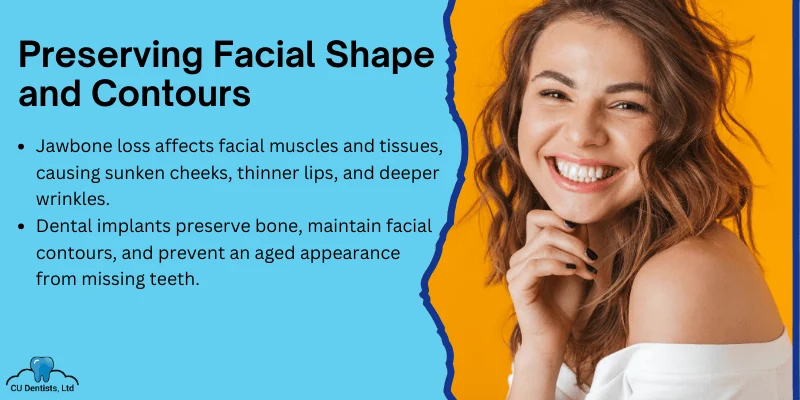
Your jawbone supports the muscles and tissues in your face. When bone resorption occurs, it can change your entire facial appearance.
Dental implants help prevent jawbone loss and restore facial shape by maintaining the bone structure that keeps your face looking natural. Without this support, your cheeks can appear sunken, your lips may look thinner, and wrinkles around your mouth can deepen.
These changes can make you look older than you are. By preserving your jawbone, implants help maintain your natural facial contours and prevent the aged appearance that often comes with missing teeth.
Bite Alignment, Occlusion, and Oral Health Benefits
Dental implants help restore proper contact between upper and lower teeth while preventing neighboring teeth from drifting out of position. This stable foundation reduces strain on your jaw joints and makes daily cleaning easier.
Correcting Bite Misalignment and Occlusion
When you lose a tooth, your bite changes in ways you might not notice right away. The remaining teeth start to shift into the empty space, which throws off how your upper and lower teeth come together. This disruption in occlusion affects your oral health and daily comfort.
Dental implants act like natural tooth roots anchored into your jawbone. They fill the gap and keep your teeth in their correct positions. Unlike bridges or dentures, implants restore up to 100% of your natural biting power.
Your implant dentist will carefully plan the placement to match your natural bite pattern. This ensures that when you close your mouth, your teeth meet evenly. Proper bite alignment distributes chewing forces across all your teeth instead of overloading certain areas.
Stabilizing Remaining Teeth and Preventing Shifting
Missing teeth create empty spaces that neighboring teeth want to fill. Your adjacent teeth start tilting toward the gap, while the opposite tooth may grow longer into the space. This domino effect disrupts your entire dental arch over time.
An implant placed promptly after tooth loss locks surrounding teeth in place. The prosthetic crown attached to the implant maintains proper spacing between teeth. This prevents the cascade of movement that leads to crowding and misalignment.
Benefits of immediate stabilization:
- Preserves your original tooth positions
- Prevents need for orthodontic correction later
- Maintains even spacing across your dental arch
- Protects investment in previous orthodontic work
Reducing Risks of TMJ and Jaw Pain
When your bite becomes uneven due to missing teeth, you naturally start favoring one side of your mouth while chewing. This puts excessive stress on certain teeth and your jaw joint. Over time, this imbalance can trigger temporomandibular joint problems.
Bite adjustment through dental implants restores balanced force distribution across your mouth. You can chew comfortably on both sides again without straining muscles or joints. Many patients notice reduced jaw tension and fewer headaches after getting implants.
The even pressure also protects your remaining natural teeth from excessive wear. When all your teeth share the workload, no single tooth bears too much force during biting and chewing.
Simplifying Oral Hygiene and Protecting Natural Teeth
Dental implants function just like your natural teeth, which makes cleaning them straightforward. You brush and floss around them the same way you care for regular teeth. This simplicity helps you maintain better oral hygiene compared to other tooth replacement options.
Bridges require special flossing techniques to clean underneath the false tooth. Partial dentures need removal for proper cleaning and can trap food particles. Implants eliminate these complications.
The stable crown on your implant also prevents food from getting stuck in gaps where teeth have shifted. Easier cleaning means lower risk of decay and gum disease in surrounding teeth. Your natural teeth stay healthier when proper spacing is maintained throughout your mouth.
Overview of the Implant Procedure and Candidacy Considerations
Getting dental implants involves multiple stages over several months, with healing time between each step. Your overall health, jawbone condition, and commitment to the process all play important roles in determining whether you’re a good candidate for this tooth replacement option.

Assessment and Planning for Implant Placement
Your dental team will start with a complete evaluation before any surgery begins. You’ll need dental X-rays and 3D images to help your dentist see the exact condition of your jawbone and remaining teeth.
The planning process for dental implants may involve several specialists. You might meet with an oral surgeon, a periodontist who treats gums and bones, or a prosthodontist who designs artificial teeth.
Your dentist will review your complete medical history during this stage. You’ll need to share information about any health conditions and all medications you take, including supplements. If you have certain heart conditions or joint implants, you might need antibiotics before surgery.
The team creates a custom treatment plan based on how many teeth you need replaced. They also consider the strength and thickness of your jawbone.
Bone Grafting and Implant Surgery
Your jawbone needs to be thick and strong enough to support the implant. If your bone is too soft or thin, you’ll need bone grafting before implant placement can happen.
Bone graft material can come from another part of your body, a human donor, an animal source, or synthetic materials. The grafted bone needs several months to grow and strengthen before your dentist can place the implant. In some cases, minor bone grafting can happen at the same time as the implant surgery.
During the actual implant surgery, your surgeon cuts open your gum to expose the bone. They drill holes into the bone where the metal post will go. The post gets placed deep into the bone since it acts as your new tooth root.
You’ll have options for managing discomfort during the procedure. Local anesthesia numbs the area, sedation helps you stay calm, or general anesthesia puts you in a sleep-like state.
Recovery Timeline and Post-Care
The dental implant process takes many months from start to finish. After your surgeon places the metal post, your jawbone needs time to grow into and fuse with the implant surface. This process is called osseointegration and usually takes several months.
You might experience some discomfort after surgery, including:
- Swelling of your gums and face
- Bruising on your skin and gums
- Pain at the implant site
- Minor bleeding
You’ll need to eat soft foods while each surgical site heals. Your surgeon will probably use stitches that dissolve on their own. You might need pain medicine or antibiotics after the procedure.
Once osseointegration finishes, you’ll need another small surgery to attach the abutment. This is the piece that connects the implant to your crown. Your gums need at least two more weeks to heal before your dentist can attach the artificial tooth.
Who Qualifies for Dental Implants
Several factors determine dental implant eligibility. You need to have a jawbone that’s reached full growth and enough bone to secure the implants. Your mouth tissues need to be healthy, and you can’t have health conditions that affect bone healing.
Good candidates for dental implants typically:
- Have one or more missing teeth
- Don’t smoke tobacco
- Can commit several months to the process
- Want to improve their speech
- Can’t or don’t want to wear dentures
Your overall health matters when it comes to how well your implant heals and how long it lasts. You need healthy gums and adequate bone density to support the implant long-term.
Smoking can lead to implant failure and complications. If you grind your teeth, you’ll need treatment for that habit. You also need to be willing to maintain good oral hygiene and visit your dentist regularly for checkups.
Frequently Asked Questions
Dental implants offer significant improvements to bite strength and jaw health while feeling remarkably similar to your natural teeth. Most people adjust within a few months and can return to eating their favorite foods.
What benefits do dental implants provide for chewing and oral health?
Dental implants restore natural bite strength and help maintain your jawbone density. When you chew with implants, they stimulate your jawbone just like natural tooth roots do.
This stimulation prevents bone loss that typically occurs after tooth loss. The implants also distribute chewing forces evenly across your teeth, which reduces excessive wear on your remaining natural teeth.
You’ll experience better digestion because you can properly break down food. Dental implants can help fix your bite and prevent long-term issues like TMJ pain and worn teeth.
Can dental implants feel like natural teeth when biting and eating?
Yes, dental implants feel natural because they integrate directly with your jawbone. Unlike dentures, they don’t slip or click when you talk, laugh, or eat.
The titanium post fuses with your bone through a process that creates a stable foundation. Once healed, you can use your implant just like a natural tooth.
Most people forget which teeth are implants after the adjustment period. The custom-made crown on top matches your natural teeth in both appearance and function.
How long will it take to adjust to dental implants and regain full bite function?
Dental implants require several months of healing before you reach full function. The initial healing period after surgery typically takes 3 to 6 months.
During this time, your jawbone grows around the titanium post. You’ll need to eat soft foods at first and gradually introduce harder foods as healing progresses.
Most people regain full bite function within 6 months. Your dentist will guide you through each stage and let you know when you can return to normal eating habits.
What types of foods can be enjoyed after getting dental implants?
Implanted teeth offer strength comparable to natural teeth, allowing you to enjoy a wide range of foods. You can eat harder and tougher items once your implants fully heal.
Start with soft foods like yogurt, mashed potatoes, and scrambled eggs during the first few weeks. Gradually add foods with more texture as your healing progresses.
After complete healing, you can enjoy crunchy vegetables, nuts, steak, and crusty bread. Most people can return to their normal diet without restrictions once their dentist gives approval.
How do dental implants help in preventing bone loss in the jaw?
Your jawbone needs stimulation from chewing to maintain its density. When teeth are missing, the bone in that area begins to deteriorate because it’s no longer being used.
Dental implants act as artificial tooth roots that provide this necessary stimulation. Each time you bite or chew, the force transfers through the implant into your jawbone.
This process keeps your jawbone healthy and prevents the facial structure changes that often occur with tooth loss. The bone actually grows around the implant and holds it securely in place.
Are there any limitations to bite strength with dental implants compared to natural teeth?
Dental implants can restore bite force to levels very close to natural teeth. Most people regain about 80 to 90 percent of their original bite strength.
The exact amount depends on factors like bone quality, implant placement, and how well you’ve healed. Some people even report stronger bites than they had with damaged or weakened natural teeth.
You won’t need to worry about breaking or damaging properly placed implants during normal eating. They’re designed to withstand the same forces as natural teeth for daily use.