


Getting dental implants is a big step toward restoring your smile, but understanding what happens after the procedure can help you feel more prepared.
The healing process isn’t instant. It takes several months for your implant to fully integrate with your jawbone.
Dental implant healing typically takes 3 to 6 months and happens in distinct stages, starting with initial soft tissue recovery in the first two weeks, followed by osseointegration where your bone fuses with the titanium implant.
Each week brings different changes as your body works to create a stable foundation for your new tooth. You might experience some swelling and discomfort at first, but these symptoms fade as healing progresses.
Knowing what to expect during each phase of your dental implant healing timeline helps you follow your dentist’s instructions and spot any issues early.
This guide breaks down the healing process week by week so you can track your progress and take the right steps to support your recovery.
Key Takeaways
- Dental implant healing occurs in phases over 3 to 6 months, with the first two weeks focused on soft tissue recovery
- Osseointegration is the critical process where your jawbone fuses with the implant to create lasting stability
- Following aftercare instructions and attending follow-up appointments helps ensure successful healing and long-term implant success
Table of Content
- What Happens During Dental Implant Healing
- Immediate Post-Surgery Period
- Early Healing: The First Two Weeks
- Osseointegration and Bone Integration Phase
- Final Stages: Abutment and Crown Placement
- Tips for a Smooth Recovery and Implant Longevity
- Frequently Asked Questions
What Happens During Dental Implant Healing
The dental implant healing process involves your body working to secure a titanium implant post into your jawbone while the surrounding gums recover from surgery.
Your bone cells gradually grow around the implant surface, and your soft tissues repair themselves over several months.
Understanding the Dental Implant Procedure
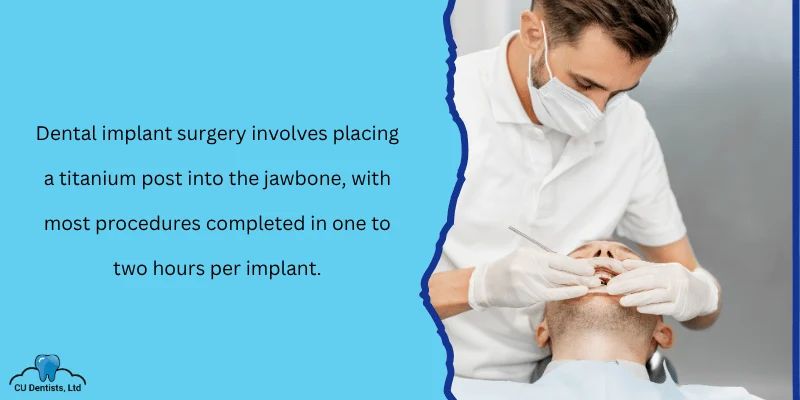
During dental implant surgery, your dentist places a small titanium implant post directly into your jawbone where your tooth root used to be. The procedure starts with numbing the area so you don’t feel pain.
Your dentist makes a small opening in your gum tissue to access the bone. They then carefully drill a precise hole in your jawbone to match the size of your implant. The titanium implant post gets screwed or pressed into this space.
If you don’t have enough bone, you might need bone grafting at the same time. This adds extra bone material to strengthen the area. Your dentist then stitches your gum tissue closed over or around the implant.
The whole dental implant procedure typically takes one to two hours per implant. You can usually go home the same day.
The Role of Osseointegration in Recovery
Osseointegration is the process where your jawbone actually fuses with the titanium implant post. This bone integration is what makes dental implants so strong and permanent.
Your bone cells recognize the titanium surface as compatible with your body. They start growing directly onto and around the implant over weeks and months.
New bone tissue forms and hardens around the titanium, locking it firmly in place.
Complete osseointegration typically takes three to six months to finish. Younger patients and those with healthy, dense bone often heal faster. Smoking or certain health conditions can slow down this process.
The implant must stay stable during this time. That’s why your dentist won’t attach your final crown until osseointegration is complete.
Soft and Hard Tissue Healing Explained
Your body heals two distinct types of tissue after the dental implant procedure. Soft tissue healing involves your gums, while hard tissue healing refers to your bone.
Soft tissue healing happens quickly in the first one to two weeks. Your gums seal around the implant site, swelling goes down, and any stitches dissolve or get removed. You’ll notice the surgical area looks and feels better during this time.
Hard tissue healing takes much longer. Your bone needs months to fully integrate with the implant through osseointegration.
While your gums might look healed on the outside, important bone integration continues beneath the gum line for several months.
Both types of healing work together. Healthy gums protect the implant site while your bone does the deeper work of securing it permanently.
Immediate Post-Surgery Period
The first few days after your dental implant procedure are the most critical for proper healing. Your body starts working right away to form a protective blood clot and begin tissue repair around the implant site.

First 24-72 Hours: Key Recovery Milestones
The initial three days mark the most intense phase of your dental implant recovery. A blood clot forms within the first few hours at your implant site. This clot acts as your body’s natural bandage and protects the healing area.
You’ll notice bleeding during the first day, but it should gradually decrease. Avoid rinsing forcefully, using straws, or spitting hard because these actions can dislodge the clot.
Swelling typically reaches its peak around 48-72 hours after your procedure. Some bruising may appear along your jaw or face. Both are normal signs that your body is sending healing resources to the area.
Most patients can return to light activities within this timeframe, but you should keep your head elevated when resting. This helps reduce swelling and promotes better blood flow to the surgical site.
Managing Swelling, Bleeding, and Discomfort
Apply ice packs to your face in 20-minute intervals during the first 24-48 hours. This simple step significantly reduces swelling and numbs the area for comfort.
Take all prescribed medications on schedule, including antibiotics and pain relievers. Many patients find the discomfort is less intense than a tooth extraction.
Post-surgery care essentials:
- Keep gauze pads gently in place for 30-45 minutes after surgery
- Replace gauze if bleeding continues, using firm pressure
- Avoid touching the surgical area with your tongue or fingers
- Sleep with your head propped up on 2-3 pillows
If bleeding doesn’t slow down after the first day or pain gets worse instead of better, contact your dentist right away.
Diet and Rest After Placement
Stick to cool, soft foods for the first 72 hours after dental implant surgery. Your jaw needs rest to heal properly.
Safe food choices include:
- Yogurt and smoothies (no straws)
- Applesauce and mashed potatoes
- Protein shakes and pudding
- Soft pasta and scrambled eggs
- Ice cream and gelatin
Avoid anything hot, spicy, crunchy, or hard during this time. These foods can irritate the surgical site or get stuck in the area. Chew on the opposite side of your mouth from the implant.
Stay well-hydrated by drinking plenty of water throughout the day. Your body needs extra fluids to support the healing process.
Plan to rest for at least 24-48 hours after your procedure. Avoid exercise, heavy lifting, or bending over because these activities increase blood pressure to your head and can cause more bleeding or swelling.
Early Healing: The First Two Weeks
The first 14 days after your dental implant surgery focus on managing discomfort and allowing soft tissue to heal around the surgical site.
During this critical period in the dental implant recovery timeline, you’ll notice swelling and bruising subside while your gums begin to close around the implant.
Soft Tissue Recovery and Suture Removal
Your body starts repairing soft tissue immediately after implant placement. You’ll likely experience swelling that peaks around day 2 or 3, then gradually decreases over the next week.
Common symptoms during this phase include:
- Mild to moderate pain managed with prescribed medications
- Swelling around the implant site and possibly your cheek
- Minor bleeding during the first 24-48 hours
- Some bruising that fades to yellow or green before disappearing
Most dentists remove sutures between days 7 and 14, depending on how quickly you heal. This appointment gives your dentist a chance to check that soft tissue healing is progressing normally.
Some practices use dissolvable sutures that don’t require removal.
Transitioning Your Diet
Stick to soft foods for the entire two weeks to protect the surgical site. Your implant healing time depends partly on avoiding pressure on the new implant.
Safe foods include:
- Yogurt, smoothies, and protein shakes
- Mashed potatoes, scrambled eggs, and oatmeal
- Soup (lukewarm, not hot)
- Soft pasta and well-cooked vegetables
Avoid crunchy, sticky, or hard foods that could disturb the implant. Don’t use straws since the suction can dislodge blood clots. Room temperature or cool foods feel more comfortable than hot items during the first few days.
Oral Hygiene and Infection Prevention
Keeping your mouth clean prevents infection without disturbing the healing site. You can brush your other teeth gently starting 24 hours after surgery, but avoid the implant area for the first week.
Your dentist will recommend rinsing with warm salt water 3-4 times daily after the first day. Mix half a teaspoon of salt in 8 ounces of warm water. This reduces bacteria without harsh chemicals.
After the first week, you can carefully clean around the implant using a soft-bristled toothbrush. Don’t use implant-specific floss until your dentist approves it.
Watch for signs of infection like increasing pain, persistent swelling after day 4, fever, or discharge from the site.
Osseointegration and Bone Integration Phase
During months one through three, your implant undergoes a critical transformation beneath the gums where bone cells actively grow onto the titanium surface. This process determines your implant’s long-term success and stability.
Weeks 3 to 12: Silent Bone Healing
While your gums look healed on the surface, the real work happens below. Your jawbone cells attach directly to the implant in a process called osseointegration.
New blood vessels form around the implant to deliver nutrients and oxygen.
Your bone creates fresh tissue that bonds with the titanium post. This happens gradually over 8 to 12 weeks for most patients. Think of it like a tree root growing firmly into soil.
You won’t feel this happening. The early osseointegration phase is silent but essential. Your dentist will schedule check-ups to monitor progress through gentle testing and X-rays.
Factors Affecting Integration and Stability
Several things influence how well your bone integrates with the implant. Bone quality matters most. Dense bone in your lower jaw typically heals faster than softer bone in your upper jaw.
Your overall health plays a big role too. Conditions like diabetes or osteoporosis can slow healing. Smoking reduces blood flow and significantly hurts your chances of success.
If you needed bone grafting, expect your timeline to extend by 4 to 6 months. The graft material must mature first before supporting the implant fully.
Immediate load implants that receive temporary teeth right away require stricter care. You’ll need to follow more careful dietary limits and attend more frequent monitoring appointments.
Recognizing Normal vs. Abnormal Signs
Normal healing signs:
- No pain after the first two weeks
- Gums appear pink and healthy
- The implant feels stable when you gently touch it with your tongue
- No swelling or redness
Warning signs that need attention:
- Any looseness or movement of the implant
- Pain that gets worse instead of better
- Swelling that appears after initial healing
- Bad taste or smell around the implant site
- Pus or drainage
Contact your dentist right away if you notice these problems. Early intervention for complications can often save your implant. Don’t wait or hope issues resolve on their own.
Final Stages: Abutment and Crown Placement
After the implant fuses with your jawbone, your dentist will attach the abutment and place your permanent crown. These final steps of dental implants complete your treatment and give you a fully functional tooth.
Abutment Placement
Your dentist schedules abutment placement once complete osseointegration occurs, usually 3-6 months after implant surgery. The abutment is a small connector piece that attaches to the top of your implant post and holds your crown in place.
During this appointment, your dentist makes a small incision in your gum to expose the implant. They attach the abutment to the implant and close the gum tissue around it. You’ll need local anesthesia for this procedure.
Abutment healing typically takes 1-2 weeks. Your gums need time to heal around the abutment before your dentist can take impressions for your crown.
You might experience mild soreness and swelling during this period, which you can manage with over-the-counter pain medication.
Final Crown Placement Process
Once your gums heal around the abutment, your dentist takes impressions of your teeth to create your custom crown. The lab needs 2-3 weeks to make your permanent crown.
At your final crown placement appointment, your dentist checks the fit, color, and shape of your new tooth.
They make sure it matches your natural teeth and doesn’t interfere with your bite. The crown attaches to the abutment using dental cement or a small screw.
This appointment usually takes about an hour. You can eat and drink normally right after the crown is placed, though your dentist might recommend avoiding very hard or sticky foods for the first 24 hours.
Maintaining Implant Longevity
How long dental implants last depends largely on how well you care for them. With proper maintenance, implants can last 25 years or even a lifetime.
Daily care requirements:
- Brush twice daily with a soft-bristled toothbrush
- Floss around your implant once per day
- Use an antibacterial mouthwash
- Avoid smoking, which can cause implant failure
Visit your dentist every 6 months for checkups and professional cleanings. Your dentist will examine your implant, check for bone loss, and clean around the crown and abutment.
They’ll also monitor your bite to ensure your implant isn’t experiencing too much pressure.
Tips for a Smooth Recovery and Implant Longevity
Taking care of your implant right after surgery and maintaining good habits long-term helps your implant last for decades.
Your daily choices about cleaning, eating, and lifestyle directly affect how well your implant heals and stays healthy.

Best Practices for Post-Surgery Care
Your first two weeks of post-surgery care set the foundation for successful healing. Keep your head elevated when sleeping to reduce swelling. Use pillows to prop yourself up at a 45-degree angle.
Apply ice packs during the first 48 hours for 20 minutes on and 20 minutes off. After day two, switch to warm compresses if you still have swelling.
Take all medications exactly as prescribed. Set phone reminders so you don’t miss doses of antibiotics or pain relievers. Managing pain effectively during dental implant recovery helps you stay comfortable while your body heals.
Don’t smoke or use tobacco products during your healing period. Smoking reduces blood flow to your gums and can cause your implant to fail. Avoid drinking through straws because the suction can disturb the surgical site.
Rest as much as possible during the first week. Skip intense workouts, heavy lifting, or activities that raise your blood pressure until your dentist approves.
Nutrition and Lifestyle Factors
Your body needs specific nutrients to heal properly and build bone around your implant. Eat plenty of protein from eggs, fish, yogurt, and soft meats. Protein helps repair tissue and speeds up dental implant healing time.
Add foods rich in vitamin C like oranges, strawberries, and bell peppers. Vitamin C supports your immune system and helps your gums heal.
Calcium from dairy products, leafy greens, and fortified foods strengthens your jawbone during osseointegration.
Stay hydrated by drinking plenty of water throughout the day. Avoid alcohol for at least the first week because it can interfere with medications and slow healing.
Stick to soft foods during weeks 1-2, then gradually add more variety. Chew on the opposite side of your mouth from the implant. Limit sugary foods and drinks that promote bacteria growth.
Long-Term Maintenance and Oral Hygiene
Brush your implant twice daily with a soft-bristled toothbrush just like your natural teeth. Use gentle circular motions around the implant crown and along the gum line.
Essential cleaning tools for implants:
- Soft-bristled or electric toothbrush
- Implant-specific floss or unwaxed dental floss
- Water flosser for hard-to-reach areas
- Interdental brushes for cleaning between teeth
- Antibacterial mouthwash (alcohol-free)
Clean around your implant daily with implant-specific floss designed to slide easily without shredding. A water flosser removes food particles and bacteria from areas regular floss might miss.
Visit your dentist every six months for professional cleanings and X-rays. These checkups catch small problems before they become serious.
Your dentist will check the stability of your implant and the health of surrounding gum tissue.
Avoid chewing ice, hard candy, or other extremely hard foods that could crack your crown. Wear a night guard if you grind your teeth. Following proper long-term care practices helps your implant last 20 years or longer.
Frequently Asked Questions
Most people have similar concerns about pain levels, eating restrictions, and knowing whether their healing is on track.
The recovery process typically involves manageable discomfort that peaks in the first few days, with most normal activities resuming within one to two weeks.
What should I expect during the first week after dental implant surgery?
You’ll likely notice swelling, minor bleeding, and soreness right after your procedure. These symptoms are normal and usually peak around day two or three.
Apply ice to your face for 15 to 20 minutes at a time during the first 24 to 48 hours after dental implant surgery to reduce swelling. Bite down on gauze to control any bleeding, and replace it as needed until it comes out clean.
Rest is your most important job during this time. Keep your head elevated above your heart, even while sleeping.
By the end of week one, you should see the swelling go down and feel less discomfort. Your gum tissue will start to look less red and return to a healthier pink color.
How can I tell if my dental implant is healing normally or if something is wrong?
Normal healing includes some swelling, mild discomfort, and minor bruising that gradually improves each day. Your gums should look less inflamed as the days pass, and any bleeding should stop within the first 24 hours.
Watch for warning signs that something might be wrong. Increased pain after the first few days, heavy bleeding that won’t stop, pus or bad-smelling discharge, and fever are all reasons to contact your oral surgeon right away.
The implant should feel stable in your jaw. If it feels loose or moves when you touch it, call your dentist immediately.
Unusual swelling that gets worse instead of better after the first few days may indicate an infection. Don’t wait to see if it improves on its own.
How much pain and swelling is typical during dental implant recovery, and when does it usually improve?
Most people describe the pain as moderate and manageable with prescribed or over-the-counter pain medication. The discomfort usually peaks within the first two to three days after surgery.
Swelling typically reaches its maximum around 48 to 72 hours post-surgery. You’ll notice it getting better after that point.
By week one, you should notice a reduction in swelling and discomfort. Most patients feel comfortable enough to return to work and light activities within three to five days.
The soreness should be mostly gone by the two-week mark. Some mild sensitivity may last a bit longer, but it shouldn’t interfere with your daily life.
What are the best tips to help my mouth heal faster after getting a dental implant?
Follow your oral surgeon’s instructions exactly as given. This is the single most important thing you can do for successful healing.
Don’t smoke or use tobacco products during your recovery. Smoking significantly slows down healing and can cause your implant to fail.
Get plenty of rest during the first few days. Your body needs energy to heal, and pushing yourself too hard can delay recovery.
Stay hydrated by drinking lots of water. Avoid using straws, though, as the sucking motion can disturb the healing site.
Maintain good oral hygiene without being too aggressive. After about seven days, you can start gently brushing around the implant site with a very soft toothbrush.
Attend all follow-up appointments with your oral surgeon. These visits allow your doctor to catch any potential problems early.
What foods should I eat (and avoid) during each stage of dental implant healing?
Stick to soft, cold foods during the first few days after surgery. Good options include yogurt, smoothies, ice cream, pudding, and applesauce.
Avoid hot foods and beverages for the first 24 hours. Let anything warm cool down to room temperature before eating it.
Stay away from spicy and acidic foods during the first 24 to 48 hours. These can irritate the surgical site and cause discomfort.
You can begin adding slightly more solid foods during week one as you feel ready. Try mashed potatoes, scrambled eggs, oatmeal, and soft pasta.
Don’t eat crunchy, hard, or chewy foods for at least two weeks. Skip chips, nuts, raw vegetables, tough meats, and sticky candies.
By weeks two to four, you can slowly return to your normal diet. Just be careful around the implant site and chew on the opposite side of your mouth when possible.
When can I get back to normal activities like exercise, work, and brushing normally after an implant?
Most people can return to work within one to three days after surgery, depending on the physical demands of their job. If your work involves heavy lifting or strenuous activity, you may need to wait longer.
Wait at least three to five days before doing any exercise. Start with light activities like walking, and avoid anything that raises your heart rate significantly for at least a week.
You can resume normal brushing around the implant site after about seven days. Use a soft-bristled toothbrush and be gentle around the healing area.
Hold off on contact sports or activities where your mouth could get hit for at least two weeks. Even minor trauma can damage your healing implant.
You can return to your normal daily activities during weeks two to four, but continue protecting your mouth from injury. By the one-month mark, most restrictions are lifted and you can resume all regular activities.