



Missing teeth can make eating, speaking, and smiling feel difficult as you get older. Many seniors think they’re too old for dental implants, but age alone doesn’t prevent you from getting these tooth replacements.
Dental implants can be a great option for seniors, even those in their 70s, 80s, and beyond, as long as you have good overall health and enough bone to support the implant.
Your mouth changes as you age, which can create some challenges for dental implant success. Bone loss, gum disease, and medical conditions become more common with time.
These factors can affect how well implants work, but they don’t automatically rule you out as a candidate.
The good news is that dental professionals have ways to work around age-related challenges.
You’ll learn about what makes you a good candidate for implants, how the procedure works for older adults, and what you can expect during recovery. Understanding these details will help you make the best choice for your oral health and quality of life.
Age-Related Challenges for Seniors Seeking Implants

Seniors face unique obstacles when considering dental implants due to changes in jawbone density, increased risk of gum disease, and medical conditions that affect healing.
These age-related factors require careful evaluation and planning to ensure successful implant placement.
Bone Density and Jawbone Health
Your jawbone naturally loses density as you age. This bone loss accelerates after tooth loss because your jaw no longer receives stimulation from tooth roots.
Bone density problems include:
- Reduced jawbone volume and height
- Weaker bone structure that may not support implants
- Slower bone healing and integration with implants
- Need for bone graftingprocedures before implant placement
Women face additional challenges after menopause. Hormonal changes can speed up bone loss in your jaw and throughout your body.
Your dentist will use CT scans to measure your jawbone density. These images show if you have enough healthy bone to support implants.
Treatment options for low bone density:
- Bone grafting to rebuild your jawbone
- Shorter implants designed for less bone
- All-on-four implants that use existing bone more efficiently
- Medications to slow bone loss before surgery
Gum Disease and Oral Health Considerations
Gum disease affects most seniors and poses serious risks for dental implants. Your gums and supporting bone must be healthy before implant surgery.
Common oral health issues include:
- Gingivitis causing red, swollen gums
- Advanced periodontitis destroying bone around teeth
- Dry mouth from medications reducing saliva protection
- Worn tooth enamel from years of use
Gum disease can cause implant failure if not treated first. The same bacteria that attack your natural teeth can infect implants.
Your oral health routine becomes more important with implants. You need to brush twice daily and floss around implants just like natural teeth.
Pre-implant treatments may include:
- Deep cleaning to remove tartar and bacteria
- Gum surgery to eliminate infected tissue
- Antibiotic treatment for active infections
- Improved daily oral hygiene habits
Impact of Overall Medical Health
Your general health affects how well you heal from implant surgery. Many seniors take medications or have conditions that can complicate treatment.
Common health factors affecting implants:
- Diabetes slowing wound healing and increasing infection risk
- Heart disease requiring medication adjustments before surgery
- Osteoporosis medications potentially interfering with bone healing
- Blood thinners increasing bleeding during surgery
Your medical history helps your dentist plan safe treatment. Some medications may need temporary changes before your procedure.
Important health considerations:
- Blood sugar control for diabetic patients
- Coordination with your primary doctor
- Medication timing around surgery dates
- Healing monitoring for chronic conditions
Smoking significantly reduces implant success rates. Your blood vessels receive less oxygen, making healing much slower and less predictable.
Managing Tooth Loss in Older Adults
Tooth loss becomes more common with age, but the timing affects your implant options. Immediate replacement preserves more bone than waiting months or years.
Factors affecting tooth replacement:
- Time since tooth loss impacts bone preservation
- Multiple missing teeth requiring different solutions
- Adjacent teeth shifting into empty spaces
- Facial support changes from extensive tooth loss
Your jawbone begins shrinking immediately after losing teeth. Waiting too long may require additional procedures to rebuild lost bone.
Replacement timing considerations:
- Immediate implants placed during tooth extraction
- Early placement within 2-3 months of loss
- Delayed placement requiring bone rebuilding
- Full mouth reconstruction for extensive tooth loss
Partial dentures can damage remaining teeth over time. Implants provide stable support without affecting your healthy teeth.
Eligibility and Preparation for Dental Implant Surgery
Getting dental implants as a senior involves careful evaluation of your overall health and mouth condition. Your dental team will assess your bone structure, review your medical history, and create a plan that works best for your specific needs.
Initial Consultation and Assessment
Your first visit focuses on understanding your complete health picture. Your dentist will review your medical history and current medications.
Age alone does not disqualify you from receiving implants. The key factor is your overall health and oral condition.
Your dental team will ask about conditions like diabetes, heart disease, or osteoporosis. These don’t automatically prevent implants but need special attention.
Blood tests may be ordered to check for underlying health issues. These tests help your dentist make safe decisions about your treatment.
You’ll also discuss your current medications with both your dentist and doctor. Some blood thinners may need adjustment before surgery.
Dental X-rays or 3D scans show the condition of your jawbone and remaining teeth. This imaging helps plan the exact placement of your implants.
Evaluating Bone Structure and the Need for Bone Grafting
Your jawbone must be strong enough to support dental implants. The imaging from your consultation reveals bone density and thickness.
Bone loss often occurs after tooth loss, especially in seniors. This doesn’t mean you can’t get implants.
If your bone is too thin or soft, bone grafting can strengthen the area. This procedure adds bone material to create a solid foundation.
Common grafting materials include:
- Your own bone from another area
- Donated human bone
- Animal bone products
- Synthetic bone substitutes
Bone grafting usually adds 3-6 months to your treatment time. The graft must heal completely before implant surgery.
Your dentist may recommend sinus lifts for upper jaw implants. This procedure creates more space and adds bone in the upper back area.
Preparing for Anesthesia and Surgery
Local anesthesia numbs the surgical area during implant placement. Most seniors handle this type of anesthesia very well.
Your dentist may offer sedation options if you feel anxious. These help you stay comfortable and relaxed during the procedure.
Pre-surgery instructions typically include:
- No eating or drinking before surgery (if sedated)
- Arrange transportation home
- Take prescribed antibiotics if ordered
- Stop smoking completely
You’ll receive specific medication guidelines before surgery. Some drugs may interfere with healing or cause bleeding problems.
Important medications to discuss:
- Blood thinners like warfarin
- Diabetes medications
- Blood pressure medicines
- Osteoporosis drugs
Your medical doctor may need to adjust certain medications. Never stop taking prescribed drugs without professional guidance.
Creating a Personalized Treatment Plan
Your treatment plan addresses your specific needs and health conditions. The success rate of dental implants for older adults is 95% with proper planning.
Your plan includes:
- Number of implants needed
- Timeline for each procedure
- Healing periods between steps
- Final restoration type
Different implant types may be recommended based on your bone condition:
- Standard implants for healthy bone
- Short implants for limited bone height
- Zygomatic implants for severe bone loss
Your dentist will explain the healing timeline. Healing time for dental implants in older adults ranges from 3 to 6 months.
Cost and payment options are discussed during planning. Many dental offices offer financing to make treatment affordable.
Your plan also covers post-surgery care and follow-up visits. Regular checkups ensure your implants heal properly and stay healthy long-term.
Ready to explore dental implants as a senior? Schedule a consultation with CU Dentists in Champaign to assess your eligibility and create a personalized treatment plan for a lasting smile.
The Dental Implant Procedure for Seniors
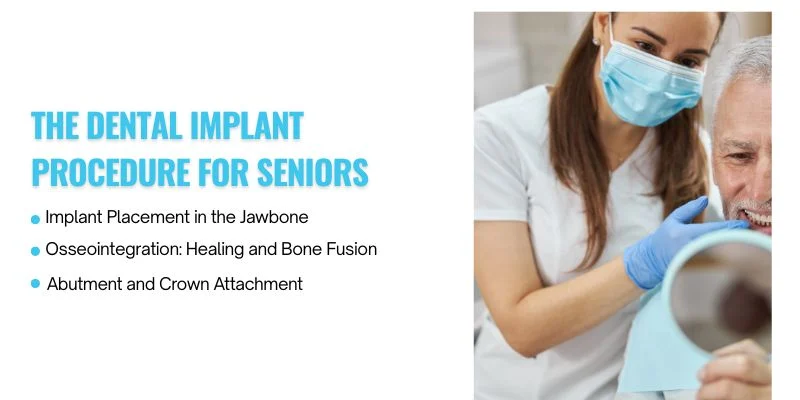
The dental implant procedure for seniors involves three main stages that typically span several months. Each phase requires careful attention to healing time and bone health considerations that become more important with age.
Implant Placement in the Jawbone
Your dental implant surgery begins with a thorough examination and treatment planning. Your dentist will take X-rays and CT scans to check your jawbone density and plan the exact placement.
During implant placement, you’ll receive local anesthesia to numb the area. Your surgeon makes a small incision in your gum tissue to expose the jawbone underneath.
A precise hole is drilled into your jawbone where the tooth root used to be. The implant post, made of titanium, is carefully screwed into this prepared site.
Key steps during placement:
- Gum tissue incision
- Bone preparation with specialized drills
- Implant post insertion
- Temporary healing cap placement
The surgery usually takes 1-2 hours per implant. Most seniors experience minimal discomfort during the procedure due to effective numbing techniques.
After placement, your gum is stitched closed over or around the implant post. You’ll receive detailed aftercare instructions to promote proper healing.
Osseointegration: Healing and Bone Fusion
Osseointegration is the process where your jawbone grows around and fuses with the titanium implant post. This creates a strong foundation that acts like a natural tooth root.
For seniors, this healing phase typically takes 3-6 months. Your age and bone density can affect how quickly osseointegration occurs.
Factors that support successful osseointegration:
- Following post-surgery care instructions
- Maintaining good oral hygiene
- Avoiding smoking and excessive alcohol
- Eating soft foods during initial healing
- Taking prescribed medications as directed
During this time, you might wear a temporary denture or bridge. Regular check-ups allow your dentist to monitor the healing progress.
Your jawbone cells gradually attach to the rough titanium surface. This biological process creates the stable base needed for your permanent crown.
Some seniors may need longer healing times, especially if they have conditions like diabetes or osteoporosis that can slow bone healing.
Abutment and Crown Attachment
Once osseointegration is complete, abutment placement begins the final phase of your implant procedure. The abutment is a small connector piece that holds your crown.
Your dentist makes a small incision to expose the top of your implant post. The healing cap is removed and replaced with the permanent abutment.
Impressions are taken from your mouth to create your custom crown. The crown is designed to match your natural teeth in color, shape, and size.
Timeline for final restoration:
- Week 1: Abutment placement
- Week 2-3: Impression taking and crown fabrication
- Week 4: Crown attachment and final adjustments
Your permanent crown is secured to the abutment with dental cement or a small screw. Your dentist checks your bite and makes any needed adjustments.
The completed implant should feel comfortable and natural when you bite and chew. Proper care will help your implant last for many years.
Ready to restore your smile with dental implants? Book a consultation at CU Dentists in Champaign to begin your personalized implant journey and ensure a smooth, comfortable procedure.
Aftercare, Longevity, and Oral Hygiene for Implants
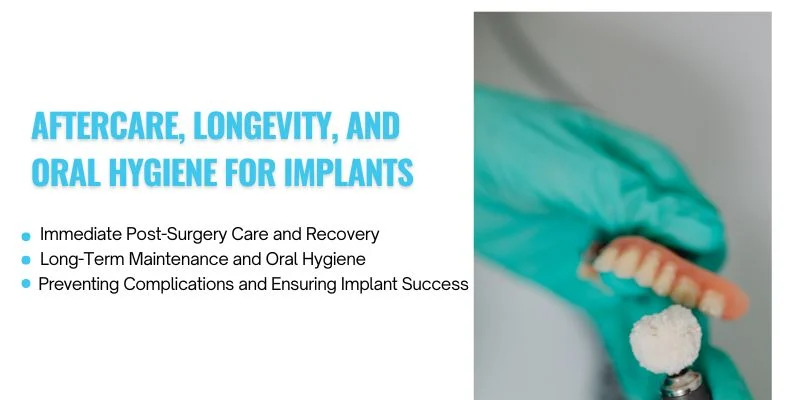
Proper care after implant surgery and ongoing oral hygiene habits determine how long your dental implants will last. Following specific recovery steps and maintaining daily cleaning routines helps prevent complications and keeps implants healthy for decades.
Immediate Post-Surgery Care and Recovery
The first few days after implant surgery are critical for proper healing. Your mouth needs time to recover from the procedure.
Pain and Swelling Management:
- Apply ice packs for 15 minutes on, 15 minutes off during the first 24 hours
- Take prescribed pain medications as directed by your dentist
- Use over-the-counter anti-inflammatory drugs if approved by your doctor
Eating and Drinking Guidelines:
- Stick to soft foods like yogurt, soup, and mashed potatoes for the first week
- Avoid hot liquids that can increase swelling
- Do not use straws as suction can disturb the healing site
Oral Care During Recovery:
- Rinse gently with warm salt water 2-3 times daily after the first 24 hours
- Avoid brushing directly over the implant site for the first few days
- Do not smoke or use tobacco products as they slow healing
Most people return to normal activities within 3-5 days. Complete healing of the implant site takes 3-6 months.
Long-Term Maintenance and Oral Hygiene
Daily oral hygiene becomes even more important once your dental implants are fully healed. Clean implants can last 25 years or longer with proper care.
Daily Cleaning Routine:
- Brush twice daily with a soft-bristled toothbrush
- Use fluoride toothpaste to protect surrounding natural teeth
- Floss around implants daily using regular floss or water flossers
- Consider interdental brushes for hard-to-reach areas
Special Tools for Implant Care:
| Tool | Purpose | Frequency |
| Water flosser | Removes bacteria around implant base | Daily |
| Interdental brush | Cleans between implant and adjacent teeth | Daily |
| Antimicrobial mouthwash | Reduces harmful bacteria | 2-3 times weekly |
Professional Maintenance:
- Schedule dental cleanings every 3-6 months
- Ask for implant-specific cleaning techniques
- Get regular X-rays to monitor bone levels around implants
Your dentist may recommend more frequent visits during the first year after implant placement.
Preventing Complications and Ensuring Implant Success
Several factors can affect implant longevity and oral health. Being aware of warning signs helps you address problems early.
Common Risk Factors to Avoid:
- Smoking:Reduces blood flow and increases infection risk
- Poor oral hygiene:Leads to peri-implantitis, a serious gum disease around implants
- Teeth grinding:Can damage the implant crown or cause implant failure
- Hard foods:Chewing ice or hard candy can crack implant crowns
Warning Signs to Watch For:
- Bleeding or swelling around the implant
- Loose or wobbly implant crown
- Pain or discomfort when chewing
- Bad taste or odor from the implant area
Protecting Your Investment: Wear a night guard if you grind your teeth during sleep. This protects both your natural teeth and implant crowns from damage.
Stay consistent with your oral hygiene routine and dental visits. Address any concerns with your dentist immediately rather than waiting for your next scheduled appointment.
Frequently Asked Questions
What are the potential benefits of dental implants for senior patients?
Dental implants can help you eat your favorite foods again without worry. Unlike dentures, implants stay firmly in place when you chew tough foods like apples or corn on the cob.
Your speech becomes clearer with implants. Loose dentures can slip and cause you to mumble or slur words.
Implants help keep your jawbone strong. When you lose teeth, your jaw starts to shrink over time. Implants act like tooth roots and keep the bone healthy.
Your face shape stays the same with implants. Missing teeth can make your cheeks look sunken and add years to your appearance.
You can smile with confidence again. Implants look and feel like your natural teeth, so you won’t worry about gaps showing when you laugh or talk.
How does age impact the success rate of dental implants?
Age alone does not make dental implants fail. Most healthy seniors have the same success rates as younger patients, which is about 95%.
Your overall health matters more than your age. If you have well-controlled diabetes or heart disease, you can still be a good candidate for implants.
Healing may take a bit longer as you get older. The bone around your implant might need an extra month or two to fully heal compared to younger patients.
Some medications can slow healing. Dental specialists will review all your medications to make sure they won’t interfere with your implant success.
Are there any special considerations for seniors looking into dental implants related to oral health?
Gum disease becomes more common with age and must be treated first. Your dentist will make sure your gums are healthy before placing implants.
Dry mouth from medications can affect healing. Many seniors take pills that reduce saliva, which helps fight bacteria and heal wounds.
You may need extra cleanings before and after implant surgery. Good oral hygiene becomes even more important as you age.
Bleeding gums should be addressed before implant placement. This could signal gum disease that needs treatment first.
Regular dental visits help catch problems early. Your dentist can spot issues with your implants before they become serious.
Can dental implants improve quality of life for the elderly, and how?
You can enjoy meals with family and friends again. Many seniors avoid social eating because of loose dentures or missing teeth.
Your nutrition improves when you can chew properly. You’ll be able to eat healthy foods like fresh vegetables and lean meats that are hard to chew with dentures.
Sleep quality often gets better with implants. Ill-fitting dentures can cause pain that keeps you awake at night.
Your self-esteem goes up when you feel good about your smile. Many seniors report feeling more confident in social situations after getting implants.
Daily activities become easier without worrying about denture adhesives or slipping. You won’t need to plan your day around denture care routines.
What options are there for seniors to finance dental implants, especially those on a fixed income?
Many dental offices offer payment plans that let you spread costs over months or years. These plans often have low or no interest rates.
Dental insurance may cover part of your implant costs. While many plans don’t cover implants fully, some newer plans are starting to include partial coverage.
Health Savings Accounts (HSAs) can pay for dental implants. If you have an HSA, you can use those tax-free dollars for your treatment.
Some dental schools offer discounted implant treatment. Students do the work under close supervision from experienced teachers.
CareCredit and similar medical financing companies provide loans specifically for dental work. These often have special payment terms for healthcare procedures.
How does one determine if they are a good candidate for dental implants later in life?
Your dentist will take X-rays to check your jawbone thickness. You need enough bone to support the implant, though bone grafts can help if you don’t have enough.
A full health review looks at your medications and medical conditions. Your dentist may talk to your doctor to make sure implants are safe for you.
Your gums must be healthy before getting implants. Any gum disease needs treatment first to give your implants the best chance of success.
You need to be able to keep your mouth clean after surgery. Good oral hygiene is essential for implant success, especially during healing.
Your commitment to follow-up care matters. Implants need regular dental visits and proper home care to last for many years.
Non-smokers have much better success rates. If you smoke, quitting before implant surgery greatly improves your chances of success.