



Getting dental implants is a big investment in your smile and oral health. You want to make sure your new implants last as long as possible.
If you grind or clench your teeth at night, you might wonder if you need to take extra steps to protect them.
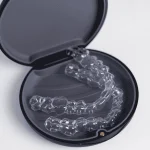
Night guard for dental implants are often necessary for dental implant patients who grind or clench their teeth because implants lack natural shock absorption and can be damaged by excessive force.
Unlike natural teeth, implants connect directly to your jawbone without any cushioning tissue. This means grinding forces go straight to the implant and surrounding bone.
A night guard creates a protective barrier that absorbs these forces and helps your implants last longer.
Not everyone with dental implants needs a night guard. Your dentist will look at your specific situation to decide if one is right for you.
This guide explains when night guards are necessary for dental implants, how they protect your investment, and what type works best for implant patients.
Key Takeaways
- Night guards protect dental implants from grinding damage by absorbing excessive force that would otherwise stress the implant and bone
- Custom-made hard acrylic guards work best for implant patients because they distribute forces evenly across all teeth
- Regular nightguard use combined with good oral hygiene and dental checkups provides complete protection for your implants
Table of Content
- Why Dental Implants Need Special Protection
- Understanding Bruxism and Its Effects on Implants
- Choosing and Fitting the Right Night Guard
- Benefits of Night Guards for Implant Longevity
- Caring for Your Night Guard and Implants
- Frequently Asked Questions
Why Dental Implants Need Special Protection
Dental implants work differently than natural teeth because they attach directly to your jawbone without the cushioning tissue that surrounds tooth roots.
This makes them strong but also means they face unique risks from heavy biting pressure and grinding habits.
How Dental Implants Differ from Natural Teeth
Natural teeth connect to your jawbone through a thin layer of tissue called the periodontal ligament. This tissue acts like a shock absorber when you bite down.
It cushions your teeth and gives you sensory feedback about how hard you’re biting.
Dental implants don’t have this protective layer. They fuse directly to your bone through osseointegration, which creates a rigid connection.
While this makes implants very stable, it also means bite force transfers straight to your bone and implant parts without any cushioning.
This difference matters most when you grind or clench your teeth. The forces go directly into your implant and bone instead of being absorbed like they would be with natural teeth.
The Role of Osseointegration and Implant Crown Vulnerability
Osseointegration is the process where your jawbone grows around and bonds with the titanium implant post. This fusion makes your implant strong enough to function like a natural tooth root.
But this same rigid connection creates vulnerability.
Your implant crown sits on top of this fused post through a connector piece called an abutment. Heavy grinding forces can damage the crown material, loosen the abutment screw, or stress the bone around your implant.
Porcelain and ceramic crowns can chip or crack under repeated pressure.
Even strong materials like zirconia can fail when exposed to the extreme forces that nighttime grinding produces over months or years.
Risks from Excessive Bite Force and Habits
Grinding and clenching create much stronger bite force than normal chewing. These forces get applied repeatedly for hours while you sleep.
Without protection from excessive bite force, your implant restorations face several problems:
- Crown damage from chips, cracks, or complete fractures
- Loose abutment screws that make your crown feel mobile
- Bone loss around your implant from chronic stress
- Accelerated wear on the biting surface
These issues develop slowly but can threaten the long-term success of your implants. The damage often happens gradually without obvious symptoms until serious problems occur.
Understanding Bruxism and Its Effects on Implants
Bruxism causes excessive force on dental implants that can lead to serious complications. People with bruxism experience 2.2 to 4.7 times higher implant failure rates compared to those without grinding habits.

Symptoms of Bruxism to Recognize
You might have bruxism without even knowing it since most grinding happens during sleep. Common signs include worn tooth surfaces, chipped teeth, and increased tooth sensitivity.
Your teeth may look flattened or have small fractures along the edges.
Many people notice their jaw feels tired or sore when they wake up. You might also experience earaches that have no clear cause or notice clicking sounds when you open your mouth.
Indentations on your tongue or damage to the inside of your cheeks are other warning signs.
Sleep partners often report hearing grinding noises at night. If someone tells you they hear these sounds, take it seriously.
Your dentist can also spot signs of bruxism during regular checkups by looking at your tooth wear patterns.
Teeth Grinding and Clenching: Hidden Threats
The forces from teeth grinding can reach 6 to 10 times stronger than normal chewing forces.
This creates major problems for dental implants because they connect rigidly to your jawbone without the cushioning that natural teeth have.
Natural teeth have a periodontal ligament that acts like a shock absorber. Implants lack this protection, so excessive forces transfer directly to the implant and surrounding bone.
This direct force transmission can cause implant fractures, loose screws, and broken prosthetic components.
Sleep bruxism affects 8 to 16% of adults, while awake bruxism impacts 22 to 31% of adults. Both types put your implants at risk. The constant pressure can also damage the bone around your implants over time.
How Jaw Pain, Morning Headaches, and Jaw Tension Indicate Problems
Jaw pain that gets worse throughout the day often signals teeth clenching during waking hours. You might notice your temporomandibular joint feels stiff or painful when you eat or talk.
This pain can spread to your neck and shoulders.
Morning headaches are a key sign of nighttime grinding. These headaches typically feel like a dull ache around your temples.
They happen because your jaw muscles stay tense all night from clenching.
Jaw tension makes it hard to open your mouth fully or causes discomfort when yawning. Some people hear popping or clicking sounds from their temporomandibular joint.
If you have dental implants and notice these symptoms, contact your dentist right away to prevent damage.
Choosing and Fitting the Right Night Guard
Getting the right night guard for your dental implants means understanding your options and how each type works.
Custom-made guards offer better protection than store-bought versions, and the fitting process plays a major role in how well they work.
Custom-Made vs Over-the-Counter Night Guards
When you have dental implants, custom-made night guards are usually the safest option because they fit your mouth exactly. Your dentist creates these guards using impressions or digital scans of your teeth.
Store-bought guards from the pharmacy seem like an easy choice. They cost less upfront. But they come with problems that matter more when you have implants.
Over-the-counter guards are bulky and don’t fit well. They can create uneven pressure on your implants and natural teeth. This uneven force is exactly what you’re trying to avoid.
A custom night guard distributes pressure evenly across all your teeth. It stays in place while you sleep without shifting around. The fit is so precise that it protects your implant crowns and nearby teeth at the same time.
Store-bought guards also wear down faster. You’ll need to replace them more often, which removes the cost advantage.
For implant patients, the investment in a custom-made night guard pays off through better protection.
Role of Impressions in Achieving a Perfect Fit
The impressions your dentist takes are what make custom dental night guards work so well. These impressions capture every detail of your teeth, including where your implants are located.
Your dentist will either use traditional impression material or a digital scanner. Both methods create an exact model of your mouth.
The lab uses this model to build a guard that matches your bite perfectly.
Getting accurate impressions matters even more when you wear a mouth guard with dental implants. The guard needs to account for how implants respond to force differently than natural teeth.
Once your guard is ready, your dentist checks the fit and makes adjustments. They look at how your teeth come together when you bite down. Small tweaks ensure the guard doesn’t create pressure points on your implants.
Differences Between Custom Dental Night Guards and Occlusal Guards
You might hear both terms used, but they’re not quite the same thing. A custom dental night guard is designed specifically for wear during sleep to protect against grinding and clenching.
Occlusal guards are a broader category. They include any device that covers your teeth to change how your upper and lower teeth meet. Some occlusal guards are worn during the day or used for specific jaw problems.
For implant patients, most dentists recommend a teeth night guard made from hard acrylic or dual-layer material. These materials hold up against heavy grinding forces.
Softer guards might feel more comfortable at first, but they don’t offer the same protection for implants.
The key difference is in the purpose and design. Your night guard for implants needs to be strong enough to handle grinding without breaking down quickly.
How Custom Night Guards Protect Dental Implants
Implants don’t have the natural ligaments that cushion your regular teeth. When you grind your teeth, grinding forces transfer straight to the implant and surrounding structures.
A properly fitted custom-made night guard acts as a barrier. It absorbs and spreads out the force from grinding before it reaches your implants. This protection prevents several problems:
What Your Night Guard Prevents:
- Cracks or chips in implant crowns
- Loosening of implant parts
- Stress on the bone around implants
- Damage to teeth next to implants
- Morning jaw pain and headaches
The guard also keeps your bite stable. This matters because implants need consistent, balanced pressure to stay healthy long-term. Uneven forces from grinding can cause complications years after your oral surgery.
Your custom night guard becomes part of your daily routine, like brushing your teeth. It’s a simple step that protects the money and time you invested in your implants.
Benefits of Night Guards for Implant Longevity
Night guards offer protection that extends the life of your dental implants by absorbing grinding forces and distributing pressure evenly across your teeth.
They shield both the implant components and your jaw joint from the damaging effects of nighttime clenching.
Preventing Cracks, Chips, and Loosening
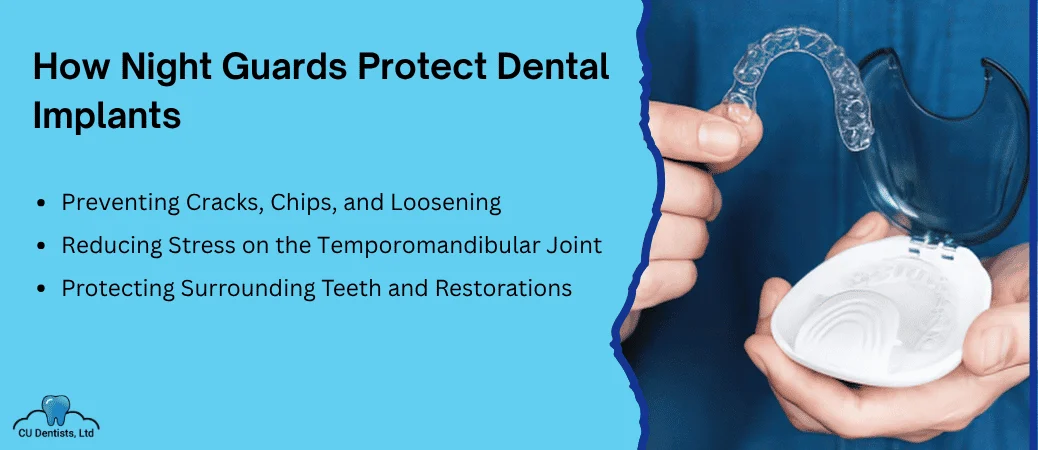
Your implant restorations face constant risk when you grind your teeth at night. A dental night guard creates a protective barrier between your upper and lower teeth that absorbs the force before it reaches your implants.
Without this protection, your implant crown can develop small cracks that grow larger over time. The crown material can chip at the edges where it meets other teeth.
Even stronger materials like zirconia can break under repeated heavy grinding.
The abutment screw that connects your crown to the implant can also loosen from constant pressure. You might notice a clicking sound when you bite down or feel slight movement in the crown.
A custom night guard distributes these forces evenly, keeping the screw tight and stable.
The bone around your implant needs protection too. Excessive grinding can stress the bone-implant connection and lead to gradual bone loss. Night guards reduce this stress significantly.
Reducing Stress on the Temporomandibular Joint
Your jaw joint takes a beating when you clench or grind your teeth at night. The temporomandibular joint connects your jawbone to your skull and controls all mouth movements.
Grinding creates force that travels through your teeth directly into this joint. Over time, this leads to jaw pain, headaches when you wake up, and difficulty opening your mouth fully.
Occlusal guards cushion these forces and reduce muscle tension in your jaw.
The guard also prevents your teeth from fully interlocking during grinding episodes. This stops your jaw muscles from contracting as forcefully.
Your muscles stay more relaxed throughout the night, which means less soreness in the morning.
Protecting Surrounding Teeth and Restorations
Your natural teeth next to your implants need protection just as much as the implants themselves. Night guards protect crowns, veneers, and other dental work from grinding damage.
If you have multiple implants or other restorations like bridges or crowns, a night guard shields all of them at once. The guard spreads biting forces across your entire dental arch instead of concentrating pressure on individual teeth.
Natural teeth have a periodontal ligament that acts like a shock absorber. Your implants don’t have this cushioning, which makes implant care especially important.
The guard compensates for this missing protection layer and keeps grinding forces from damaging either your natural teeth or implants.
Caring for Your Night Guard and Implants
Proper maintenance of both your night guard and dental implants requires daily cleaning routines and regular monitoring for wear.
Keeping both in good condition protects your investment and ensures they continue working effectively together.
Daily and Weekly Maintenance Tips
Clean your night guard every morning after you take it out. Rinse it under cool water to remove saliva and debris. Use a soft toothbrush with mild liquid soap or a dedicated appliance cleaner to gently scrub the guard.
Avoid using toothpaste on your night guard. The abrasive particles can scratch the surface and create spots where bacteria can grow.
Let your dental night guard air dry completely before putting it back in its case. Storing a wet guard in a closed container encourages bacteria and fungal growth.
Keep the guard away from heat sources like hot water, direct sunlight, and car dashboards since acrylic can warp.
For your implants, brush twice daily with a soft-bristled toothbrush around the gum line. Use interdental brushes to clean spaces between teeth and around implant crowns where your toothbrush cannot reach.
Once a week, soak your custom night guard in a denture or retainer cleaning solution. This helps remove any buildup that daily brushing might miss.
When to Replace Your Night Guard
Most custom night guards last between one and three years with proper care. The lifespan depends on how heavily you grind your teeth and how well you maintain the guard.
Check your night guard regularly for these signs of wear:
- Visible cracks or holes in the material
- Thinning spots where you can see light through the guard
- Rough or uneven surfaces from grinding
- Changes in fit where the guard feels loose or does not seat properly
A worn guard provides less protection for your implants. It may also create uneven pressure that could stress your implant restorations more than wearing no guard at all.
Bring your night guard to every dental appointment. Your dentist can inspect it for wear patterns and make small adjustments to maintain proper bite contact.
Maintaining a Healthy Bite for Long-Term Success

Your bite relationship affects both implant maintenance and night guard effectiveness. Regular dental checkups allow your dentist to monitor how forces distribute across your teeth and implants.
Schedule professional cleanings and exams every four to six months if you have implants and grind your teeth.
These visits are more frequent than the standard yearly checkup because implant care requires closer monitoring when bruxism is present.
Tell your dentist right away if you notice changes like a loose feeling in your implant crown, clicking sounds when biting, or jaw soreness in the morning.
These symptoms may indicate that your bite needs adjustment or your night guard needs modification.
Frequently Asked Questions
Night guards protect implants from grinding forces, but the timing, type, and fit matter for both safety and effectiveness.
Do I need a night guard if I have dental implants?
You need a night guard if you grind or clench your teeth at night. Dental implants connect directly to your jawbone without the natural cushioning that regular teeth have.
This means grinding forces go straight to the implant and bone.
A night guard is necessary for dental implants if you show signs of bruxism. Your dentist might notice wear patterns on your teeth or you might wake up with jaw pain or headaches.
Not everyone with implants needs a night guard. If you don’t grind your teeth and your dentist doesn’t see any signs of clenching, you might not need one.
When can I start wearing a night guard after dental implant surgery?
You should wait until your implant has fully healed and your permanent crown is placed. This usually takes three to six months after the implant surgery.
Wearing a night guard too early can put pressure on the healing implant. Your dentist will tell you when it’s safe to start using one based on how your implant is healing.
Once your final crown is attached, your dentist can make impressions for a custom night guard. Using a night guard after dental work helps protect your new restoration from damage.
Can teeth grinding or clenching damage a dental implant or its crown?
Yes, grinding and clenching can damage both the implant crown and the implant itself. The crown can chip, crack, or wear down from repeated heavy forces.
The screw that holds the crown to the implant can loosen over time. You might notice the crown feels loose or makes a clicking sound when you bite down.
Heavy grinding forces can also stress the bone around the implant. This can lead to bone loss around the implant over time, which weakens its stability.
What are the possible downsides or side effects of wearing a night guard?
Some people experience extra saliva production when they first start wearing a night guard. This usually goes away after a few nights as you get used to it.
You might feel some jaw soreness for the first few days. Your jaw muscles need time to adjust to the new biting position.
A poorly fitted night guard can cause problems. It might create sore spots on your gums or make your bite feel off during the day. This is why getting a proper fit from your dentist matters.
Some people find it hard to sleep with something in their mouth at first. Most people adjust within a week or two of regular use.
Should I choose a custom night guard or an over-the-counter one if I have implants?
You should choose a custom night guard made by your dentist if you have implants. Custom guards fit precisely over your teeth and implants to distribute forces evenly.
Over-the-counter guards don’t fit well enough to protect implants properly. They can’t account for the exact shape and position of your implant crown.
A poorly fitting guard can actually create uneven pressure on your implant. Custom mouthguards for dental implants are essential for proper protection.
Hard acrylic guards work best for most implant patients. They last longer and distribute forces better than soft guards.
How much does a night guard usually cost, and what affects the price?
A custom night guard typically costs between $300 and $800. The exact price depends on your location, your dentist’s fees, and the type of guard material used.
Hard acrylic guards usually cost more than soft guards but last much longer. Dual-laminate guards with a hard outer layer and soft inner layer fall in the middle price range.
Your dental insurance might cover part of the cost if you have documented bruxism. Check with your insurance provider to see what they cover.
The cost of replacing a damaged implant crown is much higher than the cost of a night guard. A new crown can cost $1,000 to $3,000, making the night guard a good investment for protection.