


When you lose one or more teeth, you face an important choice about how to replace them. You might wonder whether an implant-supported bridge vs single implant works better for your situation.
The answer depends on how many teeth you need to replace, your bone health, and your budget.
Single tooth implants work best when you’re replacing teeth that aren’t next to each other, while implant-supported bridges are better when you have multiple missing teeth in a row.
Each option can restore your smile and help you eat and speak normally again. A single implant replaces one tooth with its own titanium root and crown.
An implant-supported bridge uses two or more implants to hold several replacement teeth together.
Your choice affects more than just your appearance. It impacts your jaw health, how long your tooth replacement will last, and how much you’ll spend.
Understanding the differences between these options helps you make the right decision for your mouth.
Key Takeaways
- Single implants replace individual teeth while implant-supported bridges use fewer implants to hold multiple teeth together
- Your bone health, number of missing teeth, and budget all play important roles in choosing the right option
- Both dental implants and bridges need regular care and checkups to last as long as possible
Table of Content
- Understanding Single Dental Implants
- Exploring Implant-Supported Bridges
- Comparing Bone Health and Jaw Support
- Factors That Influence Treatment Decisions
- Caring for Your Dental Implants and Bridges
- Frequently Asked Questions
Understanding Single Dental Implants
A single tooth implant replaces both the root and visible portion of one missing tooth through a titanium post anchored into your jawbone, topped with a custom dental crown.
This standalone solution doesn’t rely on neighboring teeth and actively prevents bone loss in your jaw.
Components and Procedure
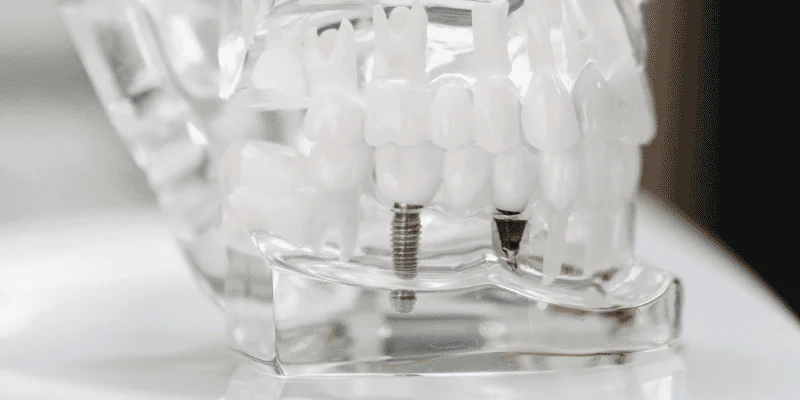
A dental implant consists of three main parts that work together to replace your missing tooth. The titanium post acts as an artificial root that gets surgically placed into your jawbone.
An abutment connects the post to the final restoration. A dental crown caps the structure and looks like your natural tooth.
The procedure happens in stages over several months. Your dentist first drills into your jawbone and inserts the titanium post during a surgical appointment.
You’ll wait 2 to 6 months while osseointegration occurs, which is when your bone fuses with the implant post.
After healing completes, your dentist attaches the abutment to the post. They’ll take impressions of your teeth to create a custom crown that matches your other teeth in size, shape, and color.
The crown gets secured to the abutment during your final visit.
Who Is an Ideal Candidate?

You need adequate jawbone density to support the implant post for successful single tooth replacement. Your jawbone must be free of decay and infection.
Good overall health matters because the oral surgery requires proper healing. People with conditions like uncontrolled diabetes or leukemia may not heal well enough for implants.
You shouldn’t smoke since it interferes with osseointegration and increases failure risk.
Your gums need to be healthy without active periodontal disease. You must also commit to good oral hygiene habits after the procedure. Regular dental visits help ensure your implant stays healthy long-term.
Benefits for Jawbone and Oral Health
Single tooth implants preserve jawbone tissue better than any other replacement option. The titanium post stimulates your bone just like a natural tooth root does.
This stimulation prevents bone loss that normally happens after tooth loss.
Your chewing function stays strong because the implant handles bite forces like a real tooth. The preserved jawbone maintains your facial structure and prevents the sunken appearance that comes with bone deterioration.
Single implants protect your other teeth since they don’t require grinding down healthy adjacent teeth for support. Your oral health improves because you can brush and floss around the implant normally.
The implant won’t decay, though you still need to keep your gums healthy around it.
Exploring Implant-Supported Bridges
An implant-supported bridge uses dental implants as anchors to hold connected crowns that replace multiple missing teeth in a row.
The implants act as artificial tooth roots in your jawbone, while pontics fill the gaps between them to create a complete dental restoration.
How Implant-Supported Bridges Work
Your implant bridge relies on titanium posts surgically placed into your jawbone. These posts fuse with your bone over several months through a process called osseointegration.
Once the implants have bonded to your jawbone, your dentist attaches connected crowns to them. The bridge typically includes crowns that sit directly on the implants plus pontics suspended between them.
For example, two implants can support a three-unit bridge where the middle tooth is a pontic.
The implants distribute chewing forces directly into your jawbone density, just like natural tooth roots. This helps maintain your bone structure over time.
Your implant-supported bridge attaches permanently through cement or screws, so you can’t remove it at home.
Procedure Overview and Timeline
Your treatment timeline for an implant bridge spans several months. First, your dentist evaluates your jawbone density with X-rays or CT scans to confirm you have enough bone for implant placement.
During the initial surgery, your dentist places the titanium posts into your jaw. You’ll need 3 to 6 months for the implants to integrate with your bone.
Some patients need bone grafting first, which adds 4 to 6 months to the timeline.
After healing completes, your dentist takes impressions for your custom bridge. You may wear a temporary bridge during the fabrication period.
Finally, your dentist attaches the permanent bridge to the implants at your last appointment.
Types of Gaps Suited for Bridges
Implant bridges work best when you need to replace multiple missing teeth that sit next to each other. Most bridges replace 3 to 6 consecutive teeth using 2 to 4 implants.
You’re a good candidate if you have healthy gums and adequate bone density in the gap area. The missing teeth should form a continuous span without natural teeth interrupting the space.
Common situations for bridge placement include:
- Three or four back teeth missing in a row
- Front teeth gaps spanning multiple positions
- One side of your upper or lower jaw missing several teeth
- Cases where individual implants would require too many surgeries
Your dentist may recommend single implants instead if your missing teeth aren’t consecutive or if you have very strong jawbone that can support multiple individual posts.
Comparing Bone Health and Jaw Support
Your jawbone health depends heavily on which tooth replacement option you choose. Individual implants stimulate bone differently than implant-supported bridges, and each option affects bone density and volume in distinct ways.
Impact on Bone Density and Volume
When you lose a tooth, your jawbone starts to shrink without the root to stimulate it. This happens because your bone needs pressure from chewing to stay strong and dense.
Single implants work like natural tooth roots. Each implant you get provides direct stimulation to your jawbone in that specific area. This means your bone density stays stable where each implant sits.
Implant-supported bridges use fewer implants to replace more teeth. If you’re replacing three teeth with a bridge, you typically need only two implants instead of three. The middle tooth section doesn’t have its own root replacement.
This means the bone under the middle crown doesn’t get the same stimulation. Over time, you might lose some bone volume in that area.
However, this bone loss is much less than what happens with traditional bridges that don’t use any implants.
Bone Stimulation: Individual Implants vs. Bridges
Your jawbone responds to bite forces through a process called osseointegration. This is when the implant fuses with your natural bone and becomes part of your jaw.
Individual implants provide:
- Direct pressure at each tooth site
- Maximum bone stimulation
- Better preservation of bone volume
- Natural distribution of chewing forces
Implant-supported bridges offer:
- Stimulation only where implants are placed
- Reduced bone maintenance between implants
- Still better than traditional bridges
- Good overall jawbone health support
The implants in a bridge still preserve the jawbone structure much better than bridges without implants. Your chewing function remains strong with either option.
Bone Grafting Considerations
You might need bone grafting if your jawbone has already lost density or volume. This procedure adds bone material to strengthen weak areas before implant placement.
Single implants often require bone grafting at each site if you’ve had missing teeth for a while. This means more grafting procedures and longer healing time.
Implant-supported bridges can sometimes work around areas with less bone. Your dentist might place implants at angles in stronger bone sections. This can reduce or eliminate your need for extensive grafting.
If you do need grafting for a bridge, you typically only graft where the implants will go. The pontic (middle) section doesn’t require bone grafting since no implant goes there.
This makes the overall treatment process shorter and less complex for replacing multiple teeth.
Factors That Influence Treatment Decisions
The choice between implant-supported bridges and single implants depends on your specific dental situation, the condition of your surrounding teeth and gums, and your budget for both immediate treatment and future care.
Number and Location of Missing Teeth
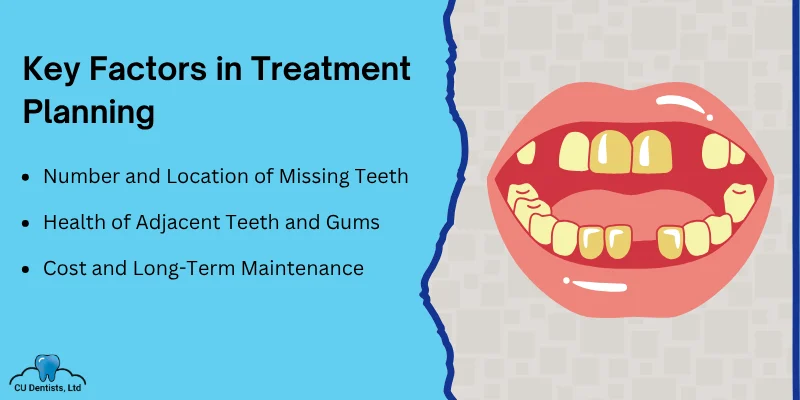
The number of missing teeth you need to replace plays a major role in determining which tooth replacement option works best for you. If you’re missing just one tooth, a single implant typically makes the most sense. It replaces the root and crown without affecting nearby teeth.
When you have two or three missing teeth in a row, an implant-supported bridge becomes more practical.
This approach uses two implants to support multiple crowns, which costs less than placing individual implants for each missing tooth.
Front teeth and back teeth require different considerations. Front teeth need excellent cosmetic results because they show when you smile. Back teeth need to handle heavy chewing forces.
Your dentist will factor in these differences during treatment planning.
The location also affects jawbone density. Areas where teeth have been missing for a long time may have less bone, which can make placing multiple single implants more challenging than using a bridge design.
Health of Adjacent Teeth and Gums
Your gum health and the condition of teeth next to the gap directly impact which tooth replacement you should choose. Healthy gums are essential for any type of dental implant to succeed long-term.
If you have gum disease, your dentist needs to treat it before placing implants. Poor oral hygiene can lead to infections around implants, just like it causes problems with natural teeth.
The teeth beside your gap matter too. With a tooth-supported bridge, healthy adjacent teeth must be shaved down to support the bridge. This removes protective enamel permanently.
Single implants don’t touch neighboring teeth at all. They stand alone, which preserves your natural tooth structure. This makes them better for restorative dentistry when adjacent teeth are healthy and worth protecting.
Cost and Long-Term Maintenance
Budget affects most decisions about tooth replacement options. Single implants cost more upfront because each missing tooth needs its own implant, abutment, and crown.
An implant-supported bridge uses fewer implants to replace more teeth, lowering the initial price.
A three-tooth gap might need three single implants at £1,850 to £3,600 each. The same gap could use a dental implant bridge with just two implants supporting three crowns, starting around £3,500 total.
Maintenance costs matter over time. Both options need good oral hygiene with regular brushing and flossing. You’ll need routine dental check-ups to monitor your implants and gums.
Repairs differ between the two. If one crown fails on individual implants, you replace just that one. With a bridge, damage to any part might mean replacing the entire bridge.
However, implant-supported bridges often last 10 to 15 years with proper care, similar to single implants.
Caring for Your Dental Implants and Bridges
Both single implants and implant-supported bridges need daily cleaning and professional checkups to stay healthy. Using the right tools and avoiding certain foods will help your restorative dentistry work last for many years.
Oral Hygiene Practices and Tools
You need to brush your teeth twice a day using a soft-bristled toothbrush. Regular brushing removes plaque from around your implant crown and bridge placement areas.
Flossing is essential for cleaning under bridges and around implants. Super floss works well because it has a stiff end that slides under your bridge easily. Water flossers are another good option that rinses away food particles.
Interdental brushes help clean tight spaces between your teeth and implants. These small brushes fit between teeth where regular floss might not reach. You should use them gently to avoid damaging your gums.
Avoid hard, sticky, or chewy foods that could damage your restorations. Be careful with nuts, hard candy, and chewing gum. These foods can loosen or crack your implants and bridges.
For removable implant-supported dentures, denture cleansing solutions help keep them clean. Soak them according to the product instructions.
Regular Dental Visits

Dental check-ups every six months let your dentist monitor your implants and bridges. Your dentist will check for loose parts, gum inflammation, and bone health around your implants.
Professional cleanings remove tartar buildup that regular brushing cannot eliminate. Your dental hygienist uses special tools designed for implants that won’t scratch or damage them.
X-rays during these visits show how well your jawbone supports your implants. Early detection of problems saves you money and prevents bigger issues later. Your dentist can spot signs of infection or bone loss before you notice symptoms.
Tell your dentist right away if you notice any looseness or discomfort. A loose bridge can lead to further complications that require more extensive treatment.
Preventing Complications for Long-Term Success
Following your dentist’s specific instructions is important because every implant restoration is different. Your cosmetic dentistry work has unique needs based on your mouth and health.
Smoking slows healing and increases your risk of implant failure. If you smoke, quitting improves your chances of long-term success with your implants.
Watch for warning signs like bleeding gums, swelling, or pain around your implants. These symptoms might indicate infection or other problems that need immediate attention.
Maintaining good oral hygiene prevents infections that can cause implant failure. Bacteria can build up around implants just like natural teeth. A strict daily cleaning routine keeps harmful bacteria away from your implant sites.
People with diabetes or other health conditions need extra care with their implants. Keep these conditions under control with proper medical care.
Frequently Asked Questions
People considering tooth replacement often have similar questions about choosing between an implant-supported bridge and multiple single implants.
Cost differences, healing times, and daily maintenance requirements are among the most common concerns.
What’s the difference between an implant-supported bridge and getting individual implants for each missing tooth?
An implant-supported bridge uses fewer implants to replace multiple teeth. If you’re missing three teeth in a row, you might only need two implants placed at either end with the middle tooth attached as part of the bridge structure.
Individual implants mean placing a separate implant for each missing tooth. For three missing teeth, you would get three implants, each with its own crown.
The main structural difference is that bridges connect multiple replacement teeth together, while single implants stand alone. Both options use titanium posts inserted into your jawbone, but they differ in how the final restorations attach.
How do dentists decide whether a bridge or single implants are better for my specific situation?
Your dentist will evaluate your bone density first. If you don’t have enough bone in certain areas, placing an implant in every tooth position might not work well.
The location of your missing teeth matters too. Where the gap is in your mouth can affect which option works best for function and appearance.
Your budget plays a role since multiple single implants cost more than a bridge. Your dentist will also consider your overall health and how well you can handle multiple surgical procedures.
How many implants are typically needed to support a bridge, and what affects that number?
For three missing teeth, you usually need two implants to support a bridge. For four missing teeth, you might need two or three implants depending on where they’re located.
The amount and quality of your bone affects how many implants you need. Weaker bone may require more implants to distribute the chewing forces properly.
The position in your mouth matters because back teeth handle more pressure when you chew. Your dentist might recommend more implants for back tooth bridges than for front tooth bridges.
Which option is usually easier to clean and maintain day to day?
Single implants are generally easier to clean. You can floss between each implant crown just like you would with natural teeth.
Implant-supported bridges require special floss threaders or water flossers to clean underneath. You need to thread floss under the bridge portion to remove food and bacteria.
Both options need regular brushing and professional cleanings. Single implants are easier to maintain compared to bridges because you can access all sides of each crown more easily.
How do the costs and long-term value compare between these two treatment choices?
Implant-supported bridges cost less upfront than multiple single implants. You pay for fewer implant surgeries and fewer individual crowns.
Individual implants have a higher initial cost but can last a lifetime with proper care. If one implant develops a problem years later, you only need to address that single tooth.
With a bridge, if one implant fails, you might need to replace the entire bridge structure. Over decades, single implants may prove more cost-effective because repairs affect only one tooth at a time.
What does recovery and treatment time look like for a bridge versus single implants?
An implant-supported bridge typically takes 4-7 months to complete. You’ll have one or two surgical appointments to place the implants, then wait for bone healing before getting the final bridge.
Multiple single implants can take the same amount of time or longer. The timeline ranges from 8-14 months in some cases, especially if you need bone grafting at multiple sites.
Your healing happens simultaneously for all implants, but placing several implants in one surgery means a bigger procedure.
Some dentists split multiple implant placements into separate appointments, which extends the total treatment time.