


Losing multiple teeth affects how you eat, speak, and feel about your smile. Full-mouth dental implants offer a permanent solution, but you face an important choice between two main options.
The decision between fixed and removable full-mouth implants depends on your budget, lifestyle needs, oral health condition, and personal preferences for convenience versus permanence.
Fixed implants are permanently attached to your jawbone and cannot be removed without a dentist’s help. They look and function like natural teeth.
Removable implants snap onto connectors attached to your jawbone, allowing you to take them out for cleaning. Each option has different costs, maintenance requirements, and benefits.
Understanding the key differences between fixed and removable dental implants helps you make the right choice for your situation. Your dentist will consider factors like your jawbone density, oral hygiene habits, and aesthetic goals.
This guide walks you through everything you need to know about both options so you can move forward with confidence.
Key Takeaways
- Fixed implants stay permanently in place while removable implants can be taken out for cleaning and maintenance
- Your choice depends on your budget, lifestyle, jawbone health, and whether you prioritize convenience or permanence
- Both options restore your ability to eat and speak normally while improving your confidence and oral health
Schedule a full-mouth implant consultation in Champaign, IL to find your best option.
Understanding Full-Mouth Dental Implants
Full-mouth dental implants replace all your missing teeth using surgically placed posts that act as artificial tooth roots.
The implant procedure involves careful planning by your implant dentist to ensure proper placement and long-term success.
What Are Full-Mouth Dental Implants?
Full-mouth dental implants are a complete tooth replacement solution that restores your entire upper or lower arch of teeth.
Unlike traditional dentures that sit on your gums, these implants are surgically anchored into your jawbone to provide a permanent foundation.
The typical full-mouth restoration uses 4 to 8 strategically placed implants per arch. These implants support either a fixed bridge or a removable prosthesis that functions like natural teeth.
The All-On-4 dental implants system is a popular option that uses just four implants to support an entire arch.
Your jawbone needs sufficient density and volume to support the implants. If you’ve experienced bone loss from missing teeth, your dentist may recommend bone grafting before implant placement.
How Do Dental Implants Work?
Dental implants work by fusing directly with your jawbone through a process called osseointegration. During implant surgery, your dentist places small titanium posts into your jaw at precise angles and depths.
Over the next several weeks to months, your bone grows around these posts and holds them firmly in place. This creates a stable foundation that can withstand the forces of chewing and speaking.
Once healing is complete, your dentist attaches abutments to the implants, which connect the posts to your replacement teeth.
The dental implant procedure maintains your facial structure and prevents bone thinning in areas where natural teeth once existed.
This stability allows you to eat your favorite foods and speak clearly without worrying about your teeth shifting or slipping.
The Role of Implant Dentists
Your implant dentist guides you through every step of the treatment process. They evaluate your oral health, take detailed scans of your jaw, and create a customized treatment plan based on your specific needs.
During the planning phase, your dentist determines the optimal number and position of implants needed. They also assess whether you need any preparatory procedures like bone grafting or tooth extractions.
The surgical expertise of your implant dentist directly affects the success and longevity of your restoration.
After implant placement, your dentist monitors the healing process and ensures proper osseointegration. They work with lab technicians to design your final prosthesis and make any necessary adjustments for comfort and function.
Visit our Rantoul, IL dental team to compare fixed vs removable implant solutions.
Fixed Full-Mouth Implant Solutions
Fixed dental implants stay permanently in your mouth and can only be removed by a dentist. These solutions attach securely to implants placed in your jawbone, giving you a stable set of teeth that work much like natural ones.
Features and Structure of Fixed Dental Implants
Fixed dental implants use titanium posts placed into your jawbone to support a full arch of replacement teeth. The posts fuse with your bone over time through a process that creates a strong foundation for your new teeth.
The design includes several key components like abutments, connecting screws, and the prosthetic teeth themselves. Abutments act as connectors between the implants in your jaw and the visible teeth above your gumline.
Your dentist bonds the prosthetic teeth directly to these components. You can’t take them out at home for cleaning like dentures.
The structure must handle more vertical pressure than natural teeth since the teeth connect rigidly to the bone. Your dentist designs each solution to fit your specific jaw dimensions and tooth spacing needs.
Common Types: All-on-4 and Implant-Supported Bridges
All-on-4 uses four strategically placed implants to support a complete arch of teeth. This approach works well if you need full mouth replacement and have some bone loss.
The back implants angle at 30 to 45 degrees to maximize contact with existing bone. This design often lets you avoid bone grafting procedures that would add time and cost.
An implant-supported bridge works differently by using multiple implants spread across your jaw. Each implant supports a section of connected teeth, similar to how a traditional bridge works but with implants instead of natural teeth as anchors.
Full arch dental implants can use anywhere from four to eight implants per arch depending on your bone quality and bite force needs. More implants typically mean better stability and longer-lasting results.
Benefits of Choosing Fixed Prosthesis
Fixed options feel most like your natural teeth when you eat and speak. You can bite with much more force than removable options allow, often restoring over 95% of your normal bite strength.
Key advantages include:
- No daily removal needed for cleaning
- Better stability during eating and talking
- More natural appearance and feel
- Prevents bone loss in your jaw
- Lasts longer with proper care
You brush and floss them just like regular teeth. They don’t slip or move around when you laugh or eat tough foods.
The permanent attachment prevents excessive wear since the fixture bonds directly to your gumline and supporting teeth.
Potential Drawbacks of Fixed Options
The treatment takes longer to complete, usually requiring several appointments over months. You need to wait for your jawbone to heal and fuse with the implants before attaching the final teeth.
Common concerns include:
- Higher upfront costs than removable options
- Requires surgery with healing time
- Risk of infection or nerve damage if not done correctly
- More complex cleaning around the gumline
- Can’t remove them yourself for repairs
If something breaks or needs adjustment, you must visit your dentist instead of handling it at home. The procedure costs more in both time and money compared to removable solutions.
Some people experience pain during recovery. Your bone density and overall health affect how well the implants integrate with your jaw.
Book a consultation to choose the right full-mouth implant option.
Removable Full-Mouth Implant Solutions
Removable full-mouth implants offer flexibility and easier maintenance compared to permanent options. These prosthetic solutions attach to implants but can be taken out for cleaning and care.
Features and Structure of Removable Dental Implants
Removable prosthesis designs for full-mouth dental implants typically consist of an acrylic base that holds multiple artificial teeth. The base supports your replacement teeth and connects to your implants through special attachments.
Most removable dental implants use clasps or snap-on connectors to stay in place. These attachments click onto the implants in your jaw, providing a secure fit during daily use.
You can remove the prosthesis yourself without tools or a dentist’s help.
The acrylic material makes the prosthesis lighter than fixed options. Custom dentists create each set to match your mouth’s exact shape and size. This personalized approach helps ensure comfort when you eat and speak.
Types: Removable Dentures and Implant-Supported Dentures
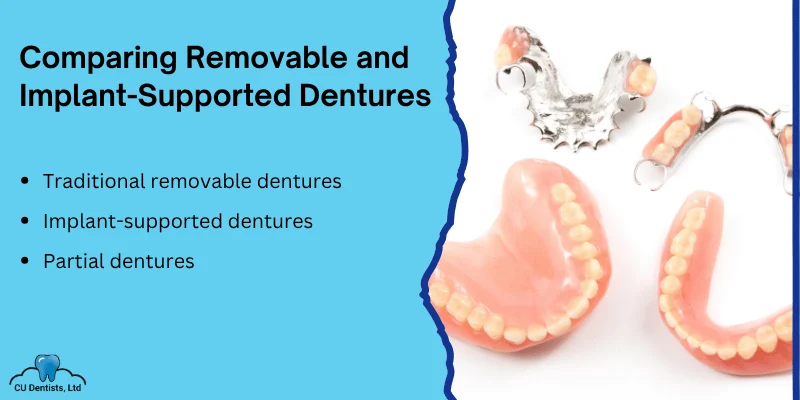
Traditional removable dentures rest on your gums and stay in place through suction or adhesive. They don’t attach to implants and are the most basic option.
Implant-supported dentures connect to dental implants surgically placed in your jawbone. These provide much better stability than traditional dentures. The implants act as anchors that keep your dentures from shifting or slipping.
Partial dentures replace some missing teeth rather than a full arch. They can also attach to implants for added security.
Implant supported dentures in Miami and South Florida offer middle-ground solutions between traditional dentures and permanent implants. You get improved stability while maintaining the ability to remove your teeth for cleaning.
Benefits of Choosing Removable Prosthesis
You can easily clean your removable prosthesis by taking it out each day. This simple maintenance routine helps you keep both the prosthesis and your gums healthy.
Regular cleaning prevents bacteria buildup and extends the life of your dentures.
The cost of removable options is typically lower than fixed implants. You’ll spend less on the initial procedure and installation. This makes removable prosthesis more accessible if you have budget concerns.
Removable solutions require less bone density than fixed implants. If you don’t have enough jawbone for permanent implants, removable options might be your best choice.
You can still get implant support without extensive bone grafting procedures.
Installation takes less time compared to fixed prosthesis. The simpler process means fewer dental visits and faster results.
Potential Drawbacks of Removable Options
Your removable prosthesis may not feel as stable as natural teeth or fixed implants. Some movement can occur while eating or speaking, especially with harder foods. You might need to avoid certain sticky or tough foods.
The acrylic material can crack or break over time with regular use. Removable dentures may fracture and require repairs or replacement sooner than fixed options.
Most removable prostheses last between five to seven years before needing replacement.
Cleaning your dentures daily adds an extra step to your routine. You must remove them each night and soak them properly. Some people find this inconvenient or feel self-conscious about removing their teeth.
Gum damage can occur if you don’t maintain proper oral hygiene with your removable prosthesis. The areas where the dentures contact your gums need careful attention. Poor cleaning habits lead to irritation and inflammation.
Comparing Fixed vs. Removable Implants
When you’re deciding between fixed and removable full-mouth implants to replace missing teeth, understanding how they differ in daily use, appearance, and care requirements helps you make the right choice for your lifestyle and oral health needs.
Stability and Functionality
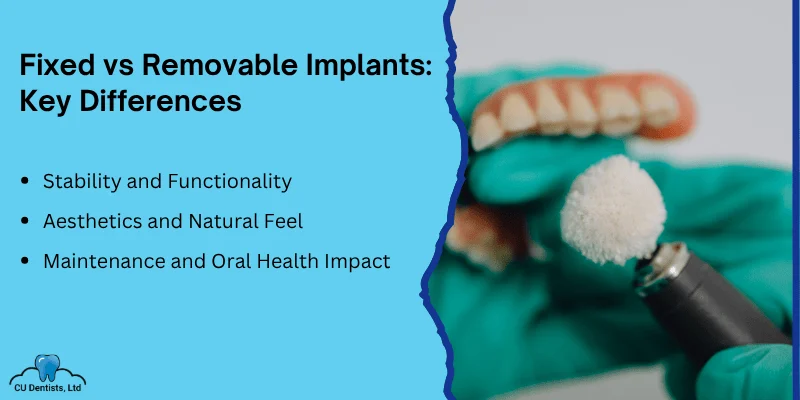
Fixed implants attach permanently to your jawbone and stay in place just like natural teeth. You cannot remove them yourself. They provide the strongest stability when you eat, speak, or smile.
Removable implants snap onto connectors that attach to your implants, allowing you to take them out for cleaning. While they offer good stability during daily activities, they don’t feel quite as secure as fixed options.
Fixed implants let you bite with more force, so you can eat tough or crunchy foods without worry.
When choosing tooth replacement options, think about your eating habits. If you want to eat all your favorite foods without restriction, fixed implants work better.
Removable options work well if you prefer easier access for cleaning but don’t mind some limitations with very hard or sticky foods.
Aesthetics and Natural Feel
Fixed implants look and feel most like your natural teeth. The replacement teeth emerge directly from your gums without any visible attachments or clasps. You won’t see any gaps between the teeth and gums.
Removable implants sit on top of your gums with an acrylic base that mimics gum tissue. This creates a fuller appearance that some people prefer if you’ve experienced bone loss. However, others feel the base looks less natural than fixed teeth.
Fixed prostheses provide a more natural look because they’re custom-designed to match your facial structure. The teeth feel completely stable in your mouth.
Removable options may shift slightly when you eat or speak, which can affect your confidence until you adjust to wearing them.
Maintenance and Oral Health Impact
You clean fixed implants by brushing and flossing just like natural teeth. You’ll need special floss threaders or water flossers to clean around the implants properly.
Regular dental visits help maintain your jawbone health and check the implants.
Removable implants require you to take them out daily for thorough cleaning. You brush both the prosthesis and your gums separately. This makes cleaning easier but adds an extra step to your routine.
Fixed implants better preserve your jawbone because they create constant stimulation through your regular chewing. This helps prevent bone loss over time.
Removable options still protect jawbone health better than traditional dentures, but not as effectively as fixed implants since you remove them at night.
Candidacy, Procedure, and Treatment Considerations
Getting full-mouth implants requires meeting specific health criteria, having adequate jawbone support, and understanding the multi-step process involved.
Treatment costs vary widely based on your needs, but the investment typically provides decades of use.
Who Is a Good Candidate?
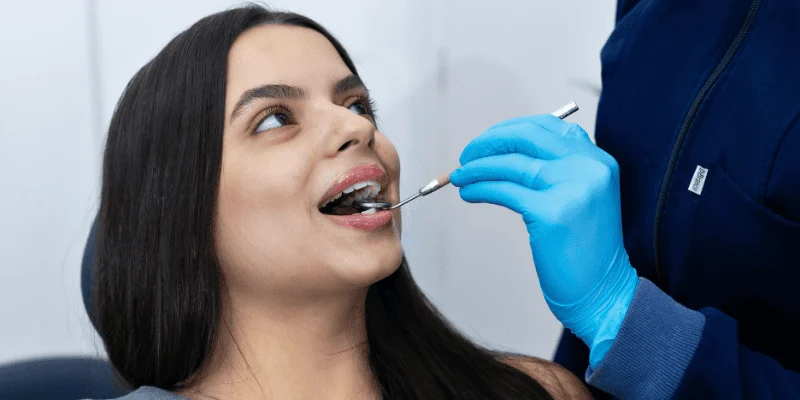
Good candidates for full mouth teeth implants are generally healthy adults with enough jawbone density to support the implants. You need healthy gums and must be committed to maintaining good oral hygiene after the procedure.
If you have uncontrolled diabetes, active gum disease, or certain autoimmune conditions, you may need additional treatment before getting implants. Smoking can reduce success rates, so your dentist may ask you to quit before starting treatment.
You should have realistic expectations about the outcome. Most people who have lost multiple teeth or struggle with dentures make excellent candidates.
Your dentist will perform a thorough examination, including X-rays and CT scans, to determine if implants are right for you. They’ll assess your bone quality, oral health, and overall medical condition before creating a treatment plan.
Bone Grafting and Jawbone Requirements
Your jawbone must be thick and strong enough to hold the implants securely. When you lose teeth, the jawbone naturally shrinks over time because it no longer receives stimulation from tooth roots.
If you don’t have enough bone, you’ll need a bone graft before getting implants. Bone grafting adds material to your jaw to build up the area where implants will be placed.
The graft material can come from your own body, a donor, or synthetic sources.
The bone grafting procedure typically requires 3-6 months of healing before implant placement can begin. During this time, the graft material fuses with your existing bone to create a solid foundation.
Some implant techniques require less bone than others. The All-On-4 procedure, for example, angles implants to maximize contact with existing bone, sometimes avoiding the need for grafting.
Overview of Implant Placement and Restoration Process
The implant procedure happens in stages over several months. First, your dentist surgically places titanium posts into your jawbone. These posts act as artificial tooth roots.
After implant placement, you’ll need 3-6 months for osseointegration to occur. This is when the bone grows around the implants and holds them firmly in place.
Once healing is complete, your dentist attaches small connector pieces called abutments to the implants. These abutments will hold your final prosthesis.
The implant restoration phase involves creating and fitting your new teeth. For fixed prostheses, your dentist permanently attaches the teeth to the abutments.
For removable options, they create dentures that snap onto the implants but can be taken out for cleaning.
Some dentists offer immediate loading, where temporary teeth are attached the same day as surgery. This gives you functional teeth while your implants heal.
Treatment Cost and Longevity
Full mouth dental implants treatment typically costs between $14,000 and $36,000 per arch. The total price depends on how many implants you need, whether you require bone grafting, and your choice between fixed or removable prostheses.
Fixed prostheses generally cost more upfront because they require more implants and specialized materials. Removable options use fewer implants and simpler attachments, making them more budget-friendly initially.
Your costs may include consultations, imaging, extractions, bone grafts, the implants themselves, and the final prosthesis. Some dental insurance plans cover part of the treatment, though many consider implants elective.
With proper care, dental implants can last 20-25 years or longer. The implants themselves often last a lifetime, though the prosthetic teeth may need replacement every 10-15 years due to normal wear.
Regular dental visits and good oral hygiene help maximize the lifespan of your investment.
Frequently Asked Questions
Choosing between fixed and removable full-mouth implants involves understanding key differences in how they attach, what they cost, and how they fit different lifestyles.
These common questions address the practical aspects of each option to help you make an informed decision.
What are the primary differences between fixed and removable full-mouth implants?
Fixed and removable dental implants differ in their attachment mechanism. Fixed implants are permanently attached to your jawbone and require a dentist to remove them. They stay in your mouth 24/7 and function like your natural teeth.
Removable implants snap onto connectors attached to your jawbone. You can take them out yourself for cleaning and sleeping. They consist of an acrylic base with artificial teeth that attach using clasps or similar mechanisms.
The choice between these options depends on your lifestyle needs and preferences. Fixed implants offer more stability during eating and speaking. Removable options give you more control over maintenance and cleaning.
How do fixed and removable dental implants compare in cost?
Fixed implants typically cost more upfront than removable options. The procedure requires more dental work and uses additional materials for permanent attachment. You also need multiple visits to complete the installation.
Removable implants have a lower initial cost and a simpler installation process. However, they may need frequent replacements over time to maintain their appearance and function. This can add to your long-term expenses.
Your budget and long-term financial planning should guide this decision. Fixed implants may cost more initially but could save money over many years.
Are some dental implants designed to be removed for cleaning?
Yes, removable implants are specifically designed for you to take out for cleaning. You can snap them off their connectors to clean both the prosthesis and your gums thoroughly. This makes daily maintenance easier for some patients.
Fixed implants cannot be removed by patients for cleaning. You clean them just like natural teeth using regular brushing and flossing. Your dentist will perform deeper cleanings during regular checkups.
The cleaning method affects how much daily effort you need to put into oral hygiene. Some patients prefer the convenience of removing their implants for thorough cleaning.
Others like the simplicity of treating their fixed implants like natural teeth.
What are the pros and cons of choosing dentures versus full-mouth implants?
Traditional dentures rest on your gums without surgical implants. They cost less than implant-supported options but can slip during eating and speaking. They also require adhesives to stay in place.
Full-mouth implants provide better stability and comfort. They prevent bone loss in your jaw and maintain your facial structure. The implants feel more natural and allow you to eat a wider variety of foods.
Dentures need replacement every five to seven years as your jaw changes shape. Implants can last much longer with proper care. However, implants require surgery and a longer healing period.
How do the long-term costs and benefits of fixed implant dentures stack up against traditional dentures?
Fixed implant dentures provide structural support that prevents bone loss in your jaw. They can last for decades with proper care and maintenance. The initial cost is higher, but you avoid frequent replacements.
Traditional dentures need regular adjustments and replacements as your mouth changes. These ongoing costs add up over time. You also need to buy adhesives and special cleaning products.
Fixed implants improve your quality of life by letting you eat confidently without worry about slipping. They require less maintenance than traditional dentures. The investment pays off through better oral health and fewer dental visits.
Can elderly patients benefit more from one type of implant over the other?
Elderly patients often find removable implants easier to manage. These options work well if you have limited hand dexterity or difficulty with detailed cleaning tasks. You can remove them for simple maintenance.
Fixed implants benefit elderly patients who want to avoid the hassle of removing and inserting dentures daily. They eliminate concerns about losing or misplacing removable prosthetics. The stability helps with eating and speaking.
Your overall health and bone density affect which option works best. Some elderly patients lack sufficient jawbone for fixed implants without additional procedures.
Your dentist can evaluate your specific situation to recommend the most suitable choice.