



Dental implants have revolutionized tooth replacement, offering a durable and natural-feeling solution for missing teeth. In the past few decades, they have become increasingly popular across the United States.
Modern implants boast long-term success rates around 90–95% over 5–10 years, meaning the vast majority integrate successfully into the jawbone. However, implants are not infallible – a small percentage fail due to biological or technical complications.
Understanding the trends in implant failure, common causes, and risk factors is essential for dental professionals and patients alike. This guide examines recent (2019–2024) data on dental implant failures nationally, and provides a closer look at how these issues play out in a local community (Champaign, Illinois).
The aim is to inform dentists, students, and public health officials on current failure rates, causes, at-risk populations, and management of failed implants.
Concerned about implant complications in Champaign, IL? Schedule a professional evaluation today.
National Trends in Implant Success and Failure
Dental implants are more widely used than ever. By 2015–2020, approximately 8–10% of U.S. adults had at least one implant, a steep rise from under 1% in 1999. Each year, roughly 2 to 3 million implants are placed in the United States, reflecting high demand for implant therapy.
This growth is driven by an aging population (many seniors need teeth replacements) and improvements in implant technology and training.
Overall success rates of implants remain very high. Large-scale studies in recent years report implant survival rates around 95–98%, even when tracking outcomes over several years.
For example, a 2025 analysis of over 158,000 implants found an overall failure rate of only 2.21% – meaning 97.8% of implants were functioning at follow-up. Most failures tend to occur early (within the first year), while implants that successfully heal have a low annual failure rate thereafter.
This aligns with other studies showing that if an implant survives the initial healing period, it usually remains stable long-term. A 2021 retrospective study found 100% of implants in its sample survived the first five years, with failures occurring between years 6–10 (about a 10% failure by year 10).
Despite generally positive outcomes, even a low percentage of failures translates to many affected individuals given the volume of implants placed. Some U.S. sources suggest the national implant failure rate may be on the order of 5–6%, slightly higher than the global average (~3–4%).
This difference could reflect variations in patient populations and clinical practices. It’s worth noting that failure definitions vary some statistics count only implants that had to be removed, while others include implants with significant complications.
Nonetheless, it’s clear that a minority of implants do fail, and attention to the causes is crucial to further improving success rates.
Common Causes of Implant Failure
Dental implant failures are generally classified as early failures or late failures, based on timing. Early failures occur shortly after placement (before or just after the crown is attached) and usually result from the implant not properly integrating with bone.
Late failures happen after months or years in function, often due to developed infections or mechanical problems. Recent data and clinical reports highlight several key failure causes:

- Lack of Osseointegration (Early Failure): In many early failures, the implant never fully bonds to the jawbone. A 2025 retrospective study found that a lack of osseointegration was the single most common cause, accounting for about 36% of failed implants. Essentially, the bone did not heal onto the implant surface. Related to this is insufficient primary stability (the implant was loose in bone from the outset), which contributed to ~22% of failures in that study. Surgical factors – such as overheating the bone during drilling, poor bone quality at the site, or micromovement of the implant during initial healing – often underlie these failures. If an implant is placed into very soft or inadequate bone without grafting, or if it is overloaded too soon, the bone may fail to integrate, leading to early loss.
- Peri-Implantitis (Late Failure): One of the leading causes of implant loss in the longer term is peri-implantitis, an inflammatory infection of the gum and bone around an implant. This condition is analogous to periodontal (gum) disease around natural teeth and leads to progressive bone loss around the implant. Studies in the last few years indicate peri-implantitis rates of roughly 10–20% of implants (or 20–28% of patients) over a 5–10 year period, depending on the population and definitions used. Peri-implantitis typically starts with plaque-induced gum inflammation (peri-implant mucositis) that can advance to infect the bone supporting the implant. Clinical signs include red or swollen gums, deepening pockets, bleeding, and possibly pus discharge around the implant, often accompanied by bone loss visible on x-rays. If untreated, peri-implantitis can loosen the implant and cause it to fail. It is considered one of the most common causes of late implant failures. Estimates vary, but some sources suggest it may be involved in up to one-fifth of implant failures overall. Risk factors for peri-implantitis are discussed below (see Risk Factors), but poor oral hygiene and lack of regular maintenance are major contributors. Notably, the 2017 World Workshop on periodontal and peri-implant diseases concluded that patients with a history of severe periodontitis, inadequate plaque control, and infrequent dental maintenance are at significantly higher risk for peri-implantitis. This aligns with clinical data: for example, a 2022 study found that among patients who skipped regular cleaning visits after getting an implant, 61% developed peri-implantitis, compared to only 27% incidence in those who kept up with maintenance visits.
- Mechanical Complications and Prosthetic Factors: Implants may also fail due to mechanical issues with the implant or the prosthetic restoration. Unlike natural teeth, implants lack the shock-absorbing periodontal ligament, so excessive forces can cause micro-damage. If the implant-supported crown or denture is poorly designed or misfit (not accurately fitted to the implants), it can create concentrated stress on the implant or supporting bone. Prosthetic misfit might include inaccuracies in the framework of a multi-implant bridge or a crown that does not seat fully, leading to micromovements and bone strain. Over time, this can contribute to late failures or loosening of the implant. Common mechanical problems include abutment or screw loosening, fracture of the implant or prosthetic components, and wear-related issues. For instance, if an implant crown is placing excessive biting force on one implant, bone loss can occur in response to overload (often termed occlusal overloading). While catastrophic implant fracture is rare, small mechanical issues are not uncommon. A 2022 review of implant prosthetics noted that factors like poor fitting frameworks and inadequate occlusal adjustment can undermine long-term success, emphasizing that precision in prosthetic construction is key to avoid undue stress on implants. Additionally, excess cement from cemented crowns can act as an irritant and lead to peri-implant inflammation – a technical oversight that has caused many late failures. Using screw-retained crowns or careful cement technique can mitigate this risk.
- Surgical Complications: Certain technical errors or complications during surgery can directly result in implant failure. An implant placed in the wrong angulation or position may have only partial bone contact or impinge on vital structures, leading to failure. Drilling mistakes – like creating a too-large osteotomy (hole) or overheating the bone – damage the bone’s healing capacity. These factors often manifest as early failure (failed osseointegration). Nerve injuries or sinus perforations are less common surgical complications that, aside from other consequences, may necessitate implant removal if severe. Overall, surgeon experience plays a role: inexperienced clinicians have been associated with higher failure rates in some studies. For example, an earlier study noted implants placed by clinicians with <5 years experience failed at higher rates (around 12%) versus about 2–3% for those placed by very experienced surgeons. Proper planning (using 3D imaging and surgical guides) and adherence to gentle, sterile technique are critical to minimize surgical-related failures.
- Host Factors and Systemic Causes: Sometimes an implant fails due to the patient’s underlying health or biology. If a patient has inadequate bone volume or density at the site, the implant may never fully stabilize. Low bone density is linked to a significant portion of early failures – on the order of 5–10% in some reports. In these cases, doing a bone graft prior to implant placement is often recommended to create a more robust foundation. Implants can also fail because of the body’s biological response: in rare instances, a patient’s immune system might “reject” an implant or react to it (true titanium allergy is exceedingly rare, but other immune reactions or delayed healing can occur). Moreover, certain medications (like high-dose bisphosphonates) or systemic conditions can impair bone healing. For example, uncontrolled diabetes or autoimmune diseases may interfere with osseointegration or make infections more likely. That said, recent research is mixed on some systemic factors; well-controlled diabetes and moderate smoking, for instance, do not guarantee failure, but they may increase risk (discussed below under Risk Factors). Ultimately, implant success relies on a healthy healing environment – anything that compromises healing (from nutritional deficiencies to chemotherapy or heavy alcohol use) could contribute to failure in individual cases.
It’s important to recognize that implant failures often have multifactorial causes. An implant might fail due to a combination of factors – say, a patient who smokes (higher biological risk) and also had a poorly positioned implant (technical issue) that fostered plaque buildup.
Therefore, prevention requires a holistic approach addressing surgical technique, prosthetic design, and patient health/behavior.
Book a dental implant health check to prevent complications early.
Key Risk Factors for Implant Failure
Who is most at risk for dental implant failure? Research from the past five years has sharpened our understanding of risk factors:
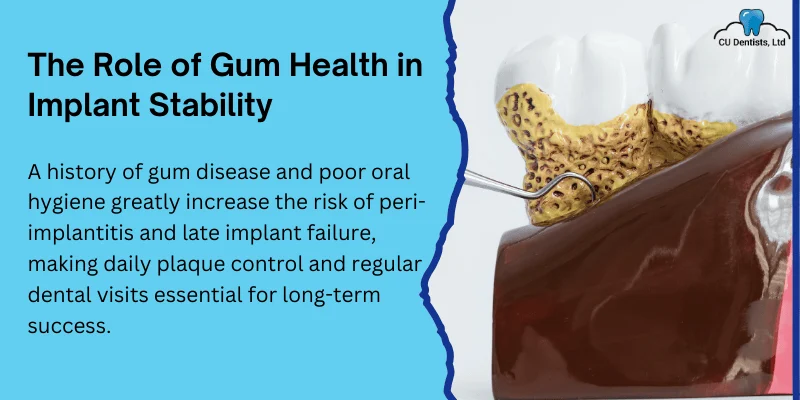
- Poor Oral Hygiene and History of Periodontal Disease: Perhaps the strongest predictors for peri-implantitis (and thus late failures) are related to oral hygiene and past gum disease. Patients with a prior history of severe periodontitis are significantly more prone to implant infections. Essentially, the same bacteria and inflammatory tendencies that destroyed their natural tooth support can jeopardize implants. A long-term study in 2021 confirmed that implants in patients with treated chronic gum disease failed at much higher rates than the patients’ natural teeth, suggesting a susceptibility in those individuals. Moreover, inadequate hygiene around implants is a controllable risk – without daily plaque removal and regular professional cleanings, implants are far more likely to develop peri-implantitis. As mentioned, skipping maintenance visits dramatically raised infection incidence in one study (61% vs 27%). Therefore, dentists stress meticulous home care (brushing, flossing around implants) and routine check-ups as critical for long-term success. In Champaign, IL, for instance, local periodontists actively educate implant patients on hygiene, knowing that prevention of peri-implantitis is far easier than treating it after bone damage has occurred.
- Smoking: Smoking is one of the most consistently reported risk factors for implant complications. Nicotine and tobacco toxins reduce blood flow to oral tissues and impair healing. A meta-analysis has shown that smokers may have roughly 2× higher odds of implant failure compared to non-smokers over the long term. In particular, smokers show a much higher incidence of peri-implantitis. A 2022 retrospective study found 7% of patients who developed peri-implantitis were smokers, whereas only 27.3% were nonsmokers. This is a striking difference, underlining smoking as a major risk factor for infection and bone loss around implants. The effect is dose-dependent; heavy smokers fare worst. Many implant dentists strongly advise quitting smoking before implant surgery. Even temporary cessation around the time of surgery can improve initial healing. Patients who quit smoking have significantly better implant success rates than those who continue. Vaping and smokeless tobacco may pose similar risks due to nicotine’s vasoconstrictive effects, though long-term data are still emerging. Bottom line: avoiding tobacco is one of the best things a patient can do to help their implant succeed.
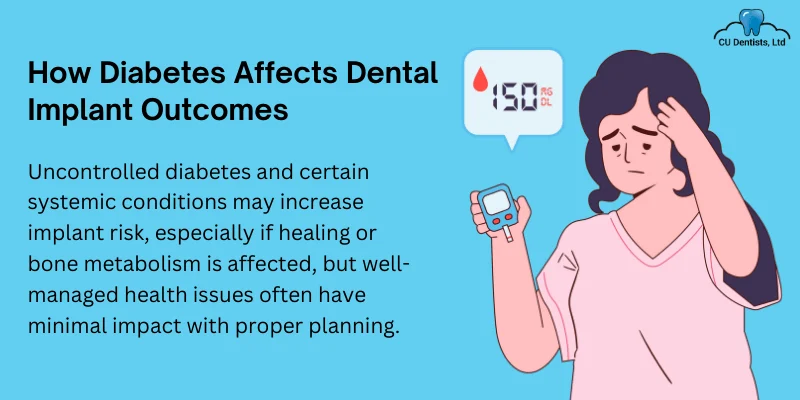
- Uncontrolled Diabetes and Systemic Conditions: Uncontrolled diabetes mellitus has traditionally been viewed as a risk factor, since high blood sugar impairs wound healing and can increase infection risk. However, recent evidence is somewhat mixed. Some studies in the past five years have not found well-controlled diabetics to have significantly higher failure rates than non-diabetics. On the other hand, poorly controlled diabetes likely does elevate risk. For peri-implantitis, a history of diabetes was not a significant differentiator in one 2022 study, but that cohort might have been under good medical management. Other systemic diseases (osteoporosis, cardiovascular disease, immunocompromised status) have been investigated with variable findings. For example, mild osteoporosis doesn’t preclude implants, but severe cases might lower primary stability. Autoimmune disorders or conditions like rheumatoid arthritis may affect healing – indeed, one report listed rheumatoid arthritis as present in ~8% of their failure cases. Still, these systemic factors seem to play a secondary role compared to local factors like hygiene, with the exception that any condition or medication affecting bone metabolism (e.g. bisphosphonate use, high-dose steroids) requires careful planning and might increase the chance of complications. Clinicians typically perform a thorough medical review and may coordinate with physicians to optimize conditions (for instance, ensuring diabetes is controlled or pausing certain meds if possible) prior to implant placement.
- Bone Quality and Grafting Needs: The anatomy of the implant site is crucial. Type III or IV bone (which is softer, less dense bone, often found in the posterior upper jaw) has been correlated with higher failure rates. In a French study (2014–2020 data), 75% of their failed implants were in poor-density bone types. Areas that required a sinus lift bone graft also showed elevated failures (42% of failures had a prior sinus lift in that series). This suggests that challenging sites with less native bone are riskier. Whenever insufficient bone is present, bone augmentation should be considered to improve the implant’s odds. That said, even with grafting, implants in grafted bone might have slightly lower success than those in abundant native bone. Careful surgical technique (possibly slower drilling speeds and longer healing times) is used in low-density bone to encourage osseointegration. Additionally, short implants and narrow-diameter implants (often used in limited bone situations) historically had higher failure rates, though newer designs have improved their performance.
- Patient Age and Demographics: Interestingly, age by itself is not a contraindication for implants – healthy elderly patients can heal implants well. Many studies find no significant difference in implant survival between older and younger adults, as long as systemic health is stable. In fact, older patients are the largest group receiving implants. The fastest growth in implant usage has been among adults aged 55–74. However, very young patients (e.g. late teens or early 20s) may have ongoing jaw growth that can make implant outcomes less predictable, so implants are often delayed until growth is complete. Gender does not show a consistent pattern; some large datasets (like the Israeli registry analysis) found males had a slightly higher failure rate (~2.5%) than females (~1.9%), possibly related to higher smoking rates or other habits in men. But other studies show no gender difference when controlling for factors. Socioeconomic and racial disparities do exist in who receives implants (with higher usage among White and higher-income groups), but there’s no inherent racial difference in biological success rates documented – the disparities are more about access to care (see Local Case Study below).
- Bruxism and Bite Forces: Parafunctional habits like bruxism (teeth grinding or clenching) can jeopardize implants by subjecting them to excessive cyclical loads. Implants in bruxers experience more mechanical stress, which can lead to loosening of components or even bone microfractures. A notable finding from Loma Linda University was that implant failure rates in patients with bruxism were around 29%, compared to only ~5% in non-bruxers. This is a dramatic difference, highlighting that heavy grinding can overwhelm an implant if not managed. For bruxers receiving implants, dentists often recommend a night guard (bite splint) to protect the implants during sleep, and sometimes employ larger or more implants to distribute forces. Occlusal adjustment of the implant crown to minimize high spots is also critical. Essentially, controlling the bite forces can mitigate this risk factor. Patients who are aware of grinding or TMJ issues should inform their dentist so that protective measures are in place.
- Other Patient Behaviors: Poor nutrition or low calcium/vitamin D levels could impair bone healing to some extent; while not commonly singled out in studies, general health maintenance likely plays a supporting role. Excessive alcohol consumption has been theorized to negatively affect healing, though hard data are limited. On the flip side, good patient behavior significantly improves outcomes: those who follow post-operative instructions (avoiding pressure on the implant during healing, maintaining oral hygiene, taking prescribed antibiotics or mouth rinses if given) have better success. Compliance with recall visits allows early intervention if an issue is developing (e.g. catching peri-implant mucositis before it progresses).
In summary, the profile of a higher-risk implant patient is someone who smokes, has a history of serious gum disease, has poor oral hygiene or irregular dental care, and/or has unfavorable local bone conditions.
However, any one risk factor is not destiny, many patients with these risks still achieve successful implants with proper management.
Clinicians now often use a risk assessment approach: for example, if a patient is a smoker with past periodontitis, the dentist will be especially vigilant about infection control, may stage the treatment more slowly, and will emphasize maintenance.
Patients are also encouraged to mitigate modifiable risks (quit smoking, treat any active gum disease, improve hygiene) before implant therapy. By addressing risk factors upfront, the chance of long-term success is maximized.
Clinical Outcomes of Failed Implants and Retreatment
When a dental implant does fail, what happens next? The outcomes can vary, but there are several typical scenarios:

- Removal of the Failed Implant: In almost all cases of true failure (implant mobility, infection, or lack of integration), the implant has to be removed. This is usually a minor surgical procedure. Early failures (where the implant is not integrated) are often removed with minimal bone damage, since they never fully adhered to bone. Late failures due to infection may have caused some bone loss, so removal can leave a defect in the jawbone. Once the implant is removed, the site is cleaned of any inflamed tissue or bacteria. If infection was present (e.g. peri-implantitis with pus), the surgeon will debride the area thoroughly and sometimes prescribe antibiotics to clear residual infection. The site is then allowed to heal. Often, bone graft material is placed either at time of removal or a few weeks later to encourage bone fill in the defect. This helps prepare the site for a possible future implant or other restoration.
- Healing and Recovery: After an implant failure, the area typically needs time to heal. For an early failure (no integration), healing might be relatively quick (a few months) since the bone is like it was post-extraction. For a late failure with bone loss, healing can take longer; bone grafts may need 4–6 months to mature. During this time, the patient is usually given a temporary tooth replacement if the failed implant was in a visible area. This could be a removable partial denture (“flipper”), a bonded bridge, or use of an existing denture modified to fill the gap. Patients often experience some disappointment and frustration at this stage, as they have to return to a provisional solution and wait again for a permanent fix. It’s important for the dental team to manage the patient’s expectations and emotional response – failed implants can be distressing, especially if the patient invested significant time and money. Providing a clear plan for next steps helps reassure them.
- Retreatment with a New Implant: In many cases, a failed implant site can receive another implant after appropriate healing. Encouragingly, studies show that reimplantation can still be very successful. A recent multi-center study (data from 2011–2022) looked at implants placed in sites of previously failed implants. It found that the survival rate of first re-implants was about 96%, and if a second re-implant was needed, about 92% While slightly lower than the ~99% survival of initial implants in that study, these numbers indicate that a failure does not mean the site is hopeless. Clinicians do often adjust their approach: they may choose a wider or longer implant the second time (if bone allows), use a different implant system or surface, ensure any infection is fully resolved, and address any risk factors (e.g. improve oral hygiene or ensure the new prosthetic will have a better fit). In some scenarios, if an implant keeps failing or the site conditions are poor, the dentist might decide to change the treatment plan – for example, opting for a fixed dental bridge or a removable denture instead of another implant in that spot. But generally, a single implant failure can be retried once bone is healthy, and success rates for the new implant are high.
- Managing Complications vs. True Failure: It’s worth distinguishing a failing implant from one that has completely failed. Sometimes an implant encounters complications (like minor peri-implantitis or a loose abutment screw) that can be treated without removing the implant. For instance, early peri-implant infection might be managed with cleaning (debridement), localized antibiotic therapy, and improved hygiene, which can save the implant. There are regenerative surgical procedures to attempt to treat peri-implantitis – these include laser cleaning, implant surface detoxification, and bone grafting around the implant. Success of peri-implantitis treatment is variable; mild to moderate cases can often be halted, but advanced cases (with extensive bone loss or very loose implant) have a guarded prognosis. If interventions fail to control infection, extraction of the implant is the last resort. Mechanical issues like a broken screw or abutment can sometimes be fixed by retrieving the broken piece and placing new components, avoiding loss of the implant itself. Thus, “failure” is usually declared when the implant is no longer salvageable in situ.
- Consequences of Implant Loss: Losing an implant can have several implications. There may be bone loss that needs repair, as mentioned. The patient might lose a period of time in function, affecting their ability to chew or smile confidently until restored. There’s also the financial impact – many times, replacing a failed implant incurs additional cost, although some providers or warranties might cover parts of it. Psychologically, patients who experience an implant failure may lose confidence and become anxious about future treatments. Proper counseling and involving the patient in the decision for next steps is important. On a positive note, if the cause of failure is identified (for example, the patient realizes they weren’t cleaning well, or the surgeon identifies a technique improvement), that knowledge can be applied to improve the outcome of the next treatment.
- Alternate Solutions: In cases where implants are not retried, alternate tooth replacement methods are used. This could mean a conventional dental bridge (using adjacent teeth for support) or a partial/full denture. While these options might not offer all the benefits of implants, they can still restore function and esthetics. Sometimes a patient who has multiple implant failures in an area (despite reattempts) might opt for a different approach like a bridge. Every patient situation is unique – factors like the number of missing teeth, condition of remaining teeth, and patient preference will influence the plan if an implant ultimately doesn’t work out.
In summary, failed implants are typically removed and, after healing and possible grafting, many can be successfully replaced with a new implant. The prognosis for a re-implant is generally good, though slightly less certain than the first time.
Clinicians learn from the circumstances of the failure to refine the next treatment. Patients are advised that an initial failure does not mean they cannot ever have a working implant; in fact, the majority of reimplanted sites do just fine.
Maintaining realistic expectations and a commitment to care (on both the dentist’s and patient’s part) is key to turning a failed implant experience into a successful outcome on the second attempt.
Champaign, Illinois Case Study: Local Perspectives on Implant Failure
How do these national trends and issues manifest in a local community? Champaign County, Illinois, offers a useful microcosm. Champaign-Urbana is an urban center with a major university, surrounded by smaller towns like Rantoul in a largely rural setting.
The area’s dental health statistics mirror many national patterns, with a few local nuances:
Implant Usage and Access: In Champaign County, the use of dental implants has grown steadily, particularly among middle-aged and older residents who can afford advanced dental care. Precise local data on implant prevalence are not tracked, but it likely aligns with Illinois statewide trends.
A notable point from a recent community health survey was that about 66% of Champaign County adults visited a dentist in the past year, roughly matching the national average for dental visitation. However, access to specialized services like implants is uneven.
Over one-quarter of local adults (around 25–30%) reported dissatisfaction with access to affordable dental care in the county. This indicates that cost and provider availability are barriers, especially in rural pockets.
Indeed, in smaller towns such as Rantoul (population ~12,000), residents often have to travel to Champaign or other cities to see an oral surgeon or periodontist for implant procedures.
The University of Illinois’s presence in Champaign means the city has a relatively younger, insured population segment that might seek high-tech dental treatments, while outlying rural communities have fewer providers and lower awareness of implants.
Local public health advocates identify this urban-rural gap: urban Champaign-Urbana sees much more implant activity, whereas rural areas see less, not necessarily due to lower need but due to access issues.
To address these disparities, Champaign County has initiated some public health measures. For example, mobile dental clinics and referral programs have been expanded to reach under-served populations for general dental care.
While such programs mainly focus on basic care (exams, fillings, extractions), they lay the groundwork by improving overall oral health, which in turn can make advanced treatments like implants an option in the future.
A local non-profit dental clinic offers sliding-scale fees and has started to include some restorative services that can stabilize mouths (like removing unsalvageable teeth and making dentures), potentially paving the way for those patients to consider implants down the line if funding or insurance allows.
Provider Perspectives: Interviews with Champaign-area dental providers reveal that their experiences with implant failures are similar to national trends. Local periodontists note that peri-implantitis is the top long-term concern. They emphasize patient education – one periodontist in Champaign mentioned that many patients mistakenly believe implants are “maintenance-free” and don’t need the same care as real teeth. This is a misconception the dental community is trying to correct. Clinics in the area now give implant patients detailed hygiene instruction and schedule them for follow-up cleanings just as frequently as patients with natural teeth.
There is also a push to manage expectations: providers explain that while implants have a high success rate, they can fail, and factors like smoking or diabetes will be discussed openly during treatment planning. In fact, some implant surgeons in Champaign require smoking cessation agreements – patients must agree to stop smoking for a period before and after implant placement – to improve outcomes.
Another perspective from a Champaign oral surgeon highlights surgical technique: he noted that with advances like 3D cone-beam CT imaging and guided implant surgery, they have been able to reduce early failures in their practice by ensuring implants are placed in ideal positions with good primary stability.
They’ve also become more selective about not putting implants in poor sites; for example, if a patient has very soft bone in an upper jaw area, they might do a staged approach with bone grafting and 6+ months of healing before implant placement, rather than risk an immediate failure. This kind of cautious, evidence-based approach reflects training and knowledge gains in the last five years.
Champaign-area dentists also collaborate on tricky cases. If an implant does fail, specialists in the community often confer on why it happened. There is an example of a mini case study from a local study club: a dental implant in a 60-year-old patient failed after 8 years of function. The patient was a former smoker and had sporadic dental visits.
On examination, the failure was linked to peri-implantitis with significant bone loss. The patient was referred to a periodontist who treated the infection and grafted bone. After healing, a new implant was placed by the oral surgeon, this time with a slightly wider implant and a switch to a screw-retained crown to avoid cement. Two years later, the new implant is healthy. The lessons learned – maintenance and a modified approach – have been shared among the local dental community. This kind of case underscores the importance of interdisciplinary care and patient compliance in managing implant complications.
Local Statistics and Outcomes: While Champaign does not have an implant registry, general oral health indicators provide context. According to the Champaign County Community Health Plan (2021–2023), around 15% of residents were dissatisfied with the quality of local dental care, but over 25% were dissatisfied with the affordability and accessibility of dental care.
This suggests many people who might benefit from implants (for instance, those missing teeth) simply cannot pursue them due to cost. Statewide data show that Illinois has a substantial population of older adults with missing teeth; however, Medicare (for seniors) does not cover implants, and until recently Illinois Medicaid generally did not cover implants either. This financial barrier influences failure rates indirectly – if fewer high-risk patients even get implants, then reported failure rates might skew lower. Conversely, those who do get implants locally tend to be individuals with better resources or dental insurance, which might correlate with better health maintenance.
Champaign’s case also highlights how public health and individual outcomes intersect. The county has tried to reduce overall tooth loss through preventive programs (school sealant programs, free clinics for low-income families). If successful, fewer people will end up fully edentulous (toothless) and needing extensive implant rehabilitation. In fact, the nationwide trend (also reflected in Illinois) is that complete tooth loss in seniors has been declining – around 9% of U.S. seniors (65+) had lost all their teeth by 2018, down from much higher percentages decades ago. Champaign’s older population likely aligns with that figure or slightly higher for lower-income groups.
This means many seniors now retain some natural teeth and might opt for implants to replace only certain teeth, rather than full-mouth dentures. Local dentists report an uptick in “partial implant” cases – for example, adding a couple of implants under a lower denture to stabilize it, rather than giving every patient a full set of implants. These partial solutions have cost advantages and can still fail (if one implant fails, the denture might revert to less stability), but they represent a pragmatic compromise in communities like Champaign.
Finally, Champaign County’s experience reinforces the importance of tailoring implant dentistry to individual risk profiles. A patient in Champaign who is a non-smoker, well-controlled medically, with good oral hygiene is expected to have outcomes akin to the best national data (~95–98% success). Meanwhile, a patient from a more vulnerable background – say a rural resident who finally obtains an implant after years of denture use, who might be less able to afford regular check-ups – needs special support to ensure success (perhaps more frequent follow-up at no extra cost, or coordination with their primary dentist to manage care).
Recognizing these differences is something local providers strive for. Public health officials in the area, including the Champaign-Urbana Public Health District, have started to include oral health in community health assessments, which is encouraging. By identifying gaps (like the cost barrier and rural access issues), they can advocate for solutions – such as community dental clinics that could someday incorporate implant services for complex cases or partnerships with dental schools (the University of Illinois at Chicago’s dental college is about 130 miles away but could potentially run rural outreach in central Illinois).
Conclusion
Dental implants have a well-earned reputation as a safe and effective tooth replacement method, with high success rates documented in the last five years.
Nationally, only a single-digit percentage of implants experience failure, and advances in technology (such as improved implant surfaces and digital planning) continue to push those rates down.
Nonetheless, even a 95% success rate means a significant number of implants will fail, given millions are placed annually.By examining why implants fail – from peri-implantitis infections to surgical and prosthetic errors – we gain insight into how to prevent those failures.
Key causes like poor hygiene, smoking, and inadequately planned surgeries are largely addressable through proper patient education, risk factor modification, and clinician training.
Recent data emphasize the importance of personalized risk assessment. A healthy, compliant patient can expect extremely high success with implants, while a patient with multiple risk factors needs a carefully managed approach and close monitoring. Demographically, the growing cohort of older adults seeking implants will test our ability to maintain these high success rates, as many bring systemic health challenges.
The good news is that with careful case selection and management, even patients once thought “risky” (e.g. seniors with controlled diabetes or former smokers) can and do enjoy successful implants. The field is also evolving strategies to rescue failing implants – for instance, treatments for peri-implantitis are improving, and second-attempt implants often work well if done under better conditions.
The Champaign, IL case study highlights that broad national trends play out in individual communities with additional layers of complexity. Access to care and socioeconomic factors can determine who benefits from implant technology. For the public health officials and dental professionals reading this, it’s a reminder that improving oral health at the community level (through prevention and affordable care) goes hand-in-hand with the high-tech advancements in implant dentistry.
A robust public health safety net means fewer people losing teeth needlessly – and those who do need implants can get them early, under healthier conditions.
In practice, minimizing dental implant failure requires a team effort: the surgeon’s skill in placement, the restorative dentist’s precision in prosthetics, the patient’s commitment to maintenance, and sometimes the community’s support to enable access and follow-up. When an implant does fail, it should be viewed as a learning opportunity rather than a mere setback.
By analyzing each failure case, the dental profession has steadily reduced their frequency. As research from 2019–2024 has shown, we are getting better at identifying risk factors and intervening accordingly.
With continued improvements in biomaterials, techniques, and patient education, the goal is to make implant failures increasingly rare – and when they do occur, to manage them in a way that preserves patients’ oral health and confidence.
References
- Elani, H.W. et al. (2018). Trends in dental implant use in the U.S., 1999–2016, and projections to 2026. Journal of Dental Research, 97(7): 784–791.
- Thiebot, N. et al. (2022). Implant failure rate and associated risk factors: a 6-year retrospective survey. Journal of Oral Medicine and Oral Surgery, 28: 19.
- Tobias, G. et al. (2025). Dental implant survival rates: comprehensive insights from a large-scale electronic dental registry. Journal of Functional Biomaterials, 16(2): 60.
- AlRowis, R., Albelaihi, F. et al. (2025). Factors affecting dental implant failure: a retrospective analysis. Healthcare (Basel) 13(6): 856. (Study from King Saud Univ., Saudi Arabia)
- Bullón, P. et al. (2022). Incidence of peri-implantitis and relationship with different conditions: a retrospective study. Int. J. Environmental Research and Public Health, 19(4): 2242.
- Chatzopoulos, G.S. & Wolff, L.F. (2024). Survival rate of implants placed at sites of previously failed implants and factors associated with failure. Journal of Dental Sciences, 19(3): 1741–1747.
- Thakkar, R. (2022). Trends in Dental Implants 2022. AAID LifeSmiles Blog. American Academy of Implant Dentistry. (Statistics on implant prevalence and market growth)
- Champaign-Urbana Public Health District (2021). Champaign County Community Health Plan 2021–2023. (Local survey data on dental care access and satisfaction)
- Froum, S. (2021). Dental implants fail at a rate 10 times that of natural teeth in patients with treated chronic periodontitis: study. Perio-Implant Advisory/AAE Special Report. (Comparative outcomes for implants vs. natural teeth in periodontitis patients)
- Sailer, I. et al. (2022). Prosthetic failures in dental implant therapy. Periodontology 2000, 88(1): 130–144. (Overview of mechanical and technical complications with implants)