



Getting dental implants is an exciting step toward a healthier smile, but your recovery depends heavily on what you eat in the weeks that follow. Your body needs the right nutrients to heal properly and help your new implants integrate successfully with your jawbone.
Eating soft, nutrient-rich foods while avoiding hard, crunchy, or acidic options can speed up your healing and protect your investment in dental implants.
The foods you choose during recovery can make the difference between a smooth healing process and potential complications.
This guide will walk you through everything you need to know about maintaining proper nutrition during dental implant recovery. You’ll learn which nutrients help healing, discover the best foods to eat, and understand how to gradually return to your normal diet safely.
The Role of Nutrition in Dental Implant Recovery

Good nutrition speeds up your healing after dental implant surgery and helps your implants bond properly with your jawbone. The right foods provide the nutrients your body needs to recover quickly and keep your implants stable.
Why a Healthy Diet Matters After Dental Implant Surgery
Your body needs extra energy and nutrients to heal after dental implant surgery. The surgery creates small wounds in your gums and jawbone that must repair themselves.
Proper nutrition helps you recover faster by:
- Reducing swelling and pain
- Fighting infection
- Building new tissue
- Strengthening your immune system
When you eat poorly during dental implant recovery, your healing slows down. This can lead to complications like infections or implant failure.
Your mouth is especially sensitive after surgery. Eating the wrong foods can damage the surgical site or cause pain.
Key nutrients for healing include:
- Protein– builds new tissue
- Vitamin C– helps wounds heal
- Calcium– strengthens bones
- Iron– carries oxygen to healing areas
How Nutrition Supports Osseointegration and Implant Stability
Osseointegration is when your dental implant fuses with your jawbone. This process takes 3-6 months and determines if your implant will be successful.
Your jawbone needs specific nutrients to grow around the implant properly. Without these nutrients, the bone may not attach well to the implant surface.
Critical nutrients for osseointegration:
- Calcium and Vitamin D– help bone cells multiply
- Protein– provides building blocks for bone tissue
- Magnesium– helps calcium work better
- Vitamin K– guides calcium to bones
Poor nutrition during this time can cause your dental implants to loosen or fail completely. The bone around the implant may not grow strong enough to support chewing forces.
You should eat nutrient-rich foods for at least 6 months after surgery. This gives your jawbone enough time to fully integrate with your dental implants.
Essential Nutrients for Optimal Healing After Dental Implants
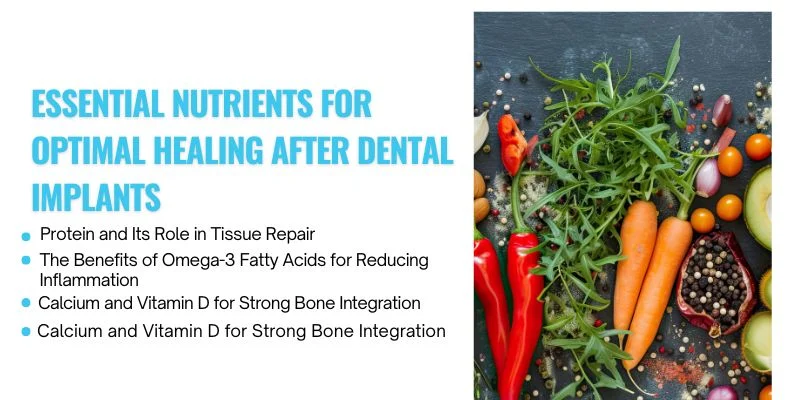
Your body needs specific nutrients to heal properly after dental implant surgery. Protein helps rebuild tissues, omega-3 fatty acids reduce swelling, calcium and vitamin D strengthen bones, and vitamin C supports your gums.
Protein and Its Role in Tissue Repair
Protein is your body’s main building block for healing after dental implant surgery. Your mouth creates new tissue around the implant site every day during recovery.
You need about 1.2 to 1.6 grams of protein per kilogram of body weight during healing. This means a 150-pound person needs about 80 to 110 grams of protein daily.
Best protein sources during recovery:
- Soft fish like salmon and cod
- Scrambled eggs
- Greek yogurt
- Protein smoothies
- Cottage cheese
- Ground turkey or chicken
Your body breaks down protein into amino acids. These amino acids help form new blood vessels and repair damaged tissue around your dental implant.
Eat protein at every meal to keep your healing steady. Your body cannot store extra protein, so you need it throughout the day.
The Benefits of Omega-3 Fatty Acids for Reducing Inflammation
Omega-3 fatty acids help control inflammation during dental implant healing. Too much inflammation can slow down your recovery and cause more pain.
These healthy fats work like natural anti-inflammatory medicine in your body. They help reduce swelling around the implant site and support faster healing.
Top omega-3 sources:
- Salmon and mackerel
- Walnuts
- Chia seeds
- Flaxseeds
- Fish oil supplements
Aim for 1 to 2 grams of omega-3s daily during your recovery. This amount helps manage inflammation without interfering with your body’s natural healing process.
Studies show that people who eat more omega-3s have less pain and swelling after dental surgery. Your gums also heal better when you get enough of these healthy fats.
Calcium and Vitamin D for Strong Bone Integration
Your jawbone must grow around the dental implant for it to stay secure. This process is called osseointegration and requires plenty of calcium and vitamin D.
Calcium provides the raw material for new bone growth. Vitamin D helps your body absorb calcium from food and move it into your bones.
You need 1,200 mg of calcium and 800 to 1,000 IU of vitamin D daily during healing. Most adults do not get enough of these nutrients from food alone.
Calcium-rich foods:
- Dairy products like milk and cheese
- Leafy greens such as kale
- Canned sardines with bones
- Fortified plant milks
Vitamin D sources:
- Fatty fish
- Egg yolks
- Fortified cereals
- Vitamin D supplements
Your doctor may suggest supplements if blood tests show low levels. Good bone integration around your implant takes 3 to 6 months.
Vitamin C for Gum Health and Collagen Production
Vitamin C helps your gums heal and creates collagen around your dental implant. Collagen is a protein that holds your gums and other tissues together.
Your body cannot make vitamin C on its own. You must get it from food every day because it does not stay in your body long.
Adults need 90 mg of vitamin C daily, but you may need 200 mg during healing after dental implant surgery. This extra amount supports faster tissue repair.
Excellent vitamin C sources:
- Citrus fruits (choose soft options)
- Strawberries
- Bell peppers
- Broccoli
- Cantaloupe
Low vitamin C levels can cause bleeding gums and slow healing. Your gum health directly affects how well your dental implant integrates with surrounding tissue.
Vitamin C also helps your body absorb iron from food. Iron carries oxygen to healing tissues around your implant site.
Ready to accelerate your recovery? Book a consultation with CU Dentists in Champaign to learn how nutrition plays a key role in the success of your dental implants.
Best Foods to Eat During Dental Implant Recovery

Your food choices after dental implant surgery play a big role in how well you heal. Soft, nutrient-rich foods help your mouth recover while staying hydrated speeds up the healing process.
Soft Foods That Support Healing
Your mouth needs gentle foods after dental implant surgery. Hard or crunchy foods can hurt your healing gums and disturb the implant site.
Protein-rich soft foods help rebuild tissue around your new implants:
- Scrambled eggs
- Greek yogurt
- Cottage cheese
- Soft fish like salmon or cod
- Protein smoothies
Cooked vegetables give you vitamins without being too rough:
- Mashed sweet potatoes
- Steamed carrots
- Soft-cooked broccoli
- Pureed soups
Avoid seeds, nuts, and anything that requires heavy chewing. These foods can get stuck in your healing gums or put too much pressure on your dental implants.
Room temperature or slightly warm foods work best. Very hot foods can increase swelling and slow down implant healing.
Hydrating Options and Their Importance
Staying hydrated helps your body heal faster after dental implant surgery. Your mouth produces less saliva when you’re dehydrated, which can lead to infection.
Water should be your main drink. Aim for 8 glasses per day to flush out bacteria and keep your mouth clean.
Other good hydrating options include:
- Herbal teas (cooled to room temperature)
- Coconut water
- Diluted fruit juices
- Clear broths
Avoid straws for the first week after surgery. The sucking motion can disturb your healing implants and cause dry socket.
Stay away from alcohol, coffee, and sugary drinks during dental implant recovery. These drinks can slow healing and increase your risk of infection.
Easy-to-Prepare Meal Ideas for Recovery
Simple meals work best when your mouth is sore from dental implant surgery. You don’t want to spend lots of time cooking when you’re recovering.
Quick breakfast options:
- Oatmeal with mashed banana
- Smoothies with protein powder
- Soft scrambled eggs
Simple lunch and dinner ideas:
- Mashed potatoes with gravy
- Pasta with soft sauce
- Blended soups
- Soft rice dishes
Prepare meals ahead of time and freeze them in small portions. This way you’ll have healthy options ready without much work.
Use a blender or food processor to make regular foods softer. You can puree almost any cooked meal to make it safe for your healing dental implants.
You can also review our post-surgery care guide for full mouth implants for step-by-step recovery instructions after treatment.
Foods and Habits to Avoid After Dental Implant Surgery
Certain foods can harm your dental implant healing process. Sugar and processed foods create extra challenges for your recovery.
Foods That Can Slow Down or Disrupt Healing
Hard and crunchy foods are your biggest enemy during recovery. Nuts, chips, crackers, and raw carrots can damage your implant site. These foods put too much pressure on the healing tissue.
Sticky foods like caramel, taffy, and gummy candy can pull at your stitches. They also get stuck around the implant area. This makes cleaning very difficult.
Spicy foods cause irritation and swelling. Hot peppers, curry, and spicy sauces can burn your healing gums. This slows down the healing after dental implant surgery.
Very hot foods and drinks can increase bleeding and pain. Wait for coffee, soup, and tea to cool down before drinking. Room temperature is safest for the first week.
Acidic foods create problems too. Citrus fruits, tomatoes, and vinegar can sting your wound. They also increase inflammation around the implant.
Reducing Sugar and Processed Foods for Better Outcomes
High sugar foods feed harmful bacteria in your mouth. Candy, cookies, and soda create infection risks. Your dental implant healing depends on keeping bacteria levels low.
Processed meats like bacon and deli meat contain lots of salt and chemicals. These ingredients can increase swelling. Fresh, soft proteins work better during recovery.
White bread and refined grains offer little nutrition for healing. Your body needs vitamins and minerals to repair tissue. Choose whole grain options when you can eat them safely.
Alcohol slows down your immune system. It also increases bleeding and reduces bone formation. Skip alcoholic drinks for at least one week after surgery.
Carbonated drinks create bubbles that can disturb your implant site. The fizzing action may loosen blood clots. Stick to still water and non-acidic juices.
Gradually Reintroducing Foods and Long-Term Dietary Tips
Moving back to your regular diet takes time and patience after dental implant surgery. Building good eating habits now will protect your investment and keep your mouth healthy for years to come.
How to Safely Transition Back to a Normal Diet
Start adding firmer foods around week 2 or 3 after surgery. Your dentist will tell you when it’s safe to begin this process.
Begin with soft cooked vegetables like steamed carrots or green beans. Cut them into small pieces first. This lets you practice chewing without putting too much stress on your dental implants.
Add soft proteins next. Try scrambled eggs, flaked fish, or ground turkey. These foods give you nutrition while staying gentle on your healing gums.
Week 3-4: Try pasta, soft bread, and cooked fruits. Avoid crusty breads or tough meats during this time.
Week 4-6: Slowly add raw fruits and vegetables. Start with soft options like bananas and ripe peaches. Your gum health should be much better by now.
After 6 weeks: Most people can eat normally once osseointegration begins. This is when your jawbone grows around the implant. Always chew carefully and avoid extremely hard foods like ice or nuts.
Sustaining Gum and Implant Health for the Long Term
Your dental implants need the same care as natural teeth. What you eat affects how long they last.
Eat calcium-rich foods daily. Milk, cheese, yogurt, and leafy greens keep your jawbone strong. A weak jawbone can cause implant problems later.
Choose foods high in vitamin C. Oranges, strawberries, and bell peppers help your gum health. Healthy gums protect the area around your implants.
Limit sugary and acidic foods. Soda, candy, and citrus fruits can harm your remaining natural teeth and irritate your gums.
Stay away from very hard foods forever. Ice, hard candy, and popcorn kernels can damage your implants. Sticky foods like caramel can also cause problems.
Drink plenty of water throughout the day. Water washes away food particles and bacteria that could cause infections around your implants.
Frequently Asked Questions
How long should I follow a soft diet after undergoing dental implant surgery?
You should eat soft foods for two to three days after your implant surgery. Then you can slowly add more solid foods back to your diet.
Your body will tell you if you’re trying to eat something too hard too soon. Listen to these signals and don’t push yourself.
For a few weeks, your dentist may put you on a soft food diet to make sure your implants heal properly. The exact time depends on how well you’re healing.
Most people can return to normal eating within a few weeks to a month. Your dentist will give you specific guidelines based on your situation.
When is it typically okay to start incorporating spicy foods back into my diet after implant placement?
You should wait until your surgical site is fully healed before eating spicy foods again. This usually takes about one to two weeks.
Spicy foods like salsa and hot sauce should be avoided during the early healing period. They can cause pain and slow recovery.
Start with mildly seasoned foods first. If these don’t cause discomfort, you can gradually add spicier items back to your diet.
Your dentist will let you know when it’s safe to return to your normal diet. Don’t rush this process even if you feel fine.
What are some effective ways to manage discomfort during the recovery period from a dental implant procedure?
Take your pain medication exactly as your dentist prescribed it. Don’t wait until the pain gets bad to take your medicine.
Cold compresses can help reduce swelling and numb pain. Apply them to the outside of your face for 15-20 minutes at a time.
Stick to soft, cool foods that won’t irritate your surgical site. Avoid very hot or cold items if they cause sensitivity.
Resting, eating soft foods and using a saltwater rinse are key in your recovery. Gentle saltwater rinses can keep the area clean and promote healing.
Sleep with your head elevated to reduce swelling. Use extra pillows to keep your head above your heart level.