



Missing teeth can significantly impact your daily life, from eating your favorite foods to feeling confident when you smile. When it comes to replacing lost teeth, you have two main options that can restore both function and appearance to your mouth.
The choice between dental implants and dentures depends on your budget, oral health, age, and personal preferences for maintenance and comfort.
Dental implants are more expensive but could provide 20 or more years of service compared with dentures, which may need occasional adjustments or replacements over time.
Understanding the key differences between these tooth replacement options will help you make an informed decision that fits your lifestyle.
We’ll explore everything from health requirements and costs to daily maintenance and long-term expectations, so you can choose the solution that works best for your unique situation.
Understanding Tooth Replacement Options

When you lose one or more teeth, you have several effective ways to restore your smile and eating ability. Dental implants, traditional dentures, and implant-supported options each offer unique benefits for different situations and budgets.
What Are Dental Implants?
Dental implants are titanium posts that replace your natural tooth roots. A dentist surgically places them into your jawbone where they fuse with the bone over time.
Once healed, your dentist attaches a crown, bridge, or denture to the implant. This creates a stable foundation that feels and functions like your natural teeth.
Single tooth implants replace one missing tooth with one implant and crown. Multiple implants can support bridges for several missing teeth in a row.
Benefits of dental implants:
- Look and feel like natural teeth
- Last 20+ years with proper care
- Preserve jawbone structure
- Allow you to eat all foods normally
- Don’t affect neighboring teeth
The implant process typically takes 3-6 months. Your jawbone needs time to heal and bond with the titanium post before adding the final restoration.
What Are Dentures?
Dentures are removable replacements for missing teeth and surrounding gum tissue. They rest on your gums and help restore your ability to chew and speak.
Full dentures replace all teeth in your upper or lower jaw. Partial dentures fill gaps when you still have some natural teeth remaining.
Your dentist creates custom dentures by taking impressions of your mouth. The process usually takes several weeks and multiple appointments.
Types of full dentures:
- Conventional dentures – Made after tooth removal and healing (8-12 weeks)
- Immediate dentures – Placed right after tooth extraction
Partial denture options:
- Traditional removable partials with metal clasps
- Precision partials with hidden attachments
- Flexible partials made from soft materials
Dentures typically need replacement every 5-7 years. Your gums and jawbone change shape over time, affecting the fit.
Overview of Implant-Supported Dentures
Implant-supported dentures combine the stability of dental implants with the convenience of dentures. This option uses 2-6 implants to secure your dentures in place.
All-on-4 uses four implants to support a full arch of teeth. All-on-6 uses six implants for added stability and strength.
Your implant-supported dentures can be removable or fixed permanently. Removable versions snap onto the implants for easy cleaning. Fixed versions stay in place and feel more like natural teeth.
Key advantages:
- Much more stable than traditional dentures
- Better chewing ability
- Prevent bone loss in your jaw
- Improved confidence when eating and speaking
The treatment takes longer than regular dentures but offers significantly better function and comfort.
Types of Dentures and Dental Implants
Denture Categories:
| Type | Best For | Pros | Cons |
| Full Dentures | All teeth missing | Lower cost, non-surgical | May slip, limited chewing |
| Partial Dentures | Some teeth remaining | Preserves natural teeth | Visible clasps possible |
| Implant Dentures | Want stability | Very stable, better function | Higher cost, surgery needed |
Implant Options:
Traditional implants are about 4mm wide and work for most situations. They provide the strongest foundation for crowns and bridges.
Mini dental implants are smaller (less than 3mm wide) and cost less. They work well for securing lower dentures but aren’t as strong as regular implants.
Immediate load implants let you get temporary teeth the same day as surgery. This works best when you have good bone quality and density.
Your tooth replacement choice depends on your budget, oral health, and lifestyle needs. Each option can effectively restore your smile and eating ability.
Dental Implants vs. Dentures: Key Differences Explained
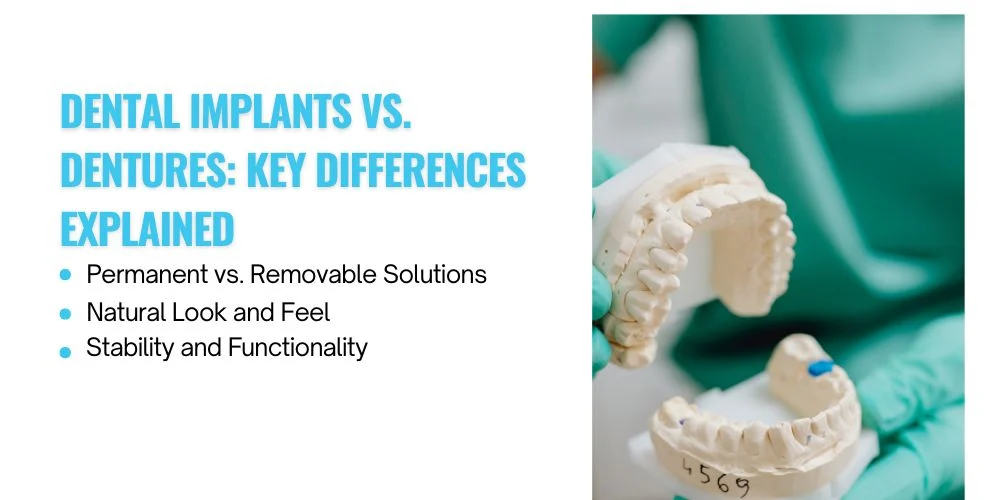
The main differences between dental implants and dentures come down to how they attach to your mouth, how natural they look and feel, and how stable they are during daily activities. Understanding these key differences will help you choose the best option for your needs.
Permanent vs. Removable Solutions
Dental implants are permanent tooth replacements that get surgically placed into your jawbone. Once the titanium post fuses with your bone, it stays there permanently.
You can’t remove implants like natural teeth. They become part of your mouth structure.
Dentures are removable prosthetic devices that you can take out of your mouth. Traditional dentures rely on neighboring teeth or gum tissue for support, which makes them less stable than implants.
You need to remove dentures daily for cleaning and soaking. This extra step takes time but allows you to clean them thoroughly.
Daily Care Differences:
- Implants: Brush and floss like natural teeth
- Dentures: Remove, soak, scrub, and rinse daily
Natural Look and Feel
Dental implants look and feel almost exactly like your natural teeth. The custom crown gets matched to your existing teeth’s color, shape, and size.
Most people can’t tell the difference between an implant and a real tooth. This makes implants great for front teeth replacements.
Dentures can look natural but often feel bulky in your mouth. The acrylic base and metal framework create a foreign feeling that takes time to get used to.
Partial dentures work well when you’re missing several teeth. However, they may not blend as seamlessly with your natural teeth as implants do. If you are weighing these two specifically, this breakdown of dental implants vs. partial dentures covers the differences in detail.
Your speech might change temporarily with either option. Implants typically cause fewer long-term speech issues than dentures.
Stability and Functionality
Implants offer superior stability because they anchor directly into your jawbone. You can eat any food without worrying about your teeth moving or falling out.
The implant stimulates your jawbone like a natural tooth root. This prevents bone loss and keeps your jaw strong over time.
Dentures can shift or move while eating or talking. Conventional dentures often result in looseness or shifting during chewing or speaking.
You might need to avoid certain sticky or hard foods with dentures. Corn on the cob or caramel apples could cause problems.
Bite Force Comparison:
- Natural teeth: 100% bite force
- Implants: 95-98% bite force
- Dentures: 20-25% bite force
Implants restore nearly full chewing power, while dentures significantly reduce what you can bite and chew effectively.
Still unsure which option suits you best? Book a smile consultation at CU Dentists in Champaign to discover whether implants or dentures fit your lifestyle.
Health and Bone Considerations
Your jawbone health and bone density play a major role in deciding between dental implants and dentures. These factors affect how well each option will work for you and how long they will last.
Jawbone Health and Bone Loss
Your jawbone needs stimulation from tooth roots to stay healthy and strong. When you lose teeth, the bone underneath starts to shrink because it no longer gets this stimulation.
Dental implants act like natural tooth roots. They stimulate your jawbone and help prevent bone loss. This keeps your facial structure looking normal over time.
Traditional dentures sit on top of your gums. They don’t provide the same stimulation to your jawbone. This means bone loss continues to happen when you wear regular dentures.
Bone loss can make your face look sunken over time. Your cheeks may appear hollow, and your lips might look thinner. This aging effect happens gradually but becomes more noticeable after several years.
Rate of bone loss with dentures:
- 25% of bone width lost in the first year
- Continues at 4mm per year after that
- Lower jaw typically loses bone faster than upper jaw
Bone Grafting and Density
Your current bone density determines if you can get dental implants right away. Some people need extra procedures to build up their jawbone first.
Bone grafting adds new bone material to areas where your jawbone is too thin or weak. This procedure creates a solid foundation for dental implants. The grafting material can come from your own body, a donor, or synthetic sources.
Your dentist will take X-rays or CT scans to check your bone density. They measure the height, width, and quality of bone available for implants.
Common bone grafting situations:
- Sinus lift: Adds bone to upper jaw near molars
- Ridge augmentation: Builds up narrow jawbone areas
- Socket preservation: Fills extraction sites to prevent bone loss
The healing time after bone grafting varies from 3 to 9 months. Your age and overall health affect how quickly the new bone integrates.
Oral Health Impact
Dental implants are easier to keep clean than dentures. You brush and floss them just like your natural teeth. This helps prevent gum disease and other oral health problems.
Dentures require special cleaning routines and adhesives. Food particles can get trapped underneath them, leading to bad breath and gum irritation.
Your remaining natural teeth stay healthier with implants. Partial dentures often put extra stress on the teeth they hook onto, which can damage them over time.
Daily care requirements:
- Implants: Regular brushing, flossing, and dental checkups
- Dentures: Remove for cleaning, soak overnight, clean gums
Peri-implantitis can develop around implants if you don’t maintain good oral hygiene. This gum disease around implants is similar to regular gum disease but can be more serious.
Your overall health affects both options. Conditions like diabetes or smoking can cause problems with implant healing and increase your risk of gum disease with dentures.
Concerned about bone loss or implant readiness? Book a bone density evaluation at CU Dentists in Champaign to see if you qualify for dental implants.
Cost, Maintenance, and Lifespan
Both dental implants and dentures have different costs upfront, with implants requiring higher initial investment but potentially offering better long-term value. Daily care routines vary significantly between the two options, affecting your oral hygiene habits and time commitment.
Upfront Costs and Long-Term Value
Dental implants typically cost $3,000-$5,000 per tooth initially. The higher price reflects the surgical procedure and titanium materials used. However, implants can last 25+ years with proper care.
Denture cost ranges from $600-$3,000 for a full set. Partial dentures fall between $700-$1,800. This makes them more affordable upfront for many patients.
Most dental insurance providers cover some or all of the cost of dentures. Insurance coverage for implants varies more widely. Many plans treat implants as cosmetic procedures.
Over 20 years, implants often cost less total. Dentures need replacements every 5-7 years. You’ll also pay for adjustments, repairs, and adhesives regularly.
Maintenance and Oral Hygiene
Implant care mirrors natural teeth. You brush twice daily and floss regularly. Standard toothpaste and brushes work fine. No special products are needed.
Denture maintenance requires more steps. You must remove them nightly for cleaning. Brush and rinse dentures daily, but not with toothpaste since it’s too harsh.
Daily denture care includes:
- Soaking overnight in cleaning solution
- Gentle brushing with a soft-bristled brush
- Rinsing after meals
- Using denture adhesive as needed
Even with full dentures, you must brush your gums, tongue, and palate every morning. This prevents infections and maintains oral health.
Replacement and Longevity
Dental implants can last your entire lifetime with good care. The crown portion may need replacement after 10-15 years. The implant root typically stays permanent.
Dentures require replacement every 5-7 years normally. Your jawbones and gums shrink and change over time, affecting denture fit.
Signs you need new dentures include:
- Loose or sliding fit
- Frequent sores or irritation
- Difficulty chewing or speaking
- Visible wear or damage
Poor denture fit causes problems beyond comfort. Loose dentures can lead to bone loss in your jaw over time. Regular dental visits help catch fit issues early.
Suitability and Lifestyle Factors
Your age, oral health, and daily habits all play a role in choosing between implants and dentures. The right choice depends on your bone health, lifestyle needs, and comfort with surgical procedures.
Who Is a Good Candidate?
Dental implants work best if you have healthy gums and enough jawbone to support them. You need good overall health to handle the surgical procedure.
Age is not a barrier for implants. Many older adults get implants successfully. However, you must be able to heal well after surgery.
Good implant candidates have:
- Healthy gums with no gum disease
- Adequate bone density in the jaw
- Good oral hygiene habits
- No uncontrolled diabetes or heart disease
Dentures suit almost anyone who has lost teeth. They work well if you cannot have surgery or lack sufficient bone for implants.
Dentures may be better if you:
- Want to avoid surgery completely
- Have medical conditions that slow healing
- Need a more affordable option
- Have significant bone loss in your jaw
Comfort, Fit, and Daily Life
Implants feel most like your natural teeth. They stay firmly in place when you eat, speak, or laugh. You can eat all your favorite foods without worry.
Complete dentures can feel loose initially until your mouth muscles adjust. Some people need denture adhesive for better fit and security.
Your daily routine changes less with implants. You brush and floss them like regular teeth. No special cleaning solutions are needed.
Dentures require more daily care. You must remove them at night and clean them with special products. You cannot sleep wearing them after the initial adjustment period.
Daily life considerations:
| Factor | Implants | Dentures |
| Eating | All foods allowed | Avoid sticky, hard foods |
| Speaking | No changes | May need practice |
| Cleaning | Regular brushing | Remove and soak nightly |
| Sleeping | Stay in mouth | Remove before bed |
Consulting Your Prosthodontist
A prosthodontist specializes in replacing missing teeth. They can evaluate your mouth and recommend the best option for your situation.
During your consultation, they will examine your gums, remaining teeth, and jawbone. X-rays help show bone density and quality.
Your prosthodontist will discuss your lifestyle and preferences. They consider factors like your age, health conditions, and budget.
Questions to ask include:
- How long will each option last?
- What are the risks and benefits?
- How much maintenance is required?
- What does the treatment timeline look like?
They may suggest trying dentures first if you are unsure about surgery. Some people start with dentures and switch to implants later.
Your oral health history matters too. If you have had gum disease or tooth decay, your prosthodontist will address these issues first.
Frequently Asked Questions
What are the key benefits of choosing dental implants over dentures?
Dental implants offer several advantages over traditional dentures. They provide better stability and won’t slip or move while you eat or talk.
Implants help maintain your jawbone strength. Unlike dentures, they stimulate the bone just like natural teeth do. This prevents the bone loss that often happens with dentures.
You can eat most foods without worry. Hard or sticky foods that cause problems with dentures are usually fine with implants.
Implants also look and feel more like your natural teeth. Many people find them more comfortable for daily activities.
How long do dental implants last compared to dentures?
Dental implants can last a lifetime with proper care. The titanium posts that go into your jawbone are designed to be permanent.
Traditional dentures typically need replacement every 5 to 8 years. They wear down from daily use and your mouth shape changes over time.
Snap-in dentures last longer than traditional ones. The implants can last your whole lifetime, while the denture part needs replacement every 15 to 20 years.
The crown on top of an implant may need replacement after 10 to 15 years. This is still much longer than traditional dentures.
Are there any dietary restrictions with dental implants that aren’t present with dentures?
Dental implants have fewer food restrictions than dentures. You can bite and chew almost like you did with natural teeth.
People with snap-in dentures can bite with up to 300% more force than those with traditional dentures. This makes eating tough foods much easier.
Traditional dentures often make it hard to eat corn on the cob, apples, or sticky foods. These foods can cause dentures to slip or come loose.
With implants, you avoid the adhesives and suction issues that limit denture wearers. Most people can return to eating all their favorite foods.
Can you explain the difference in maintenance requirements between dentures and dental implants?
Dental implants require care similar to natural teeth. You brush and floss them daily just like you would your original teeth.
Traditional dentures need removal for cleaning every night. You must brush them with special cleaners and soak them in water or cleaning solution.
Snap-in dentures should be taken out and brushed every day to remove plaque and food bits. You also need to clean your mouth thoroughly after removing them.
Implants stay in your mouth permanently. You don’t need special storage containers or soaking solutions like you do with removable dentures.
Both options require regular dental checkups. Your dentist will monitor the health of your gums and remaining bone.
How does the comfort level of wearing dentures differ from dental implants?
Dental implants typically feel more comfortable than dentures. They don’t move around in your mouth or create sore spots on your gums.
Traditional dentures can rub against your gums and cause irritation. They may also feel bulky or affect your speech until you adjust to them.
Implants feel like natural teeth because they’re anchored directly to your jawbone. You don’t have the foreign object sensation that many denture wearers experience.
Snap-in dentures are much more stable than traditional dentures. They don’t rub against the gum as much, which results in less irritation.
Some people need time to adjust to any new dental work. However, most implants require less adjustment period than dentures.
What are the initial and long-term costs associated with dental implants versus dentures?
Dental implants cost more upfront than traditional dentures. A single implant can range from $3,000 to $6,000 including the crown.
Traditional dentures typically cost $1,000 to $3,000 for a full set. This makes them more affordable initially for many people.
Snap-in dentures cost $3,000 to $12,000 per row of teeth before insurance. The price varies based on how many implants you need and your location.
Over time, implants may save money because they last longer. Dentures need replacement every few years, while implants can last decades.
Insurance coverage varies widely for both options. Some plans cover dentures but not implant surgery, while others may cover parts of both treatments.