


You want to replace a missing tooth, but your dentist says implants may not work for you. Health issues, bone loss, smoking, or certain medications can limit your options.
That news can feel discouraging, but you still have ways to restore your smile and chewing function.
If you are not a candidate for dental implants, you can choose options like dental bridges, partial dentures, full dentures, or other less invasive treatments based on your needs and oral health.
Each option comes with its own benefits, limits, and costs. Some are fixed in place, while others you remove at night.
You can also take steps that may improve your chances for implants in the future, depending on your situation. Understanding your choices helps you make a clear and confident decision about what works best for you.
Key Takeaways
- You still have several effective options if implants are not right for you.
- Fixed and removable solutions each offer different benefits and limits.
- Your health, bone level, and goals guide the best choice for your smile.
Explore dental implant alternatives and find the right solution for your smile.
Why You May Not Be a Candidate for Dental Implants
You may hear that you are not a candidate for dental implants for reasons tied to bone, gum health, or medical risks.
Dentists look closely at your jawbone structure, oral health, and overall health before they approve implant placement.
Insufficient Bone Density or Jawbone Structure
Dental implants need strong bone to stay stable. If you have insufficient bone density or weak jawbone structure, the implant may not bond well with the bone.
You can lose bone after a tooth has been missing for a long time. The jaw no longer gets pressure from chewing, so it begins to shrink. This often leads to what dentists call not enough bone for safe implant placement.
Some dentists recommend bone grafting to rebuild the area. Others may suggest advanced techniques, since new methods can help some patients avoid long grafting procedures.
Your dentist will review 3D scans to check:
- Bone height
- Bone width
- Bone density
- Location of nerves and sinuses
If the structure cannot safely support an implant, you may need alternative treatment.
Gum Disease and Oral Health Issues
Healthy gums hold your teeth and implants in place. If you have periodontal disease, also known as gum disease, you may not qualify for dental implants right away.
Gum disease damages the tissue and bone around your teeth. Active infection raises the risk of implant failure because bacteria can attack the healing area.
Signs your oral health may need treatment first include:
- Bleeding gums
- Swollen or tender tissue
- Loose teeth
- Chronic bad breath
Dentists often treat gum disease before reconsidering implant placement. Many providers explain that patients with ongoing infection may not be ideal candidates until their oral health improves.
You must commit to daily brushing, flossing, and regular cleanings to protect any future implant.
Medical or Lifestyle Factors Affecting Implant Placement
Your general health plays a major role in healing. Certain medical or lifestyle factors can delay or prevent implant placement.
Conditions that may affect healing include:
- Uncontrolled diabetes
- Autoimmune disorders
- Recent radiation to the jaw
- Heavy smoking
Smoking reduces blood flow to the gums. Poor blood flow slows healing and increases the risk of implant failure.
Age alone does not usually disqualify you. However, teenagers whose jawbone structure is still developing may need to wait.
Some medications also affect bone healing. Your dentist will review your full medical history before deciding if dental implants are safe for you.
Overview of Dental Implant Alternatives
If you can’t get implants, you still have several ways to replace missing teeth. You can choose fixed or removable tooth replacement options based on your health, budget, and comfort.
Fixed and Removable Tooth Replacement Options
You can choose from several alternatives to dental implants, depending on how many missing teeth you have and where they sit in your mouth.
Fixed options stay in place and do not come out at night. A dental bridge fills the gap by attaching to the teeth next to it.
Removable options include partial dentures, full dentures, and flipper teeth. These rest on your gums and clip around natural teeth if you still have some.
Many people choose them because they cost less upfront. Some clinics outline common tooth replacement options without implants, including snap-in dentures that use small anchors for added hold.
Each option replaces missing teeth in a different way. Stability, cleaning needs, and long-term upkeep can vary.
Factors to Consider When Choosing an Alternative
You should think about more than just price when choosing among alternatives to implants.
Start with oral health. Healthy gums and strong nearby teeth matter if you plan to get a bridge. If you have bone loss or medical limits, you may need non-surgical tooth replacement options.
Next, consider function and comfort. Back teeth handle more chewing force, so you need a strong solution. Front teeth affect your smile, so appearance matters more there.
Also review:
- Upfront cost vs. long-term repairs
- Daily cleaning routine
- How secure you want the teeth to feel
- How many teeth you need to replace
Your dentist can help you compare these details so you choose an option that fits your daily life.
Contact us to learn which dental implant alternatives are right for you.
Dental Bridges and Related Solutions
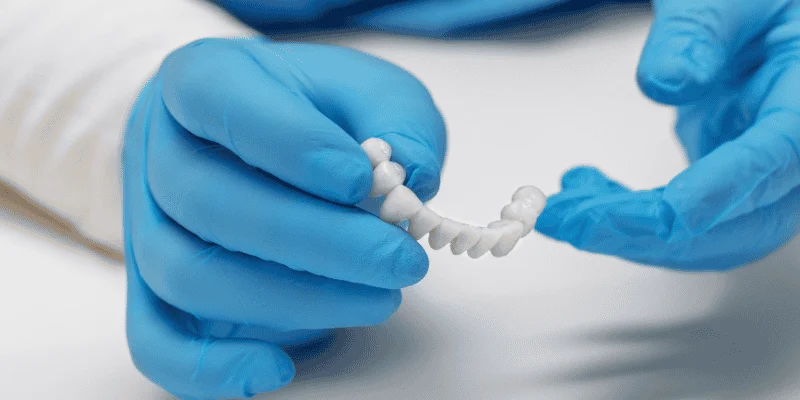
If you cannot get implants, a dental bridge can replace one or more missing teeth without surgery. These options use nearby teeth to hold a false tooth, called a pontic, in place.
Traditional Dental Bridges
A traditional bridge uses crowns on the teeth next to the gap. Your dentist shapes those teeth, places crowns on them, and connects them to a pontic in the middle.
This type of dental bridge works best when you have strong, healthy teeth on both sides of the space. It stays fixed in your mouth, so you do not remove it at night.
Key features:
- Fixed in place
- Replaces 1–3 missing teeth in a row
- Restores chewing strength
- Matches the color of your natural teeth
You should know that your dentist must remove some enamel from the support teeth. That change is permanent. With good care, many bridges last 10 to 15 years.
Maryland Bridge and Resin-Bonded Bridge

A Maryland bridge, also called a resin-bonded bridge, takes a more conservative approach. Instead of full crowns, it uses thin metal or ceramic “wings” bonded to the back of nearby teeth.
Your dentist does not need to reshape the entire tooth. This makes it a good choice for front teeth, where appearance matters most.
Best for:
- One missing front tooth
- Younger patients
- Situations where you want to save tooth structure
This bridge may not handle heavy biting force as well as a traditional bridge. Dentists often avoid placing it in the back of your mouth.
Bonded Bridge and Pontic Options
A bonded bridge attaches a pontic to nearby teeth using dental cement or small attachments. The pontic fills the gap and restores your smile’s shape.
Pontics come in different materials:
| Material | Common Use | Benefit |
| Porcelain | Front teeth | Natural look |
| Porcelain fused to metal | Front or back | Strength + appearance |
| Zirconia | Back teeth | High durability |
Your dentist shapes the pontic to match your bite and gum line. This helps your bite function so you can chew evenly and speak clearly.
Bonded options cost less than implants and avoid surgery. However, they depend on the health of the nearby teeth. If those teeth weaken, the entire dental bridge may need repair or replacement.
Removable Dentures and Partial Solutions
Removable dentures give you a way to replace missing teeth without surgery. You can choose a full set if you lost all your teeth or a partial denture if you still have healthy teeth left.

Complete Denture and Full Denture
A complete denture, also called a full denture, replaces all teeth in your upper jaw, lower jaw, or both. These traditional dentures rest directly on your gums and stay in place through suction or denture adhesive.
Dentists often suggest removable dentures if you are not a candidate for implants due to bone loss, health issues, or cost.
You can remove them at night for cleaning and to let your gums rest.
Benefits:
- Lower cost than implants
- No surgery
- Restore chewing and speech
Limits:
- May slip while eating
- Do not prevent bone shrinkage over time
- Require daily cleaning and periodic relining
You may need adjustments as your gums change shape.
Removable Partial Denture
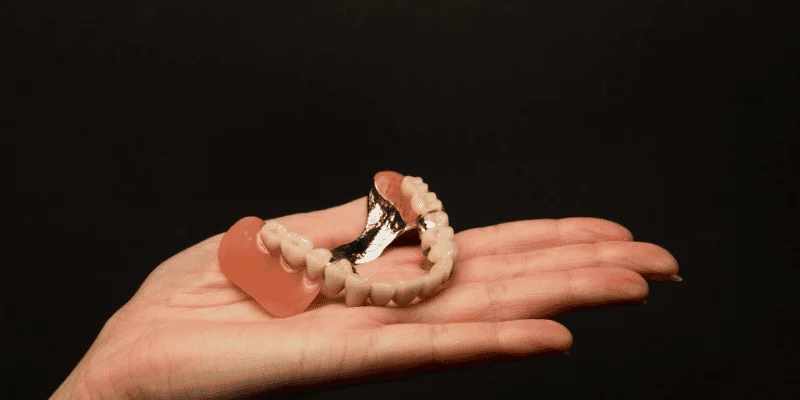
A removable partial denture fills gaps when you still have natural teeth. It uses a gum-colored base with replacement teeth attached. Metal or flexible clasps hold it onto nearby teeth.
Partial dentures help keep your remaining teeth from shifting into empty spaces. They also improve your bite and make chewing easier.
There are different types:
- Cast metal partial dentures for strength
- Flexible partial dentures for comfort
- Acrylic options for lower cost
Some patients compare bridges and partials before deciding. A breakdown of partial denture alternatives explains how partials differ from fixed bridges.
You remove your partial denture daily for cleaning. Good oral hygiene matters because plaque can build up around the clasps and supporting teeth.
Flipper Tooth: Temporary Partial Denture
A flipper tooth is a lightweight, temporary partial denture. Dentists often use it when you wait for a bridge, implant, or permanent partial denture.
It has an acrylic base with one or more artificial teeth. It usually does not have strong metal clasps. Because of this, it feels lighter but less stable.
You can use a flipper tooth to:
- Maintain space after a tooth is removed
- Protect your gums during healing
- Improve your smile in the short term
Flippers work best as a short-term fix. They can crack under heavy chewing and may feel bulky at first.
Your dentist will guide you on how long to wear it and when to move to a more stable solution.
Less Invasive and Special Alternatives
If you cannot get traditional implant placement, you still have options that require less surgery or protect your natural teeth. Some treatments use smaller implants, while others focus on saving teeth or using gentler materials.
Mini Dental Implants
Mini dental implants are smaller than standard implants. Dentists place them with a less complex procedure, often without cutting open the gum.
These mini implants work well if you have limited jawbone and want to avoid bone grafting. They can stabilize dentures or replace small teeth.
Because they are thinner, the dentist can often place them in one visit.
Key points to know:
- Smaller diameter than traditional implants
- Less invasive implant placement
- Shorter healing time in many cases
- Often cost less than full-size implants
However, mini dental implants may not handle heavy bite pressure in the back of your mouth. Your dentist will check your bone level and bite force before recommending them.
All-on-4 and Implant-Supported Options
If you have lost most or all of your teeth, the All-on-4 method may be an option. This approach uses four implants to support a full arch of teeth.
With All-on-4, the dentist places implants at specific angles to use the strongest areas of your jawbone. This may reduce the need for bone grafting. Many patients receive a temporary fixed denture the same day.
Implant-supported dentures are another choice. Instead of resting on your gums, the denture snaps onto implants. This gives you:
- Better stability
- Less slipping while eating
- Improved comfort compared to loose dentures
You can learn more about these alternatives to dental implants if you want fixed teeth without replacing each tooth with a separate implant.
These options still involve surgery, but they often use fewer implants than replacing each missing tooth one by one.
Root Canal Treatment as a Tooth-Saving Alternative
Sometimes you do not need to replace a tooth at all. If the tooth is infected but still strong enough to keep, root canal treatment can remove the infection and save it.
During this procedure, your dentist removes infected pulp, cleans the inside of the tooth, and seals it. In many cases, a crown covers the tooth to restore strength.
Keeping your natural tooth helps:
- Maintain your normal bite
- Prevent shifting of nearby teeth
- Avoid implant placement altogether
If your tooth root is healthy and the surrounding bone is stable, saving the tooth can be simpler and less invasive than surgery.
Holistic Alternatives to Dental Implants
Some patients prefer treatments that avoid metal implants or major surgery. Holistic alternatives to dental implants often include bridges and removable dentures.
For example, a dental bridge fills a gap by attaching an artificial tooth to nearby teeth. Dentures rest on your gums and can replace several or all missing teeth.
You can review different tooth replacement options such as partial dentures, full dentures, and bridges if you want a non-surgical approach.
These options do not stop bone loss the way implants can. Still, they can restore chewing and speech while keeping treatment simpler and more affordable.
Your dentist can help you weigh comfort, cost, and long-term care before you choose.
Restoring Candidacy for Dental Implants
You may not qualify for dental implants right now, but that can change. Dentists often use specific treatments to rebuild bone and improve oral health so your jaw can support an implant.
Bone Grafting and Sinus Lift Procedures
Dental implants need strong, healthy bone to stay stable. If you have bone loss, your dentist may suggest a bone graft.
A bone graft adds bone material to thin or weak areas of your jaw. Over several months, your body replaces the graft with new bone. This process, called bone grafting, can create enough support for dental implants.
If you need implants in your upper back jaw, your dentist may recommend a sinus lift. This procedure raises the sinus floor and places bone material underneath it. It increases bone height where the sinus sits too close to the jaw.
You may need to wait a few months after these procedures before placing implants. Healing time depends on how much bone you need and how your body responds.
Improving Oral Health and Seeking Expert Opinions
Your oral health plays a major role in implant success. Dentists often delay treatment if you have gum disease, active decay, or poor daily hygiene.
You can improve your chances by:
- Brushing twice a day
- Flossing daily
- Treating gum disease before surgery
- Quitting smoking or tobacco use
Healthy gums and controlled plaque lower the risk of implant failure. Your dentist may recommend a deep cleaning or periodontal treatment before moving forward.
If one provider says you are not a candidate, consider getting a second opinion. Some offices focus on complex cases and may offer advanced options.
A detailed exam, 3D imaging, and a full health review can reveal options you did not know you had.
Frequently Asked Questions
Many people cannot get dental implants due to health issues, bone loss, or cost. You still have several safe and proven ways to replace missing teeth and protect your oral health.
Why might someone not be a good candidate for dental implants?
You may not qualify for implants if you do not have enough healthy jawbone to support them. Severe bone loss can make placement hard without extra procedures.
Active gum disease can also delay or prevent implant treatment. Dentists need healthy gums to lower the risk of infection.
Certain medical conditions may affect healing.
Cost and personal preference also matter. Some people choose non-surgical treatments instead.
What are the best options to replace missing teeth if implants aren’t possible?
You can replace missing teeth with dental bridges, partial dentures, or full dentures. The right choice depends on how many teeth you are missing and where they are located.
A dental bridge attaches to nearby teeth and stays fixed in place. A partial denture can replace one or several teeth and can be removed for cleaning.
Can bone loss or gum disease be treated so I could get implants later?
You may be able to treat gum disease with deep cleanings and ongoing care. Healthy gums are a key step before any implant plan.
Dentists can also treat some bone loss with grafting procedures. These treatments aim to rebuild bone so it can support an implant.
Your dentist will use exams and imaging to decide what is possible. In some cases, treatment can improve your chances of getting implants later.
How do bridges compare to dentures in comfort, cost, and durability?
A dental bridge stays fixed in your mouth. It often feels more stable than a removable denture.
Bridges usually cost more upfront than removable dentures. However, they do not need to be taken out each day.
Dentures cost less at first but may need relines or adjustments over time.
Are removable partial dentures a good choice if I’m missing several teeth?
Removable partial dentures can work well if you are missing several teeth but still have healthy natural teeth. They fill the gaps and help you chew and speak more clearly.
They are often one of the most affordable options. Some dentists note that removable partial dentures are often the most affordable alternative.
You will need to remove and clean them daily. Over time, the fit may change as your mouth changes.
How can I keep my jawbone and facial shape healthy without implants?
You can protect your jawbone by replacing missing teeth instead of leaving gaps. Even dentures or bridges can help support chewing function.
Keep your gums healthy with daily brushing, flossing, and regular dental visits. Treat gum disease early to limit bone loss.
Good nutrition and routine care support long-term oral health. If you notice changes in fit or comfort, schedule a dental checkup to adjust your appliance.