




You may worry that gum disease means dental implants are off the table. That fear often comes from hearing about bone loss, infection, or failed implants. The good news is that modern care gives you more options than you may expect.
Yes, you can get dental implants if you have gum disease, but you must treat the disease and restore gum and bone health first. Dentists focus on stopping infection, rebuilding support, and creating a clean, stable base for the implant. With the right plan, implants can still work well and last.
This article explains what makes implants possible after gum disease and what steps help protect your results. You will learn how treatment, healing, and long-term care work together to support a strong outcome.
Key Takeaways
- Gum disease does not rule out implants when treatment comes first.
- Bone loss and infection risks need careful planning and care.
- Ongoing hygiene and checkups help protect implants long term.
Schedule a gum and implant evaluation in Champaign, IL to see if you qualify.
Can You Get Dental Implants with Gum Disease?
You can get dental implants if you have gum disease, but treatment must come first. Your dentist looks at gum health, bone support, and infection control before placing an implant. The type and stage of gum disease play a direct role in your implant eligibility.
How Gum Disease Affects Dental Implant Eligibility
Gum disease affects the tissues and bone that hold dental implants in place. When infection damages these areas, implants lose the support they need to stay stable. This risk increases if periodontal disease remains active.
Bone loss creates the biggest concern. Periodontitis can reduce jawbone density, which weakens implant stability and raises the chance of failure. Dentists often address this problem before implant surgery.
Common effects of gum disease on implants include:
- Bone loss that limits implant support
- Higher risk of implant failure due to infection after surgery
- Slower healing around the implant site
When dentists control the infection and restore gum health, many people with missing teeth still qualify for implants. Early treatment improves long-term success.
Stages of Gum Disease and Implant Considerations
The stage of gum disease guides implant decisions. Mild cases create fewer limits, while advanced cases require more steps.
| Gum Disease Stage | Implant Considerations |
| Gingivitis | Often reversible with cleanings and home care |
| Early Periodontitis | May need deep cleaning before implant placement |
| Advanced Periodontitis | Often requires surgery or bone grafting |
Gingivitis causes inflammation without bone loss, so dentists often move forward after treatment. Periodontitis leads to tooth loss and bone damage, which delays implant placement.
Dentists never place implants during active infection. Treating gum disease first protects the implant and surrounding tissue.
Personalized Assessment by Your Dentist
Your dentist decides implant eligibility through a detailed exam. They check gum health, measure bone levels, and review your history of tooth loss. Imaging scans help spot hidden bone damage.
Dentists often follow a step-by-step plan:
- Treat gum disease
- Confirm stable gums and bone
- Place the dental implant
- Monitor healing closely
Many practices explain this process in guides about dental implants with gum disease. Others outline how gum disease impacts implant success.
Your daily care also matters. Strong brushing, flossing, and follow-up visits help protect your implant long after placement.
Visit our Rantoul, IL dental team to restore gum health before implant treatment.
Challenges and Risks of Dental Implants in Patients with Gum Disease
Gum disease changes how your gums and bone support an implant. These changes raise risks related to bone strength, healing, and long-term implant health.
Bone Loss and Stability Concerns
Gum disease often causes bone loss around the teeth and jaw. That bone supports a dental implant, so reduced bone can make it harder to place the implant in the right position.
When bone volume drops, the implant may not anchor well. This problem can affect osseointegration, which is the process where the implant bonds with your bone. Weak bonding increases movement and discomfort.
Some patients need bone grafting before implants after gum disease treatment. Dentists often explain this step when discussing gum disease and dental implant risks.
Bone loss can also lead to gum recession, which may expose parts of the implant. Exposure can affect appearance and make cleaning harder.
Higher Risk of Implant Failure
A history of gum disease increases the risk of implant failure, especially if the disease was advanced. Bacteria that caused earlier damage can remain active if treatment or hygiene falls short.
Implants rely on healthy gums and bone to stay stable. If inflammation returns, it can weaken the tissue around the implant and reduce support over time.
Dentists often stress careful planning and follow-up for patients considering implants after gum disease. Many offices explain these concerns in guides about how gum disease affects dental implants.
You can lower risk by keeping up with cleanings, daily brushing, and flossing. These steps protect the implant just like a natural tooth.
Infection and Peri-Implantitis
Infection remains a major concern when you have a gum disease history. Bacteria can inflame the tissue around an implant and cause peri-implantitis.
Peri-implantitis damages the gum and bone that support the implant. Left untreated, it can lead to bone loss and eventual implant failure.
This condition resembles gum disease but affects implants instead of teeth. Many dental practices describe it when covering the connection between gum disease and dental implants.
You reduce infection risk by cleaning around the implant daily and attending regular dental visits. Early care helps control inflammation before it becomes severe.
Book a consultation to find out if implants are possible after gum disease.
Treating Gum Disease Before Dental Implant Placement
You need healthy gums and stable bone before an implant can succeed. Dentists control infection, clean below the gumline, and rebuild damaged tissue so your mouth can support an implant safely.
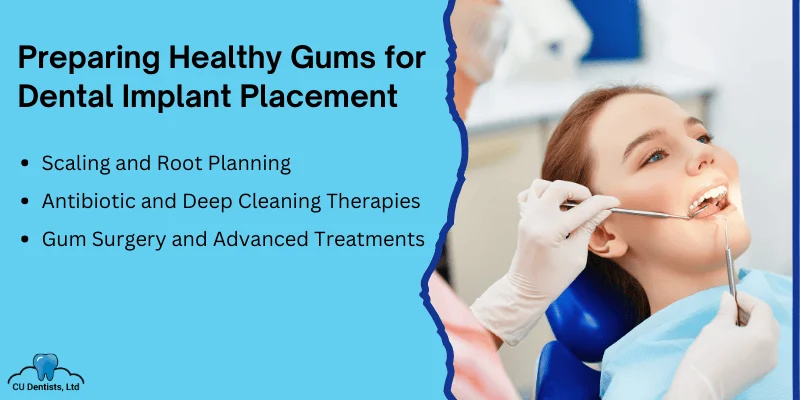
Scaling and Root Planing
Scaling and root planing treats early to moderate gum disease by cleaning deep below the gums. Your dentist removes plaque and tartar from tooth roots, then smooths the surface so bacteria cannot stick as easily.
This deep cleaning reduces swelling and bleeding and helps gums reattach to teeth. Many people avoid surgery when they start treatment early.
What to expect
- Local numbing for comfort
- One or more visits, based on severity
- Improved gum health in weeks with good home care
Dentists often start implant planning only after this step controls infection, which lowers the risk of implant failure.
Antibiotic and Deep Cleaning Therapies
When bacteria run deep, dentists add antibiotic therapy to scaling and root planing. These medicines target infection that brushing cannot reach.
Your dentist may place antibiotics directly into gum pockets or prescribe pills for short-term use. This approach helps stabilize gums before surgery.
Common options
- Local antibiotic gels or chips
- Short oral antibiotic courses
- Ongoing periodontal care visits
These treatments support healing and reduce reinfection while gums recover. Providers often combine them with strict home care to keep results stable. This approach aligns with guidance on gum disease treatment before implants.
Gum Surgery and Advanced Treatments
Advanced gum disease can cause bone loss, which weakens implant support. In these cases, gum surgery restores a healthy foundation.
Periodontal care may include pocket reduction surgery to remove infected tissue and make cleaning easier. When bone loss exists, dentists use grafts or regenerative materials to rebuild support.
Advanced treatments may include
- Pocket reduction surgery
- Bone grafting or regeneration
- Gum grafts for thin or receding tissue
These procedures take time to heal, but they improve implant stability and long-term results.
Overcoming Bone Loss: Grafting and Other Procedures
Bone loss does not always block dental implant placement. Dentists use proven procedures to rebuild support, improve stability, and help you move forward with implant surgery even after gum disease.
Bone Grafting for Implant Success

Bone grafting rebuilds areas of your jaw that lost strength due to gum disease or long-term tooth loss. During implant surgery prep, your dentist places graft material where bone is thin. Over time, your body grows new bone around it.
This step improves stability and lowers the risk of implant failure. Many patients with advanced bone loss still qualify for implants after grafting, even when loss looks severe on scans. This approach plays a key role in bone grafting for dental implants.
Common graft benefits include:
- Better support for dental implant placement
- Improved bite strength
- Healthier jaw structure for restorative dentistry
Healing often takes a few months. Your dentist tracks progress before moving to the implant stage.
Sinus Lift and Ridge Augmentation
When bone loss affects the upper back jaw, a sinus lift may help. This procedure raises the sinus floor to create space for new bone. Dentists often pair it with bone grafting to increase height for implants.
Ridge augmentation focuses on width. If your jaw ridge shrank after tooth loss, this method rebuilds its shape so implants fit correctly. These techniques expand your options when standard implants are not possible.
Dentists rely on 3D scans to plan these steps. Many patients once told “no” now qualify thanks to advances in care, including options for dental implants with severe bone loss.
Mini Implants as Alternatives
Mini implants offer a smaller option when bone volume stays limited. They use a thinner post and need less bone for support. Dentists often place them with less healing time.
They work well for stabilizing dentures or replacing small teeth. While not right for every case, they help many patients avoid complex grafting. You can learn more about options for mini implants with bone loss.
Standard vs. Mini Implants
| Feature | Standard Implants | Mini Implants |
| Bone needed | Moderate to high | Lower |
| Healing time | Longer | Often shorter |
| Best use | Single or multiple teeth | Dentures or small spaces |
Your dentist will guide you based on your bone health and goals.
Ensuring Long-Term Success with Dental Implants After Gum Disease
Strong daily habits, early warning checks, and regular professional care protect your implant and your gums. These steps lower infection risk, limit plaque buildup, and support steady healing so you can restore your smile with confidence.
Oral Hygiene Habits and Maintenance
You protect implant success with consistent oral hygiene. Brush twice a day using a soft brush, and clean along the gum line to limit plaque buildup. Use floss or interdental brushes made for implants to reach tight spaces.
Choose products that support gum health. Antibacterial mouth rinse can help, but avoid harsh formulas that dry your mouth. If you grind your teeth, ask about a night guard to protect the implant.
Daily checklist
- Brush for two minutes, morning and night
- Clean between teeth once a day
- Rinse after meals when possible
- Avoid smoking, which slows healing
Healthy routines support oral health and help keep inflammation away from the implant.
Monitoring for Recurrence of Gum Issues
You need to watch for signs that gum disease may return. Redness, swelling, bleeding, or bad breath can signal trouble. Pain around the implant or a loose feeling needs quick attention.
Gum disease can affect implants if it comes back. Research shows that gum health plays a direct role in implant stability, which makes early action important.
Check your gums weekly under good light. If you see changes, call your dental office. Fast care can stop small issues before they harm the implant.
Professional Dental Visits and Periodontal Care
Regular visits support long-term dental implant success. Professional cleanings remove hardened plaque you cannot reach at home. Your provider will also check bone levels and the tissue seal around the implant.
Periodontal care may include deeper cleanings if needed. Treating gum problems early helps protect the implant and surrounding bone. Consistent care lowers the risk of infection and failure.
Typical care schedule
- Cleanings every 3–6 months
- X-rays as advised to track bone health
- Periodontal checks for inflammation
Who Is a Candidate for Dental Implants After Gum Disease?
You can qualify for implants after gum disease if you treat the infection and rebuild support in your mouth. Dentists focus on gum health, bone levels, and daily care habits before they approve treatment.
Key Factors Dentists Consider
Dentists look at clear clinical signs to decide if you are a candidate for dental implants. They check if your gums show no active infection and if your jawbone can hold an implant.
They often review these factors:
- Gum health: No bleeding, swelling, or deep pockets
- Bone support: Enough bone height and width
- Healing ability: Stable medical conditions and good blood flow
- Home care: Daily brushing, flossing, and regular cleanings
Advanced Gum Disease: Unique Solutions
Advanced gum disease does not always rule out implants. It does mean your plan will need extra steps and more time.
Common solutions include:
| Problem | Possible Solution |
| Severe bone loss | Bone grafting |
| Deep gum pockets | Surgical gum treatment |
| Past tooth loss | Early implant planning |
Some patients may need smaller implants or staged surgery. Others may need teeth removed first to protect remaining bone.
Consulting with Implant Specialists
You should meet with a dentist who places implants after gum disease often. These providers know how to manage higher risks and longer healing times.
During a consult, you can expect:
- Full gum exam and bone scans
- Review of past gum treatments
- A step-by-step care plan
Specialists also explain long-term upkeep. Gum disease can return if care slips. Ongoing cleanings matter as much as surgery.
Frequently Asked Questions
Gum disease does not always rule out dental implants, but you need healthy gums and enough bone to support them. Treatment, healing time, and daily care all affect whether implants can succeed.
Can gum disease affect my eligibility for dental implants?
Yes, gum disease can affect whether you qualify for dental implants. Active infection and bone loss can make implants unstable or more likely to fail.
Dentists often require gum disease treatment before they place an implant.
What steps should I take to prepare for implants if I have gum disease?
Start by getting a full dental exam that checks your gums and bone levels. Your dentist may use scans to see how much bone support you have.
Treatment often includes deep cleanings, antibiotics, or gum procedures. You must also follow home care steps to keep infection under control before surgery.
Are there alternative options to dental implants for those with gum issues?
Yes, some people may need other options if implants are not safe right away. Bridges or dentures can replace missing teeth without surgery.
In certain cases, smaller implants or staged treatment may work.
How can I improve my gum health for a successful dental implant procedure?
Brush twice a day and clean between your teeth every day. These steps lower bacteria that cause gum infection.
Professional cleanings and follow-up visits also matter. Consistent care helps keep gum disease under control and protects future implants.
What are the risks of dental implants for patients with gum disease?
The main risks include infection, slow healing, and implant failure. Gum disease can also lead to peri-implantitis, which damages bone around the implant.
How does gum disease treatment impact the success rate of dental implants?
Treating gum disease greatly improves implant success. Healthy gums reduce infection and help bone bond to the implant.
When treatment comes first, implants can last many years with proper care.