

If you take daily medications, you might not realize they can affect how well your dental implants heal. Many common drugs change how your body builds bone, controls swelling, and fights infection.
That can slow healing or increase the risk of problems after surgery.
Certain medications can weaken bone healing, lower your immune response, or reduce blood flow, which may delay or even cause dental implant failure.
Drugs such as steroids, some antidepressants, acid reflux medications, and osteoporosis treatments can all play a role.
You do not need to panic if you take medication. You just need the right plan.
When you understand how medications influence healing, you can work with your dentist to protect your dental implants and improve your long‑term results.
Key Takeaways
- Some medications can slow bone healing and affect dental implant success.
- Drugs that change bone density or immune response may raise implant risks.
- Careful planning helps protect your dental implants if you take daily medication.
Learn how medications that affect dental implants impact healing and success.
How Medications Directly Influence Dental Implant Healing
Medications can change how your body forms new bone, controls inflammation, and keeps implants stable. These changes affect osseointegration, implant stability, dental implant success, and long‑term implant survival.
Impact on Osseointegration
Osseointegration is the direct bond between your bone and the implant surface. Your body builds this bond during the first few months after surgery.
Some medications interfere with this process.
An umbrella review on systemic diseases and medications and dental implant outcomes found that proton pump inhibitors (PPIs) and selective serotonin reuptake inhibitors (SSRIs) may negatively affect implant osseointegration by altering bone metabolism and mineral balance.
You can read more in this review on systemic diseases and medications and dental implant outcomes.
Other drugs, such as many blood pressure medicines and beta blockers, did not show a clear drop in osseointegration rates in that review. Still, your dentist must check your medication list before surgery.
When a drug slows bone cell activity, your bone may not attach tightly to the implant. That weak bond can lower early implant stability and increase the risk of implant failure.
Effects on Implant Stability
Implant stability means how firmly your implant stays in place. You need strong stability at placement and during healing.
Some medications affect the cells that control bone turnover.
For example:
- Antiresorptive drugs (like bisphosphonates) slow bone breakdown.
- Glucocorticoids can reduce bone formation.
- Certain antidepressants and acid‑reducing drugs may alter bone density.
If bone remodeling slows too much, your implant may not gain enough secondary stability. You might not notice this right away, but it can affect how well the implant handles chewing forces.
Your dentist may adjust healing time or loading plans if you take medications that influence bone turnover.
Consequences for Implant Success and Survival Rate
Dental implant success means more than just placing the implant. It includes healthy gums, no pain, and stable bone levels over time.
Medications can influence your implant survival rate in subtle ways. A systematic review on medication-related dental implant failure looked at drugs that affect bone metabolism and their link to implant outcomes.
Some studies suggest that patients using certain antidepressants or acid‑suppressing drugs may have higher implant loss rates. The evidence is not always strong, but it raises concern.
On the other hand, common conditions like controlled diabetes do not always reduce implant survival when managed well.
Good medical control, careful planning, and regular follow‑up visits help protect your implant success.
Your personal risk depends on the type of medication, dose, and how long you take it.
Influence on Bone Healing
Bone healing starts right after implant placement. Your body sends cells to form new bone around the implant threads.
Medications can affect this healing stage in several ways:
- NSAIDs may reduce inflammation but can also slow early bone healing.
- Steroids can suppress immune response and delay tissue repair.
- Hormone‑related drugs may change how quickly bone cells work.
Bone healing depends on a balance between bone formation and bone resorption. If a medication disrupts that balance, your implant may take longer to integrate.
You can improve bone healing by sharing your full medication list, following post‑surgery instructions, and keeping medical conditions under control.
Close coordination between your dentist and physician helps protect implant stability and long‑term implant survival.
Medications That Alter Bone Metabolism and Implant Outcomes
Some medications change how your body builds and breaks down bone. These changes can help protect bone in some cases, but they can also raise the risk of dental implant failure.
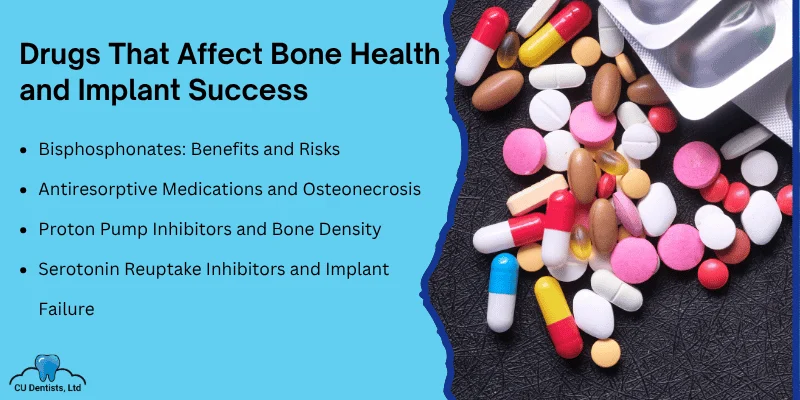
Bisphosphonates: Benefits and Risks
Bisphosphonates slow bone breakdown by blocking osteoclast activity.
Doctors often prescribe oral bisphosphonates for osteoporosis and high-dose bisphosphonates, such as zoledronic acid, for cancer-related bone disease.
Low doses may support bone stability around implants.
Research shows these drugs can improve implant bonding in some settings, especially when used locally rather than systemically, as described in this review on the dual effects of bisphosphonates on implant osseointegration.
However, long-term or high-dose use can overly suppress bone remodeling. Your jaw needs normal bone turnover to heal after implant surgery.
When remodeling slows too much, your risk of delayed healing or implant failure increases.
Tell your dentist if you take oral bisphosphonates or receive IV forms like zoledronic acid. Treatment planning may change based on dose, route, and duration.
Antiresorptive Medications and Osteonecrosis
Antiresorptive medications include bisphosphonates and other drugs that reduce bone resorption. These drugs help prevent fractures, but they can raise the risk of medication-related osteonecrosis of the jaw (MRONJ).
Osteonecrosis means bone tissue dies due to poor blood supply and limited remodeling. In the jaw, this condition can develop after tooth removal or implant placement.
A review of how medications affect implant outcomes notes that drugs that alter bone metabolism can influence healing and long-term implant survival, especially in higher-risk patients, as explained in this overview of the impact of medications on osteointegration and implant survival.
Your risk depends on:
- Drug type
- Dose and duration
- IV versus oral use
- Cancer versus osteoporosis treatment
If you use antiresorptive medications, your provider may delay implants, use less invasive surgery, or coordinate care with your physician.
Proton Pump Inhibitors and Bone Density
Proton pump inhibitors (PPIs) reduce stomach acid. You may take them for reflux or ulcers. Common examples include omeprazole and pantoprazole.
Stomach acid helps your body absorb calcium. When PPIs lower acid levels, calcium absorption may decrease. Over time, this can reduce bone density, especially in older adults.
Lower bone density may weaken the bone around an implant. Some studies suggest a possible link between long-term PPI use and higher rates of dental implant failure.
If you take PPIs daily, ask your dentist and physician to review the need and duration. They may check your calcium and vitamin D intake or assess bone health before implant placement.
Serotonin Reuptake Inhibitors and Implant Failure
Selective serotonin reuptake inhibitors (SSRIs) and other serotonin reuptake inhibitors, including SNRIs and some TCAs, treat depression and anxiety.
These antidepressants affect serotonin levels, which also play a role in bone metabolism.
Serotonin can influence how osteoblasts and osteoclasts work. Some research links SSRI use with lower bone density and higher fracture risk. This effect may extend to implant healing.
Reports have associated SSRI use with increased rates of dental implant failure in some patient groups. The risk appears higher with long-term use.
If you take antidepressants, do not stop them on your own. Instead, inform your dental team. They can assess your overall risk and monitor healing closely to reduce the chance of medication-related implant failure.
Contact us to discuss how medications that affect dental implants may impact your treatment.
Other Common Medications Impacting Implant Healing
Several everyday prescriptions can change how your body builds bone, controls swelling, and fights infection. These effects can slow osseointegration or raise the risk of implant problems if you do not plan ahead.
Anti-Inflammatory Drugs and Bone Remodeling
You may take anti-inflammatory drugs for pain after surgery or for chronic joint issues. Common options include ibuprofen and celecoxib.
These drugs lower inflammation by blocking prostaglandins. Prostaglandins help control bone remodeling, which is the process your body uses to form new bone around an implant.
When you reduce this response too much, you may slow bone turnover. Slower bone turnover can delay the tight bond between your implant and jawbone.
Short-term use for a few days often causes little concern. Long-term or high-dose use may interfere more with healing.
If you need pain relief, your dentist may adjust the dose or suggest other options. Always share how often and how long you take anti-inflammatory drugs before implant surgery.
Immunosuppressive Drugs and Immune Response
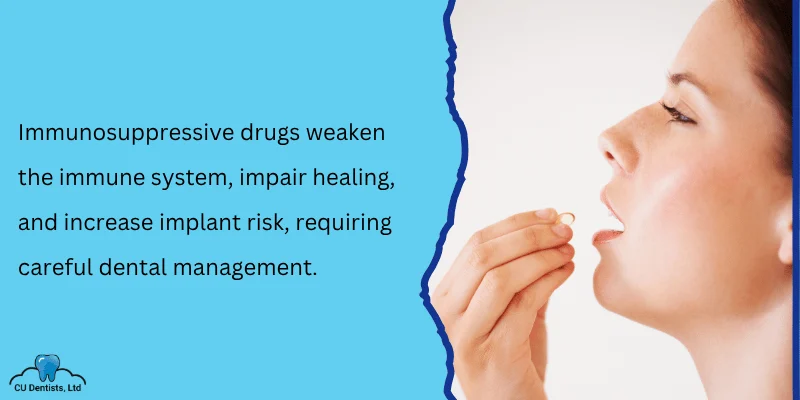
Immunosuppressive drugs weaken your immune response. Doctors prescribe them for autoimmune diseases, organ transplants, and some inflammatory conditions.
These medications lower your body’s ability to fight bacteria. After implant placement, your mouth relies on a healthy immune response to control infection and support healing.
Some drugs also affect bone cells directly. They can reduce new bone formation or change normal bone turnover.
Research on medication effects shows that several systemic drugs can alter bone healing and implant outcomes, including those that affect immunity and bone metabolism, as explained in this review of the impact of medications on osseointegration and implant survival.
If you take immunosuppressive drugs, your dentist may use careful infection control, antibiotics, and close follow-up visits. You should never stop these medications without medical advice.
Antihypertensive Medications in Implant Dentistry
High blood pressure often requires daily medication. Common types include:
- Beta-blockers
- Thiazide diuretics
- ACE inhibitors
- Calcium channel blockers
- Angiotensin-converting enzyme inhibitors
Some beta-blockers and thiazide diuretics may have neutral or even mild positive effects on bone density. Thiazides can reduce calcium loss in urine, which may help maintain bone mass.
ACE inhibitors and calcium channel blockers mainly affect blood vessels. They can change blood flow to healing tissues, which may influence early healing.
Certain calcium channel blockers may also cause gum overgrowth. Excess gum tissue can make cleaning around implants harder.
You should tell your dentist exactly which blood pressure drugs you take and at what dose. This helps your care team plan safe surgery and monitor healing.
Antidepressants: Beyond SSRIs
Many people know about selective serotonin reuptake inhibitors (SSRIs). However, other antidepressants can also affect implant healing.
Some antidepressants influence serotonin levels in bone. Serotonin plays a role in bone turnover and remodeling.
Tricyclic antidepressants and other classes may also affect bone density or increase dry mouth. Dry mouth raises your risk of plaque buildup and infection around the implant.
Medication guidance for implant patients notes that certain antidepressants have been linked to changes in bone quality and healing response.
If you take antidepressants, keep your mouth very clean and attend regular checkups. Clear communication between your dentist and physician helps reduce risks and protect your implant.
Medication-Related Complications and Implant Risks
Certain medications can change how your bone and gum tissue respond after implant surgery. These changes may increase marginal bone loss, raise the risk of gum disease, or affect healing if you have osteoporosis or osteopenia.
Medication-Induced Marginal Bone Loss
Marginal bone loss happens when the bone around your implant shrinks over time. Some medications can disturb the normal balance between bone building and bone breakdown.
Drugs that affect bone metabolism, such as proton pump inhibitors (PPIs) and selective serotonin reuptake inhibitors (SSRIs), have been linked to higher implant failure rates.
A systematic review on medication-related dental implant failure found increased failure rates in patients taking PPIs and SSRIs.
When bone does not remodel well, your implant may lose support at the neck. This can lead to:
- Early implant instability
- Deepening gum pockets
- Increased plaque buildup
You may not notice marginal bone loss at first. Your dentist often sees it on follow-up X-rays before you feel symptoms.
Peri-Implantitis and Peri-Implant Disease
Peri-implant disease includes peri-implant mucositis and peri-implantitis. Mucositis affects the soft tissue. Peri-implantitis also involves bone loss.
Some medications reduce your body’s ability to control inflammation or fight infection. Others change blood flow or healing speed. These effects can increase your risk of implant complications.
For example, certain antidepressants, blood thinners, and drugs that affect bone quality may raise the risk of infection or delayed healing.
An overview of systemic diseases and medications that influence dental implant success explains how these factors can affect osseointegration and peri-implant tissue health.
If you develop peri-implantitis, you may notice:
- Bleeding when brushing
- Swelling around the implant
- Bad taste or mild pain
- Bone loss seen on X-rays
Early treatment helps prevent further damage.
Osteoporosis and Osteopenia Implications

If you have osteoporosis or osteopenia, your bone density is lower than normal. This can affect how well your implant bonds with bone.
Bone cells called osteoblasts and osteoclasts control bone turnover. Some medications and hormone changes can disrupt this balance.
An article on the impact of medications on osteointegration and implant survival explains how drugs that alter hormone levels or bone metabolism may influence implant stability.
Lower bone density does not mean you cannot get implants. It does mean your dentist must check:
- Bone thickness
- Jaw quality
- Healing time
- Current medication use
In some cases, you may need bone grafting or a longer healing period before placing the final crown.
Strategies to Minimize Implant Complications
You can lower your risk of implant complications by sharing your full medical history. Always tell your dentist about:
- Antidepressants
- PPIs
- Blood thinners
- Osteoporosis medications
- Long-term steroid use
Your dentist may contact your physician to adjust timing or review risks. In some cases, they may change the implant plan or monitor you more closely after surgery.
You also play a key role. Brush twice daily, clean around the implant carefully, and attend regular follow-up visits.
Early detection of marginal bone loss or peri-implant mucositis gives you the best chance to protect your implant for the long term.
Bone Biology and Healing in Medication Users
Your bone cells control how well an implant bonds to your jaw. Medications can change how these cells break down, build, and maintain bone, which can affect healing speed and implant stability.
Roles of Osteoclasts and Osteoblasts
Your bone stays healthy because of two main cell types: osteoclasts and osteoblasts. Osteoclasts break down old or damaged bone. Osteoblasts build new bone in its place.
This balance allows normal bone turnover. Dentists call this process bone remodeling.
Some medications change how these cells work. For example, bisphosphonate drugs and dental implant healing have been widely studied. These drugs slow osteoclast activity.
That can reduce bone loss, but it may also slow early healing if you take them before or at the time of implant surgery.
Other drugs may also affect integration. Reviews on the impact of medications on osteointegration and implant survival explain that implant success depends on healthy osteoblast and osteoclast activity.
If either cell type becomes too active or too suppressed, the implant may not bond as well to bone.
When you take medications that affect bone cells, your dentist must consider timing, dose, and duration before placing an implant.
Osteocytes and Bone Homeostasis
Osteocytes are mature bone cells that live inside the bone matrix. They act as sensors. They detect pressure, strain, and microdamage in your jaw.
These cells help control bone homeostasis, which means keeping bone stable and balanced over time. They send signals that tell osteoclasts when to remove bone and tell osteoblasts when to form new bone.
If a medication alters bone signaling, osteocytes may not respond normally to stress from chewing or from a new implant.
Some systemic drugs that affect bone metabolism can influence implant outcomes, as discussed in research on medication‑related dental implant failure.
When osteocyte signaling changes, your bone may remodel more slowly or unevenly. That can affect long-term implant support, even if early healing seems normal.
Bone Metabolism During Implant Healing
When your dentist places an implant, your body starts a clear sequence of healing steps. First, blood fills the site and forms a clot. Then bone cells begin to rebuild the area around the implant surface.
This process depends on active bone metabolism. Osteoclasts remove damaged bone from drilling. Osteoblasts then lay down new bone that attaches directly to the implant.
Some medications do not appear to raise implant failure risk. For example, research on the effect of anticoagulant and antiplatelet medications on implant failure found no significant difference in survival rates compared to non‑users.
Other drugs that change bone turnover, hormone levels, or blood supply may influence how fast or how strongly bone forms around the implant.
If your bone metabolism slows too much, healing may take longer. If it becomes unbalanced, bone density around the implant may change over time.
Frequently Asked Questions
Certain drugs can slow bone growth, raise bleeding risk, or weaken your immune response after implant surgery. Knowing how these medications work helps you and your dentist plan safer treatment and smoother healing.
Which common medications can slow down healing after dental implant surgery?
Several common drugs can affect bone healing and implant success. These include blood thinners, antidepressants, acid reflux drugs, and some heart medications.
For example, this list of common medications affecting dental implant healing explains how anticoagulants, SSRIs, proton pump inhibitors, and corticosteroids may interfere with bone metabolism or recovery.
NSAIDs like ibuprofen may also slow early bone healing if you use them often or in high doses.
Can steroids like prednisone affect how well a dental implant integrates with the bone?
Yes, prednisone and other corticosteroids can affect how your bone heals. These drugs lower inflammation, but they also reduce bone formation and slow normal bone turnover.
Bone cells need to attach tightly to the implant surface. Long-term steroid use can weaken that bond and raise the risk of implant failure.
Your dentist may review your dose and timing before surgery to reduce problems.
Is it safe to get a dental implant while taking long-term prednisone or other immunosuppressants?
You can still get dental implants while taking these drugs, but your dentist must plan carefully. Immunosuppressants lower your body’s ability to fight infection and repair tissue.
Your dentist may coordinate with your physician before surgery.
Do antibiotics or pain relievers interfere with dental implant healing or osseointegration?
Most short-term antibiotics do not harm implant healing. Dentists often prescribe them to lower infection risk.
Some antibiotics, such as tetracyclines, may affect collagen or bone formation when used long term. Pain relievers like NSAIDs can also slow early bone healing if you use them heavily.
Why might my dentist recommend avoiding dairy products right after implant surgery?
Your dentist may suggest limiting dairy for a short time after surgery. Dairy can upset your stomach when you take certain antibiotics.
Some people also notice more mucus or mild nausea after dairy during early healing. Soft, non-dairy foods may feel more comfortable while your gums are tender.
Follow your dentist’s diet advice for the first few days.
What does the “3/2 rule” mean in dental implants, and does it relate to healing time?
The “3/2 rule” refers to spacing, not healing time. Dentists often aim for about 3 millimeters between an implant and a natural tooth, and 2 millimeters between two implants.
This spacing helps protect bone and gum tissue. Good spacing supports stable healing, but it does not set the exact number of months your implant needs to fuse with the bone.