


If you feel nervous about going to the dentist, you’re not alone. Many people avoid dental visits because of anxiety or fear.
Sedation dentistry offers a safe and effective way to help you stay calm and comfortable during your treatment, so you can get the care you need without stress.
There are different sedation options that suit various levels of anxiety and types of dental work. From mild relaxation with nitrous oxide to deeper calm through IV sedation, you can find a choice that fits your needs and health.
Knowing what to expect before, during, and after sedation helps you feel more confident about your visit.
Key Takeaways
- Sedation helps reduce anxiety, making dental visits more comfortable.
- There are multiple sedation options for different procedures and needs.
- Knowing the process and safety steps can boost your confidence in treatment.
Understanding Dental Anxiety and Its Impact
Dental anxiety can make visiting the dentist a stressful event. Fear can come from many things, and avoiding care can lead to more serious oral health problems.
Knowing how anxiety affects your dental health helps you take steps toward better care.
Common Triggers for Dental Fear
Many things can trigger your dental fear. It might be a past painful experience or the fear of needles.
The sound of the drill or even the smell of the dental office can make you uneasy. You might worry about losing control during treatment or feel embarrassed about your teeth.
These triggers can cause physical reactions like a fast heartbeat, sweating, or nausea. Being aware of what sets off your dental anxiety is a good first step to managing it and feeling more comfortable at your next visit.
A research study looked at how sensory stimuli contribute to dental anxiety: it found that sights (e.g., needles), sounds of handpieces (drills), smells, and vibration sensations are major triggers for anxious patients.
Consequences of Avoiding Dental Care
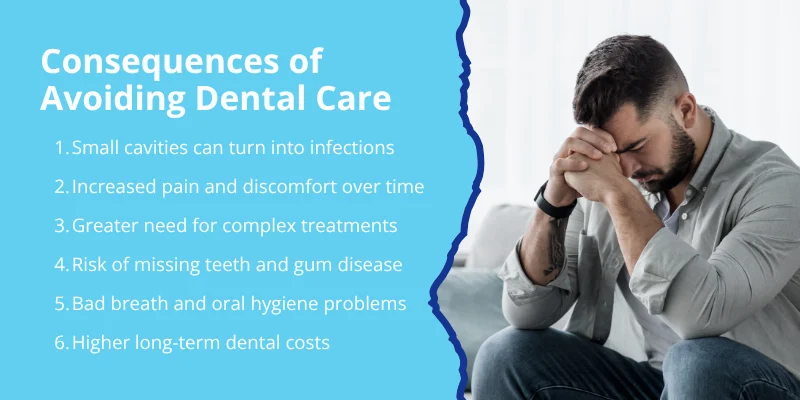
Avoiding dental visits due to fear can lead to serious problems. When you skip care, small issues like cavities can grow into bigger infections.
This can mean more pain and more complex treatments later. You might face missing teeth, gum disease, or bad breath.
These problems can affect your overall health and quality of life. Not seeing the dentist regularly also means you miss the chance to catch problems early.
This can make your dental care more expensive and difficult.
How Anxiety Affects Dental Health
Your anxiety doesn’t just affect your feelings, it can impact your dental health too. When you’re stressed about dental care, you may delay treatment, which worsens dental problems.
Anxiety can also cause muscle tension and jaw clenching, which might lead to headaches or teeth grinding. This wear and tear on your teeth can cause pain and damage.
A U.S.-based study found a clear link between mental health problems (like anxiety) and worse oral health outcomes. Higher levels of anxiety and other mental health issues were associated with more tooth decay, gum disease, and tooth loss. People with anxiety were less likely to use dental services regularly, meaning their oral health problems could worsen due to delayed or avoided care.
Managing dental anxiety helps you get the care you need comfortably. Using sedation dentistry options could make dental visits less stressful and protect your oral health.
Take control of your dental health!
If anxiety is holding you back from the dental care you deserve, reach out to CU Dentists. We offer compassionate, anxiety‑sensitive care to help you maintain a healthy, confident smile.
What Is Sedation Dentistry?
Sedation dentistry helps you stay calm and relaxed during dental treatments. It uses medication to ease anxiety so you can get the dental work you need without fear or discomfort.
Different types of sedation fit different needs and procedures.
How Sedation Dentistry Works
Sedation dentistry involves giving you medicine to help reduce nervousness. Depending on the type, you might breathe in gas, take a pill, or get medicine through a small needle in your arm.
These options let you stay awake but relaxed, or in some cases, lightly asleep. The most common methods are:
- Nitrous oxide (laughing gas):You breathe it through a mask, and it works quickly to calm you.
- Oral sedation:You take a pill before your visit, which makes you drowsy but conscious.
- IV sedation:Medicine goes directly into your bloodstream for deeper relaxation.
Each method is carefully controlled by your sedation dentist to keep you safe and comfortable during your dental work.
Who Should Consider Sedation Dentistry
Sedation dentistry is for anyone who feels anxious about the dentist. It’s especially helpful if you:
- Have a strong dental fear or phobia
- Need lengthy or complex dental treatments
- Have a sensitive gag reflex or trouble sitting still
- Have had bad experiences with dental work before
If you avoid the dentist because of fear, sedation can help you get the care you need. Your dentist will talk with you about your anxiety level and health to find the best sedation choice for you.
This way, your experience is safer and less stressful. Learn more about how sedation dentistry can help you at CU Dentist, and get a personalized plan ready.

Types of Sedation Options for Anxious Patients
You have several options to help manage anxiety during dental visits. These range from mild methods that keep you fully awake to deeper sedation that makes you very relaxed or even unconscious.
Each type has its own benefits and is used depending on how anxious you are and the kind of procedure you need.
Nitrous Oxide (Laughing Gas)
Nitrous oxide, also called laughing gas, is a quick and mild way to help you relax. You breathe it through a small mask over your nose.
It starts working in minutes and creates a calm, happy feeling without putting you to sleep. You stay awake and can follow instructions, which means you’re in control but less anxious.
The effects wear off almost immediately after the gas is turned off. This means you can usually drive yourself home right after your appointment.
Laughing gas is great if you have mild to moderate anxiety or need a short procedure. It doesn’t require fasting or special preparation before your visit.
Many people choose this because it’s safe and works fast.
Oral Sedation Methods
Oral sedation means taking a pill before your dental appointment to help you relax more deeply. You usually take the medicine about an hour before your visit.
This pill can make you drowsy but you will remain awake. The sedative often used belongs to a group of drugs called benzodiazepines.
Oral sedation helps if you have moderate anxiety or expect a longer or more uncomfortable procedure. Sometimes, you might not remember much of the visit, which can reduce fear for future visits.
Since the pill stays in your system longer, you’ll need someone to drive you home. It’s important to follow the dentist’s instructions about when and how to take these medicines to stay safe.
IV Sedation Procedures
IV sedation involves placing a small needle into a vein, usually in your arm. The sedative goes directly into your bloodstream, so it works faster and deeper than oral sedation.
With IV sedation, you feel very relaxed and may drift in and out of brief sleep-like states. You stay conscious but won’t remember much of the procedure.
The dentist can adjust the sedation during your treatment to keep you comfortable. This type is good for people with severe anxiety, strong gag reflexes, or those having longer or more complex procedures.
You will need to fast before your appointment and arrange for someone to drive you home because of the effects of the sedation.
Experience stress-free dental care!
If dental anxiety or complex procedures are holding you back, schedule a visit with CU Dentists in Champaign, IL, to benefit from personalized sedation options and comfortable, safe treatment.
General Anesthesia and Deep Sedation
General anesthesia is the deepest level of sedation. It makes you completely unconscious, so you don’t feel or remember anything.
A specially trained anesthesiologist usually gives and monitors this sedation. This method is used for very complex dental surgeries or if other sedation types are not safe or effective for you.
Because it affects your whole body, the dental team will monitor your vital signs closely throughout the procedure. General anesthesia requires thorough preparation and recovery time.
You’ll need to fast before your appointment, and someone must take you home afterward. It’s a safe option when done by experts, but it comes with more risks than lighter sedation methods.
Benefits of Sedation Dentistry for Anxious Patients
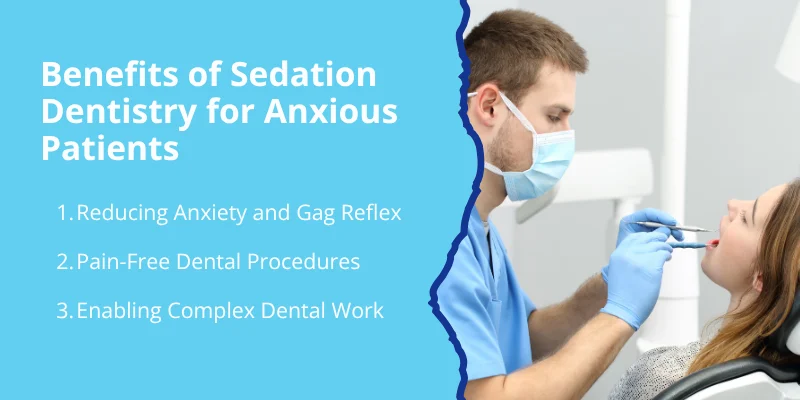
Sedation dentistry helps make dental visits less stressful by calming your mind and body. It supports you through procedures that might otherwise feel overwhelming, whether due to fear, discomfort, or physical reactions like gagging.
You can expect gentler treatments that focus on your comfort and safety.
Reducing Anxiety and Gag Reflex
If dental visits make you nervous, sedation dentistry can lower your anxiety significantly. Low levels of sedation help calm your mind without putting you fully to sleep.
This means you stay relaxed and awake but feel less fear. Sedation also helps control a strong gag reflex.
This reflex can make it hard to keep your mouth open during treatment. Mild sedatives reduce your body’s reaction to dental work, making it easier for you and your dentist.
You’ll find it easier to receive care if anxiety or gagging has stopped you before. This can help you keep up with regular dental visits, which is important for a healthy smile.
Learn more about how sedation can ease anxiety and reduce needs at Bowcutt Dental’s detailed guide on sedation options.
Pain-Free Dental Procedures
Sedation dentistry lets you have dental procedures without pain or discomfort. The sedation medicine relaxes your muscles and dulls sensitive areas, so you feel little to no pain during cleanings, fillings, or more advanced treatments.
This can be especially helpful if you have sensitive teeth or past experiences that made dental work painful. Being calm and relaxed helps your dentist do the work more smoothly, which often means quicker appointments.
You remain responsive, so your dentist can communicate with you, ensuring your safety throughout. This approach provides a pain-free, gentle dental experience for nervous patients.
Enabling Complex Dental Work
For longer or more complex dental work, such as extractions, root canals, or oral surgery, sedation dentistry makes treatment more manageable. Stronger sedation options, like IV sedation, help keep you deeply relaxed and still during the entire procedure.
This allows your dentist to work without interruptions caused by movement or discomfort. It also helps reduce stress on your body, which may help you recover faster.
You’ll be closely monitored to keep you safe, and after treatment, you’ll receive clear care instructions. Preparing for complex dental work becomes easier when sedation takes the edge off anxiety and pain.
Safety and What to Expect Before, During, and After Sedation
Sedation dentistry helps you stay calm and comfortable during dental visits. You’ll follow clear steps before your appointment and take care to recover safely afterward.
Your sedation dentist will carefully monitor you throughout the process to keep you safe.
Preparing for Your Appointment
Before your sedation dental treatment, you’ll review your medical history with your dentist. This includes any medications you take, allergies, and past sedation experiences.
You should avoid eating or drinking as instructed, often for several hours before the visit. Bring a responsible adult to escort you home because sedation can make you drowsy for hours.
Wear loose, comfortable clothing so the dental team can easily monitor your vital signs. When you arrive, your sedation dentist will check your baseline vitals like blood pressure and oxygen levels.
The oral sedation medication is usually given at the office, allowing it to take effect before starting your treatment.
Recovery and Aftercare Tips
After your dental treatment, you’ll rest in the office while your sedation dentist watches for safe recovery signs. You’ll need to meet certain health checks before leaving, including steady vitals and the ability to walk safely.
At home, avoid driving, operating machinery, or making important decisions for the rest of the day. Stick to soft foods, drink plenty of water, and stay with your escort until the sedation effects fully wear off.
If you feel dizzy, sleepy, or nauseous, take it easy and contact your dentist if symptoms last or worsen. Following these steps helps your healing and makes your next dental visit easier.
Choosing the Right Sedation Dentist and Next Steps
Finding the right dental care provider can make a big difference in how comfortable you feel during treatment. Knowing what to look for and how to prepare helps you get the best care while managing your anxiety.
Qualities of a Sedation-Friendly Dental Clinic
Look for a clinic that has experience with sedation dentistry and understands anxious patients. The staff should explain sedation options clearly and answer your questions patiently.
Check if the dental team includes board-certified sedation dentists or professionals trained in safe sedation methods. They should use modern monitoring equipment to keep your vital signs stable during treatment.
A good clinic makes you feel comfortable from the first visit. They should tailor sedation plans based on your anxiety level, medical history, and the dental work you need.
Clean, calm, and welcoming office spaces also help reduce nervousness.
Tips for First-Time Anxious Patients
Before your appointment, discuss your fears openly with the sedation dentist. Share what has caused your anxiety in the past to help them choose the best sedation method for you.
Follow pre-appointment instructions carefully, like fasting if needed. Bring a trusted friend or family member to drive you home if your sedation requires it.
During treatment, use relaxation techniques like deep breathing or listening to music if allowed.
Afterward, give yourself time to rest and recover. Don’t hesitate to ask your dentist any questions about follow-up care.
Take the first step toward a calm dental visit!
If you’re nervous about your first appointment, contact CU Dentists to discuss sedation options and get personalized support for a stress-free experience.
Frequently Asked Questions
Sedation dentistry helps you stay calm and comfortable by using different types of medicines. It can ease your fear, reduce pain, and make dental procedures easier to handle.
Knowing what to expect before, during, and after sedation helps you feel more in control.
How can sedation help with dental anxiety during procedures?
Sedation lowers your anxiety by relaxing you and reducing pain or discomfort. You might feel calm, drowsy, or even almost asleep depending on the type of sedation used.
This helps you sit still and stay comfortable during your treatment.
What types of sedation are available for anxious dental patients?
You have several options:
- Nitrous oxide (laughing gas) for mild relaxation
- Oral sedation with pills that make you drowsy
- IV sedation for deeper calm and little memory of the procedure
- General anesthesia for full unconsciousness in complex cases
Your dentist can help choose the right one based on your needs.
Are there any risks associated with sedation dentistry?
Most sedation methods are very safe when done by trained professionals. Some side effects may include grogginess, nausea, or slight memory loss.
Your dentist will review your health history to minimize any risks and watch you closely during the procedure.
How do I know if I’m a good candidate for sedation during dental treatment?
You are a good candidate if you feel strong fear or anxiety about dental work. Sedation also helps if you have a sensitive gag reflex, trouble sitting still, or need a long, complex treatment.
Your dentist will assess your medical history and talk with you about the best options.
What should I expect during and after dental sedation?
During sedation, professionals monitor your vital signs to keep you safe. You might be awake but relaxed or deeply sedated, depending on the method.
After treatment, recovery varies. Mild sedation wears off quickly, while stronger sedatives may require rest and someone to drive you home.
How do I prepare for a dental appointment if I require sedation?
You may need to avoid eating or drinking for a specified time before your appointment.
Follow any instructions your dentist gives carefully.
Arrange for someone to take you home if you receive oral or IV sedation, since driving afterward is unsafe.