



Losing a tooth can feel stressful, and you likely want a clear plan for your next step. You may wonder how long you need to wait after a tooth extraction before placing a dental implant.
The answer depends on your healing, bone health, and whether infection is present.
Most people wait about 2 to 3 months after a tooth extraction before getting a dental implant, but some can receive an implant the same day while others may need 3 to 6 months or longer.
Your dentist will check your jawbone, gums, and overall health to decide the safest implant timeline for you.
If you move too fast, the implant may not bond well with the bone. If you wait too long, bone loss can make tooth replacement more complex. Understanding the timing helps you protect your smile and plan your treatment with confidence.
Key Takeaways
- Your implant timeline depends on healing, bone strength, and infection risk.
- Some people qualify for same-day implants, while others need several months.
- Careful planning after tooth extraction supports long-term implant success.
Explore the tooth extraction to implant timeline and plan your treatment for optimal results.
Understanding the Tooth Extraction and Implant Timeline
Your tooth extraction and implant timeline depends on bone health, infection, and how your body heals. You may place the implant the same day, wait a few months, or wait longer if you need extra healing or bone support.
Immediate Implant Placement
With immediate implant placement, your dentist places the implant at the same visit as the tooth extraction. This works best when the tooth comes out cleanly, you have strong bone, and there is no active infection.
You skip the first waiting period, which shortens the overall tooth extraction and implant process. This option can also help preserve the natural shape of your gums and bone, which matters most for front or single tooth implant.
Dentists often suggest this approach when conditions are ideal.
Keep in mind that not everyone qualifies. If your bone is thin or infected, your dentist will likely recommend waiting.
Early and Delayed Implant Placement
Most people receive early implant placement about 2 to 3 months after extraction. During this time, your gums close, swelling goes down, and new bone starts to form.
This approach gives your mouth time to heal while avoiding long delays. Many dentists consider this the most predictable phase in the tooth extraction and implant timeline.
If you wait longer than three months, you move into delayed implant placement. Dentists often choose this when you had an infection or mild bone loss.
During the waiting period, some bone loss can happen. If that occurs, your dentist may place a bone graft to rebuild support before dental implant placement.
Late Placement Scenarios
Sometimes you need to wait more than three months before placing an implant after tooth extraction. This happens when you have major bone loss, a large infection, or other health issues that slow healing.
In these cases, your dentist may recommend bone grafting right after the extraction. The graft protects the socket and helps preserve bone for future implant placement.
Some treatment plans suggest waiting 3 to 6 months to allow full healing before placing the implant.
This longer timeline adds steps, but it helps create a stable base. A strong foundation improves the long-term success of your dental implant placement.
Key Factors That Impact Your Waiting Period
Several clinical details shape how long you need to wait before implant placement. Your bone quality, oral health, and the exact tooth involved all affect healing time and long‑term implant stability.
Jawbone Density and Bone Grafting
Your jawbone density plays a major role in how soon you can receive an implant. Strong, thick bone can support the implant sooner because it allows better initial stability. If your bone is thin or soft, you may need more healing time.
After an extraction, bone naturally shrinks. Dentists often place a bone graft at the time of removal to help prevent bone loss and keep the ridge shape. Bone grafting usually adds several months of healing before the implant can go in.
If you need a sinus lift for upper back teeth, the wait may be even longer. This procedure builds bone height below the sinus so the implant has enough support.
An implant consultation at a dental implant center often includes 3D imaging. Implant specialists use this scan to measure bone width and height.
These details guide your exact timeline.
Presence of Infection or Medical Conditions
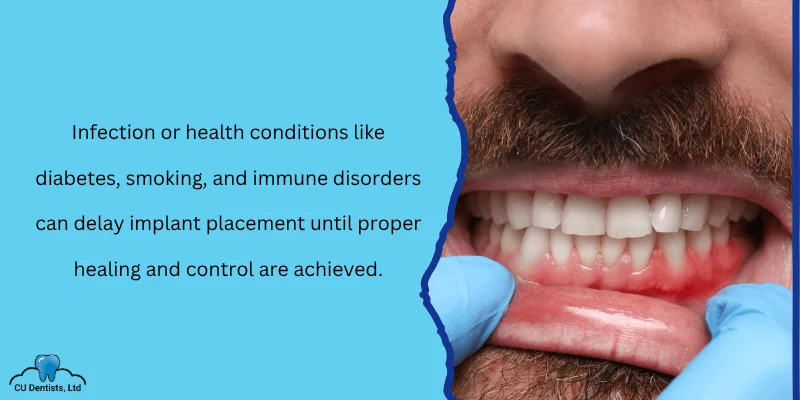
An active infection at the extraction site can delay implant placement. Your dentist must clear the infection before placing an implant to reduce the risk of failure. This may require antibiotics and extra healing time.
If the tooth had a severe abscess or bone damage, your provider may wait several months. This allows healthy bone to form before surgery.
Certain health conditions also affect healing. Uncontrolled diabetes, smoking, and immune disorders can slow bone repair. You may need closer monitoring and a longer wait to protect implant stability.
During your implant consultation, share your full medical history. Implant specialists adjust the plan to match your health needs and lower your risk of problems.
Type and Location of the Tooth

The tooth’s position in your mouth changes the timeline. Front teeth sometimes qualify for immediate implant placement if the bone walls remain intact. This can reduce treatment time.
Back teeth often need more healing. They handle stronger biting forces, so they require solid bone support. If bone loss occurred before extraction, you may need bone grafting first.
Upper molars sit near the sinus cavity. Limited bone height in this area often leads to a sinus lift before implant placement.
Lower front teeth usually have thinner bone. Your dentist must confirm there is enough width to support the implant safely. Each location calls for a careful plan that protects long‑term results.
The Step-by-Step Process After Extraction
After your tooth comes out, your body moves through clear healing stages before implant placement. Each step builds a stable base for long-term success.
Initial Healing and Post-Extraction Care
Right after extraction, a blood clot forms in the socket. This clot protects the bone and nerves underneath. You must keep it in place.
For the first 24 hours, avoid rinsing hard, spitting, or using a straw. These actions can dislodge the clot and lead to dry socket. Stick to soft foods and chew on the other side.
Good post-extraction care helps prevent infection. Brush gently, avoid the surgical area, and rinse with warm salt water after the first day if your dentist advises it.
Swelling and mild pain are normal for a few days. Most gums close over in about 1 to 2 weeks, but deeper healing continues below the surface.
If you need a temporary tooth replacement, your dentist may adjust or provide a removable partial denture. They will make sure it does not press on the healing site.
Bone and Soft Tissue Healing
After the gums close, your body begins rebuilding bone inside the socket. This stage is critical for future implant support.
Soft tissue healing usually completes in a few weeks. Bone healing takes much longer. In many cases, you wait about 3 to 6 months before implant placement.
Some patients need a bone graft. Your dentist may place graft material at the time of extraction or later to preserve bone width and height.
If you receive a graft, healing can take about 4 to 6 months before implant surgery.
Healing time depends on:
- Your overall health
- Whether infection was present
- If a bone graft was placed
- How well you follow care instructions
Implant Surgery and Abutment Placement
Once the bone is strong enough, your dentist schedules dental implant surgery. They numb the area and place a titanium implant into your jawbone.
The implant acts as an artificial root. Your bone then bonds to it in a process called osseointegration. This usually takes another 3 to 6 months.
In some cases, your dentist places a healing abutment or healing cap at the time of surgery. This small piece shapes the gum tissue while the implant integrates.
In other cases, they cover the implant and uncover it later for abutment placement.
During abutment placement, your dentist attaches a connector to the implant. This piece holds your final crown in place.
Each stage has a clear purpose: protect the site, rebuild bone, secure the implant, and prepare the gum tissue for your new tooth.
What to Expect During Implant Integration and Restoration
After your implant is placed, your body starts building bone around it. You will move through healing, temporary teeth, and then a final crown while your dentist checks stability and gum health.
Osseointegration and Implant Stability
Once your surgeon places the implant, your jawbone begins a process called osseointegration. This means the bone grows and bonds directly to the titanium implant surface.
This step usually takes 3 to 6 months. During this time, the implant becomes stable enough to support a tooth.
Your dentist may place a healing cap to shape the gum tissue. In some cases, you may qualify for immediate load implants, which allow a tooth to attach the same day.
This option only works if your bone is dense and the implant feels very stable at placement.
Your provider will check stability with exams and sometimes imaging. If the implant does not bond well, implant failure can occur.
Early signs include pain, movement, or infection. Regular follow-up visits lower this risk and help catch problems early.
Temporary and Final Restorations
You may receive a temporary crown or provisional restoration while your implant heals. This tooth improves your smile and protects the implant site.
A temporary tooth is usually lighter and avoids heavy biting pressure. You may need to avoid hard or sticky foods during this stage.
After full healing, your dentist places the final restoration. This is often a custom crown made to match your nearby teeth in shape and color.
The final crown connects to the implant with an abutment. Your dentist will check your bite to make sure the force spreads evenly. A balanced bite helps prevent stress on the implant and lowers the risk of long-term problems.
Managing Implant Timeline Risks
Healing does not move at the same speed for everyone. Smoking, uncontrolled diabetes, and poor oral hygiene can delay osseointegration.
You can lower your risk by:
- Brushing and flossing daily
- Avoiding tobacco
- Attending all follow-up visits
- Following food limits after surgery
Some people need extra healing time if they had a bone graft.
Call your dentist if you notice swelling, pus, severe pain, or movement in the implant. Quick treatment can protect your investment and keep your treatment on track.
Best Practices for a Smooth Recovery and Long-Term Success
You can protect your new implant and speed healing by keeping your mouth clean, showing up for dental check-ups, and watching for early signs of trouble.
Simple daily habits make a real difference after an implant after extraction.

Maintaining Oral Hygiene
You need to keep the extraction site and implant area clean from day one. Good oral hygiene lowers your risk of infection and helps the implant bond to your jaw.
For the first 24 hours, avoid rinsing hard or brushing the surgical area. After that, gently rinse with warm salt water 2–3 times a day, especially after meals.
Brush the rest of your teeth as usual using a soft-bristled toothbrush. When your dentist says it is safe, carefully clean around the implant with light pressure.
Focus on:
- Brushing twice a day
- Flossing once daily
- Using any prescribed antibacterial rinse
- Avoiding tobacco products
If food gets stuck near the site, do not use sharp tools. Use gentle rinsing instead. Clean habits support healing during the critical fusion stage known as osseointegration.
Adhering to Follow-Up and Dental Check-Ups
You should never skip your follow-up visits. These dental check-ups allow your dentist to confirm that healing stays on track.
Your dentist will check for swelling, infection, and proper implant stability. They may take X-rays to confirm that the implant is bonding well with your jawbone.
The healing phase can last several months. Regular visits during this time help catch small problems before they become serious.
After your final crown is placed, continue routine cleanings every six months or as advised. Long-term success depends on ongoing monitoring, not just the surgery itself.
Tips for Preventing Complications
You can lower your risk of problems by protecting the area while it heals. Avoid chewing on the implant side until your dentist tells you it is safe.
Stick to soft foods at first, such as yogurt, eggs, rice, and soup. Slowly return to normal foods as healing improves.
Watch for warning signs, including:
- Severe or worsening pain
- Swelling that does not improve
- Pus or bad taste in your mouth
- Fever
If you notice any of these, call your dentist right away.
If you grind your teeth, ask about a night guard. Grinding puts pressure on a new implant and may affect healing. Small daily choices help your implant stay stable and functional for many years.
Frequently Asked Questions
Your timeline depends on your bone health, healing speed, and whether you need extra procedures like bone grafting. You may qualify for same-day placement, or you may need to wait several months for safe healing.
What factors determine the ideal timing for getting a dental implant after a tooth is removed?
Your dentist checks the amount and strength of your jawbone first. If the bone is thick and healthy, you may not need to wait long.
If you have bone loss, gum disease, or infection, you may need time to heal. Many patients wait about 3 to 6 months to allow the bone to recover before implant placement.
Your overall health also matters. Smoking, diabetes, and poor oral hygiene can slow healing and delay implant surgery.
Is it possible to place a dental implant on the same day as a tooth extraction?
Yes, you can sometimes get an implant on the same day your tooth is removed. Dentists call this immediate implant placement.
You must have enough healthy bone to hold the implant firmly. If the area has severe infection or weak bone, your dentist may suggest waiting instead.
Some patients even receive a temporary tooth the same day, but not everyone qualifies for this option.
Can I still get a dental implant if my tooth was extracted years ago?
Yes, you can still get an implant years later. However, your jawbone may have shrunk over time.
When bone loss occurs, you may need a bone graft before implant surgery. This adds healing time but can rebuild the support your implant needs.
Your dentist will use X-rays or 3D scans to measure your bone and decide the best plan for you.
What happens if I don’t replace an extracted tooth with an implant or another option?
Your jawbone begins to shrink when it no longer supports a tooth root. Bone loss can change your bite and the shape of your face.
Nearby teeth may shift into the empty space. This can make chewing harder and increase your risk of gum problems.
A dental implant acts like a tooth root and helps maintain bone.
How do pain and recovery compare between same-day implant placement and delayed placement?
You can expect mild swelling and soreness with both options. Most people manage discomfort with over-the-counter or prescribed pain medicine.
Same-day placement combines extraction and implant surgery in one visit. This means one healing period instead of two.
Delayed placement spreads treatment over several months. You heal from the extraction first, then return for implant surgery later.
What costs should I expect for a tooth extraction and dental implant treatment?
Costs vary based on your location and the complexity of your case. A simple extraction costs less than a surgical one.
Dental implants usually include several parts: the implant post, the abutment, and the final crown. If you need a bone graft, this will increase the total cost.
Dental insurance may cover part of the extraction, but many plans limit implant coverage. Ask your dental office for a written estimate so you know what to expect.