


You want a dental implant that looks natural, lasts a long time, and fits your health needs. Zirconia implants often win on aesthetics, gum health, and lower plaque buildup, while titanium implants still lead for long-term strength, proven success, and more treatment options.
This quick comparison helps you see which benefits matter most for your mouth.
If appearance and fewer metal parts matter, zirconia can give a tooth-like color and a smooth surface that gums like. If you need the widest range of sizes, long-term data, or a lower cost, titanium remains the most flexible choice.
Key Takeaways
- Zirconia shines for looks and soft-tissue health.
- Titanium offers proven durability and wider clinical options.
- Choose based on your priorities: aesthetics, health, or long-term strength.
Explore Zirconia vs Titanium Dental Implants Benefits in Champaign; Book a Consultation Today
Understanding Dental Implant Materials
You’ll learn how implant materials affect strength, look, and gum health. The right material changes how long an implant lasts, how natural it looks, and how your tissues respond.
What Are Dental Implants?
Dental implants replace missing teeth by acting as artificial roots implanted into your jawbone. An implant usually has three parts: the implant post (the root), an abutment (the connector), and a crown (the visible tooth). The implant post must fuse with your bone (a process called osseointegration) to give stable chewing force.
Implant materials matter because they affect bone bonding, wear, and the chance of inflammation. Common implant uses include single-tooth replacement, bridges, and full-arch restorations like All-on-4. Your dentist checks bone volume, bite forces, and gum thickness to pick a material that fits your mouth and lifestyle.
Titanium Implants Overview
Titanium implants use medical-grade titanium or titanium alloys. They are strong, bend slightly under load, and have decades of clinical data supporting high success rates. Titanium surfaces can be roughened or coated to improve osseointegration, which speeds bone attachment and long-term stability.
You should consider titanium if you need high strength for back teeth, angled abutments, or full-arch prosthetics. Rare metal sensitivities exist, and thin or receding gums can show a gray hue near the implant neck. For predictable mechanical performance, titanium dental implants remain the standard in implant dentistry.
Zirconia Implants Overview
Zirconia implants are made from zirconium dioxide, a white ceramic that is metal-free and naturally tooth-colored. This material resists corrosion and attracts less plaque, which can help keep surrounding soft tissue healthier. Zirconia is often chosen for front-tooth restorations where appearance matters most.
Zirconia is more brittle than titanium and may fracture under heavy bite forces, so it’s less often used in posterior load-bearing zones or complex full-arch cases. Many zirconia implants are one-piece systems, which can limit prosthetic options.
Choose zirconia dental implants if you prioritize aesthetics or want a metal-free option and your bite and bone support are suitable.
Discuss Your Implant Material Options in Rantoul; Schedule an Appointment with CU Dentist
Comparing Zirconia vs. Titanium: Key Benefits
You should weigh how each material interacts with your body, how long it will last under chewing forces, and how it will look in your smile. These factors affect comfort, risk of gum issues, and whether the implant will need repair or replacement.
Biocompatibility and Osseointegration
You want an implant that your body accepts with low risk of inflammation. Zirconia (zirconium dioxide) is a ceramic that is nearly metal-free and often causes fewer soft-tissue reactions for people sensitive to metals. Clinically, zirconia shows good osseointegration (bone can attach to its surface) but long-term data is still growing compared with titanium.
Titanium has decades of research showing reliable bone bonding and a high success rate. Its surface treatments promote osseointegration and stable bone-to-implant contact.
If you have a known metal allergy or autoimmune concerns, zirconia may lower the chance of gum irritation. If you need a well-documented track record and many component options, titanium usually provides that.
Durability and Longevity
You should consider fracture resistance and how the implant handles bending forces from chewing. Titanium is stronger in bending and fatigue resistance. It performs better for long spans, multi-implant restorations, and where chewing forces are high. That makes titanium the preferred choice for many back-tooth replacements.
Zirconia is harder but more brittle. It resists corrosion and wear, and its smooth surface reduces plaque buildup. However, zirconia implants can be more prone to fracture under repeated flexion or when thin. If your bite exerts heavy lateral forces or you clench and grind, titanium often offers greater long-term reliability.
Aesthetic Outcomes
You care about how the implant looks through your gums and under crowns. Zirconia’s tooth-like white color helps prevent dark metal showing through thin gum tissue. That makes zirconia attractive for front-tooth implants and cases where gum discoloration is a concern.
Titanium can sometimes show a grayish tint through thin gums or if recession occurs. You can reduce that risk with deeper placement or specialized abutments, but the metal still exists beneath the crown.
If a natural-looking gum margin and crown color are priorities, zirconia often gives a cosmetic advantage. If strength and a wide range of prosthetic parts matter more, titanium may suit your needs better.
Learn Which Implant Material Fits Your Smile Goals; Schedule Your Consultation
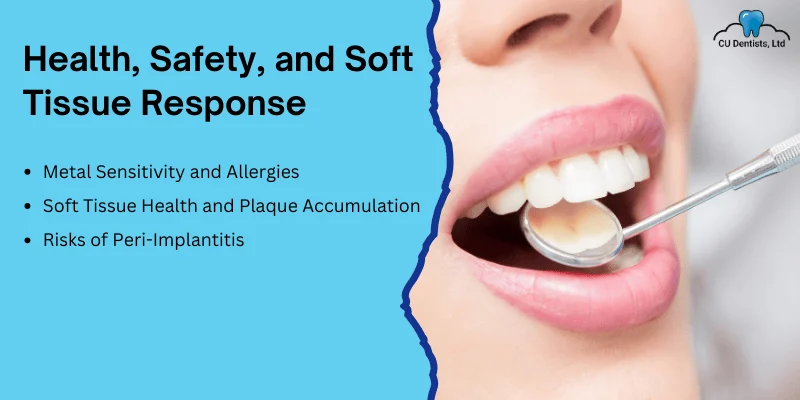
Health, Safety, and Soft Tissue Response
Zirconia and titanium differ in how your body and gums react to them. Key points: zirconia releases no metal ions and tends to attract less plaque, while titanium can release ions that may affect sensitive patients and the surrounding tissue.
Metal Sensitivity and Allergies
If you have metal sensitivity or a history of allergic reactions, zirconia often causes fewer issues. Zirconia is a ceramic (zirconium dioxide) and does not release metal ions the way titanium can when its oxide layer breaks down. That means less risk of localized inflammation tied to metal particles.
Titanium is well tolerated by most people, but documented cases of hypersensitivity exist. If you react to metals, you might notice redness, swelling, or persistent discomfort around a titanium implant.
Ask your clinician about allergy testing or patch tests before choosing implant materials. Holistic dentistry patients often prefer zirconia because it avoids metal exposure.
Soft Tissue Health and Plaque Accumulation
Your gum tissue tends to look better around zirconia abutments and crowns because zirconia’s surface attracts less plaque. Less plaque means lower bacterial load at the gum line and healthier-looking gingiva, especially in the front teeth where aesthetics matter most.
Titanium surfaces can accumulate more biofilm unless they have special coatings or surface treatments. Good home care and professional cleaning reduce this risk for either material. If you struggle with hygiene or have a history of periodontal disease, talk to your dentist about implant surface choice and cleaning plans.
Risks of Peri-Implantitis
Peri-implantitis is bone loss and inflammation around an implant that can lead to failure. Titanium ion release and increased plaque retention may raise the local inflammatory response in some cases. That can make peri-implantitis more likely if other risk factors are present, such as smoking, poor oral hygiene, or a history of periodontal disease.
Zirconia’s low ion release and reduced plaque affinity may lower the inflammatory trigger for some patients. Still, peri-implantitis is multi-factorial: surgical technique, prosthetic fit, and your systemic health all matter. Maintain regular check-ups, cleanings, and follow your dentist’s maintenance plan to reduce your risk.
Treatment Versatility and Clinical Considerations
Zirconia and titanium implants differ in where and how you can use them. Think about the tooth position, how many teeth you replace, and whether the site needs bone work or special surgical access.
Suitability for Different Tooth Replacements
Zirconia works well for single front teeth when you want a white implant under thin gums. You’ll get better esthetics in visible areas because zirconia won’t show a gray line if tissue thins. Clinical data show zirconia has slightly higher early fracture risk, so avoid narrow posterior implants under heavy chewing forces.
Titanium suits most single-tooth and posterior replacements because it tolerates high bite forces and has long-term survival data.
If you have limited space or need an angled abutment, titanium parts and prosthetic options are more varied. Talk with your implant specialist about crown material, abutment choice, and the expected load for that tooth.
Full-Arch Restorations and Complex Cases
For full-arch bridges, titanium remains the common choice due to strong long-term survival and many prosthetic options. You’ll find a wide range of multi-unit abutments, bars, and screw-retained solutions that make full-arch work predictable.
Zirconia full-arch frameworks are possible but need careful design and thicker material to avoid fracture. If you prefer a metal-free restoration for all teeth, discuss with your clinician the risk of chipping or connector fractures and the need for reinforced designs.
Your implant specialist may mix materials (titanium implants with zirconia crowns) to balance strength and esthetics.
Implant Placement and Surgical Flexibility
Titanium implants offer wide size ranges and connection types, so they adapt well to varied bone shapes and angulations. That gives your surgeon more choices for immediate placement, angled implants, and using prosthetic components to correct positioning.
Zirconia implants are available mainly as one-piece or two-piece designs with fewer implant-abutment interface options. This limits angulation corrections and immediate loading choices in some cases.
If you need angled abutments or extensive restorative adjustments, confirm with your implant specialist whether the zirconia system supports those prosthetic needs before planning implant placement.
Bone Grafting and Sinus Lift Needs
If you need bone grafting or a sinus lift, titanium implants have the advantage of long clinical data showing good outcomes with grafted bone. You’ll find many protocols and implant diameters that work with augmented sites, including short and narrow options.
Zirconia implants can integrate in grafted bone but have less long-term data in complex grafts and sinus lifts. Surgeons may prefer titanium when heavy grafting or staged sinus augmentation is needed.
Discuss bone volume, graft material, and healing time with your implant specialist to choose the implant that matches the graft plan and the timing of final restoration.
Cost, Accessibility, and Future Trends
Zirconia implants usually cost more per tooth than titanium, but travel and clinic choices can change the price you pay. New materials and lab techniques are making implants stronger, more natural-looking, and sometimes cheaper over time.

Implant Cost Comparison
Zirconia single implants typically run higher than titanium. In the US, titanium implants often fall roughly between $1,500–$6,000 per tooth, while zirconia commonly ranges up to $7,000 in some practices. Prices depend on the brand, implant design, and whether you need bone grafts or extra surgery.
Check these cost drivers:
- Material and manufacturing: zirconia’s processing is more complex, raising costs.
- Prosthetic work: custom crowns, abutments, and lab fees add to the total.
- Additional procedures: CT scans, grafting, and sinus lifts increase the bill.
Ask your dentist for a written breakdown and compare quotes. If insurance applies, ask which codes they cover and if metal-free implants have different reimbursement rules.
Availability and Dental Tourism
Zirconia implants are more common in specialty clinics and some countries where metal-free options are popular. Titanium remains widely available worldwide and is the default choice in many general practices.
If you consider dental tourism, countries like Mexico, Turkey, and parts of Eastern Europe often offer lower costs for both titanium and zirconia implants. Travel can cut prices by 30–70%, but you should weigh:
- Clinic accreditation and dentist credentials
- Warranty and follow-up care back home
- Travel and lodging costs
Contact clinics in advance to get itemized quotes and ask about complication policies. Keep copies of scans and treatment plans so your local dentist can provide follow-up care.
Advances in Implant Materials
Materials research focuses on improving strength, osseointegration, and soft-tissue response. Manufacturers are refining zirconia processing to reduce microfractures and improve long-term durability. Surface treatments for both titanium and zirconia aim to speed bone integration.
Recent trends you may see in clinics:
- Hybrid implants combining ceramic and titanium components for strength and aesthetics.
- Improved surface coatings that encourage faster bone bonding.
- CAD/CAM custom abutments and crowns that lower lab time and improve fit.
Talk to your dentist about new options and whether a clinic uses updated lab workflows. New techniques can affect cost and outcome, so ask how innovations will change your treatment plan and long-term maintenance.
Making the Right Choice: Titanium vs. Zirconia
You should weigh strength, appearance, and any metal sensitivities when choosing implant materials. Think about where the implant will go in your mouth, how visible it will be, and any health issues that might matter.
Personal Health and Aesthetic Priorities
Decide whether appearance or mechanical strength matters most to you. If the implant will sit in the front of your mouth, zirconia’s tooth-like color can reduce the chance of a dark line showing through thin gums. Zirconia also has low plaque buildup on smooth surfaces, which can help soft-tissue health around the crown.
If you need an implant for a back tooth or a bridge that will take a lot of chewing force, titanium usually offers better strength and a longer track record in those conditions. Titanium implants have many surface treatments that help bone attach more predictably.
If you have a known metal sensitivity or prefer a metal-free option, call this out to your dentist because zirconia may be an option. List of quick checks you can make with your dentist:
- Location of the missing tooth (anterior vs. posterior)
- Bite force and need for multi-tooth support
- History of metal reactions or allergies
Consultation with an Implant Specialist
Bring clear X-rays and any health records to the implant specialist. They will evaluate bone quantity, jaw shape, and whether you need bone grafting before choosing titanium or zirconia. Ask the specialist which implant systems they use and why, and request evidence of long-term outcomes for those systems.
Discuss prosthetic options too: two-piece titanium systems often allow more restorative flexibility than one-piece zirconia implants. If aesthetics are critical, ask to see photos of prior anterior cases using zirconia and titanium. Also confirm follow-up care plans, warranty or success rates, and costs for each material option before you decide.
Frequently Asked Questions
This section answers common, specific questions about zirconia and titanium implants. It covers appearance, metal sensitivity, costs, candidacy, possible complications, and long‑term success.
What are the advantages of choosing zirconia implants over titanium?
Zirconia is tooth‑colored, so it can look more natural near the gumline. That matters most for front teeth or thin gums where metal might show.
Zirconia implants are metal‑free, which appeals if you prefer to avoid metals. Many patients report less plaque buildup around zirconia surfaces in short‑term studies.
Are there any specific health concerns associated with titanium dental implants?
Titanium can cause allergic reactions in a small number of people, though true titanium allergy is rare. If you have a known metal sensitivity, mention it to your dentist.
Titanium integrates well with bone through osseointegration, but some patients worry about corrosion or galvanic reactions when different metals are present. Ask your clinician if this applies to your restorations.
How do the costs compare between zirconia and titanium dental implants?
Titanium implants are usually less expensive because they have been used longer and have more suppliers. Zirconia implants often cost more due to newer manufacturing and fewer product options.
Insurance coverage depends on your plan. Get itemized estimates for implant parts, surgery, and crowns so you can compare total costs.
What should individuals consider before deciding on zirconia implants?
Check gum thickness and the implant site; zirconia often comes as a one‑piece design, which limits angle adjustments. Discuss your aesthetic goals, especially for visible teeth.
Review your medical history for metal sensitivities and ask about long‑term data for zirconia in similar cases. Also confirm that your dentist has experience placing zirconia implants.
Can you describe any complications that might arise from zirconia dental implants?
Zirconia implants can fracture under extreme force, though that is uncommon with proper size and placement. One‑piece designs may make soft‑tissue management harder in some clinical situations.
Peri‑implantitis (gum infection around implants) can occur with zirconia, but some studies suggest lower bacterial colonization at the implant connection. Keep regular cleanings and checkups to reduce risk.
Is there a significant difference in the success rates of zirconia versus titanium dental implants?
Long‑term data for titanium show survival rates over 90% at 10–20 years in many studies. Zirconia has promising short‑ to mid‑term results, often above 90% at around 5–10 years, but fewer long‑term studies exist.
Success depends on surgical technique, bone quality, and oral hygiene more than material alone. Talk with your dentist about outcomes in cases like yours and ask to see their implant survival data.