



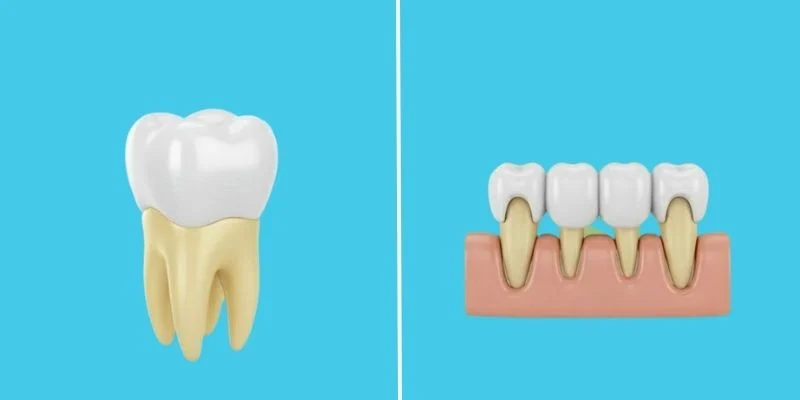
When a tooth gets damaged or is missing, you might wonder whether a dental crown or a bridge is the better choice.
A dental crown is used to restore a single damaged tooth by covering it, while a dental bridge replaces one or more missing teeth by connecting to nearby teeth.
Knowing this simple difference can help you decide which option best protects your smile and keeps your mouth healthy. Both crowns and bridges improve how your teeth work and look, but they involve different procedures and care.
Crowns cover just one tooth and are often needed after damage or root canals. Bridges fill gaps left by missing teeth and rely on the support of the teeth around the gap.
Understanding what each does makes it easier for you to talk with your dentist about the right treatment for your needs.
Key Takeaways
- Crowns restore damaged teeth, and bridges replace missing ones.
- Procedures and care vary based on your dental needs.
- Knowing the difference helps you choose the best treatment.
Dental Crowns and Dental Bridges: Core Differences
You might need a dental crown or a dental bridge, depending on whether you have a damaged tooth or missing teeth. Both help restore your smile and improve chewing, but they work in different ways and serve different purposes.
Knowing how each one functions can help you make a better choice for your dental health.
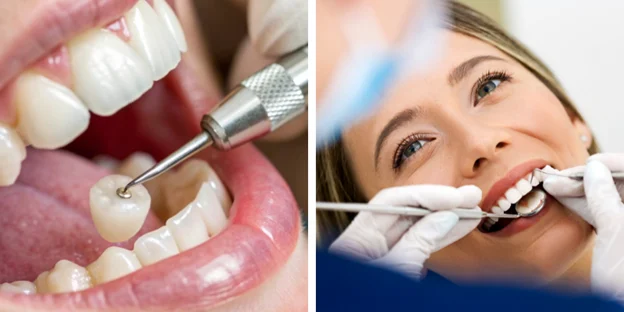
What Is a Dental Crown?
A dental crown is like a strong cap that fits over a damaged or weakened tooth. It protects the tooth from breaking further and restores its shape, size, and strength.
Crowns are often used after a root canal or when a tooth has a big cavity or crack. Crowns can be made from porcelain, ceramic, metal, or a mix of materials.
Porcelain crowns look natural and are good for front teeth, while metal crowns are very strong and used for back teeth. Getting a crown means your dentist will reshape your tooth to make room for the crown.
You’ll get a temporary crown while the permanent one is made. Crowns cover only one tooth, so they are a single-tooth solution.
What Is a Dental Bridge?
A dental bridge fills the gap left by one or more missing teeth. It uses false teeth called pontics, which are held in place by crowns attached to the healthy teeth next to the gap.
This “bridge” stops your other teeth from shifting and keeps your bite balanced. Bridges usually involve multiple units: the pontics plus the supporting crowns.
They can be made from porcelain fused to metal or all-porcelain materials to balance strength and look. To place a bridge, your adjacent teeth get reshaped to hold the crowns, which support the false teeth.
Sometimes, dental implants are used for extra support instead of natural teeth.
Considering a dental bridge to replace missing teeth? Schedule a visit at our Champaign or Rantoul, IL, dental clinic to explore the best option for your smile.
Bridge vs Crown: When Is Each Used?
Use a crown if you want to fix a single damaged or weak tooth. It’s the right choice when that tooth needs protection but still exists.
Choose a bridge if you have one or more missing teeth side-by-side. Bridges replace those missing teeth and rely on the neighbors to anchor them.
Crowns work on one tooth at a time, while bridges cover multiple teeth in a row. Cost-wise, crowns usually cost less because they involve fewer parts.
Bridges cost more due to more material and work involved. Your dentist will help you decide based on your dental health, number of missing or damaged teeth, and budget.
A retrospective study analyzed long-term survival rates and found that three-unit bridges (FDPs) had a significantly lower survival rate over 5 and 10 years compared with single-unit crowns.
This supports the idea that, for certain cases, a single crown may be more predictable and durable than a multi-unit bridge, depending on span and abutment conditions.
Types and Materials of Crowns and Bridges
When choosing crowns or bridges, you’ll find a variety of materials and styles designed to fit different needs. Your choice will affect strength, appearance, and how long they last.
Knowing these options helps you pick what works best for your smile.
Porcelain, Metal, and Ceramic Crowns
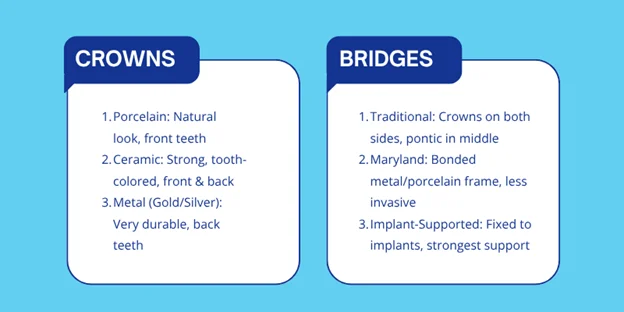
Crowns come in several main types of materials. Porcelain crowns are popular because they look like real teeth and match your natural color well.
They work great for front teeth where appearance matters most. Ceramic crowns are similar to porcelain but tend to be stronger and are also tooth-colored.
They’re often used for both front and back teeth, offering a balance of strength and a natural look. Metal crowns, made from alloys like gold or silver, are the toughest.
They last a long time but don’t look like natural teeth, so they’re usually placed on molars where you chew. Each material has pros and cons: porcelain and ceramic are pleasing to the eye but may be less durable than metal crowns in some cases.
Traditional, Cantilever, Maryland, and Implant-Supported Bridges
Bridges fill gaps left by missing teeth using different designs. A traditional bridge uses crowns on the teeth next to the gap, with artificial teeth (called pontics) in between.
A cantilever bridge is similar but supported on only one side by a crown. This type is less common and used only when there’s limited space.
Maryland bridges attach pontics with a metal or porcelain frame bonded to the back of neighboring teeth. These are less invasive but not as strong.
Implant-supported bridges are attached to dental implants instead of natural teeth. They provide strong support and don’t rely on your healthy teeth.
Temporary vs Permanent Restorations
Sometimes, you’ll get a temporary crown or bridge before the permanent one is ready. Temporaries protect your teeth and maintain appearance during the fitting process.
Temporary bridges serve the same purpose, filling the gap briefly and keeping your teeth stable. Permanent crowns and bridges are made to last years with proper care.
They’re custom-made to fit your mouth perfectly and restore your teeth’s function and look. Temporary restorations are not as durable, so avoiding hard or sticky foods is important while you wait for the permanent ones.
Treatment Procedure: From Consultation to Placement
Getting a dental crown or bridge involves several steps to make sure it fits well and looks natural. You’ll start by preparing your teeth, then move on to taking impressions and fitting the final restoration carefully.
Preparation and Tooth Structure Requirements
Before placing a crown or bridge, your dentist will prepare your teeth. If you have a broken, decayed, or misshapen tooth, it needs to be reshaped to fit the crown properly.
Sometimes, if the damage is severe, like after a root canal or when large fillings wear down the tooth, your dentist may build up the tooth with filling material first. For bridges, the teeth on either side of the missing tooth (called abutment teeth) also need to be shaped to hold the bridge securely.
Your dentist will make sure the teeth are strong enough to support the new restoration. This step is important to avoid problems later and help your crown or bridge last longer.
Impressions, Fitting, and Final Placement
Once your teeth are ready, your dentist will take impressions to make a custom crown or bridge. These impressions capture the shape of your prepared teeth and bite so the restoration feels comfortable.
While the permanent crown or bridge is made, you’ll get a temporary one to protect your teeth. At your next visit, the dentist will remove the temporary and place the permanent restoration.
They’ll check the fit, color, and bite, making small adjustments if needed. Finally, your crown or bridge will be cemented securely in place, restoring your smile’s function and appearance.
Want a crown or bridge that fits beautifully and lasts? Visit CU Dentists for expert, patient-focused restorative care.
Suitability: When to Choose a Crown or a Bridge
Choosing between a crown and a bridge depends on whether you need to restore a damaged tooth or replace one that is missing. The health of your surrounding teeth and your overall dental condition also play big roles in deciding which treatment fits you best.
Replacing Missing Teeth vs Restoring Damaged Teeth
If you have one or more missing teeth, a dental bridge is often the right choice. Bridges fill the gaps by anchoring false teeth to the healthy teeth or dental implants next to the missing spot.
This helps keep your bite balanced and stops other teeth from moving out of place. In contrast, crowns are made to cover and protect a single damaged or weakened tooth.
They restore the tooth’s shape and strength so you can chew properly and keep your natural tooth in place. Choosing a bridge is best when replacing missing teeth is the main goal, while a crown focuses on restoring damaged teeth rather than filling gaps.
A systematic review examined the survival of full-coverage crowns and fixed dental prostheses (bridges) on both vital (living) and endodontically treated (non-vital) teeth.
The review found that vital teeth, those retaining their nerve and blood supply, generally had better long-term survival outcomes under prosthetic restorations compared with non-vital teeth.
This highlights the clinical value of restoring a damaged tooth whenever possible, particularly if the tooth is still vital, as it tends to support more durable and predictable restorative results.
If you aren’t sure which applies to you, talking with your dentist can help clarify.
Candidacy for Each Treatment
Your dentist will check the condition of your teeth and gums before suggesting a crown or a bridge. You need strong, healthy teeth or dental implants next to the gap to support a bridge properly.
For crowns, your damaged tooth must be able to hold the crown securely. If the tooth is too weak or decayed, other treatments might be needed first.
If you have missing teeth and don’t have healthy teeth nearby, dental implants might be a better option than bridges. Implants offer long-lasting support and don’t rely on surrounding teeth.
Your candidacy depends on factors like tooth health, gum condition, number of missing teeth, and dental implant availability. Your dentist will guide you to the best choice based on these details.
Curious which option is right for your smile? The experts at CU Dentists Rantoul and Champaign, IL clicnics provide personalized guidance tailored to your unique dental needs.
Longevity, Maintenance, and Oral Hygiene Tips
Keeping dental crowns and bridges in good shape means paying close attention to how you clean them and protect your bite. Taking care of these restorations helps maintain your chewing function and prevents problems like decay or damage.
Caring for Crowns and Bridges
To keep your crowns and bridges strong, brush your teeth twice a day using a fluoride toothpaste. This helps fight decay around the edges where the crown meets your natural tooth.
Flossing is just as important. Use floss threaders to get under and around bridges where normal floss can’t reach.
This removes plaque that could cause gum disease or tooth decay under the bridge. Avoid chewing very hard or sticky foods like ice or caramel.
These can crack or loosen your restorations. If you grind or clench your teeth at night, talk to your dentist about a nightguard to protect your bite alignment.
Lifespan and Common Problems
Crowns and bridges usually last between 10 and 15 years but can last longer with good care. Crowns made of metal tend to be more durable, while porcelain crowns may chip easier but look more natural.
Common problems include loosened crowns or bridges, decay around the edges, and gum irritation. Regular dental check-ups let your dentist catch any issues early and fix them before they cause bigger problems.
By staying consistent with your oral hygiene and visiting your dentist regularly, you can help your dental work last longer and keep your mouth healthy.
Comparing Benefits, Drawbacks, and Alternatives
Choosing between dental crowns and bridges involves looking at how each option helps restore your teeth, their limits, and other ways to replace missing teeth. Both work well for fixing your smile, but they do it in different ways and suit different needs.

Advantages of Dental Crowns
Dental crowns cover and protect a damaged tooth, making it stronger and improving its look. You can use crowns to fix a tooth that has a big filling, a crack, or after a root canal.
They restore the tooth’s shape and help you chew better. Crowns come in many materials like porcelain, metal, and porcelain-fused-to-metal.
Porcelain crowns look natural and are great for front teeth. Metal crowns are strong and last long, making them perfect for back teeth.
Crowns are usually a quicker treatment and cost less than bridges because they restore just one tooth.
Advantages of Dental Bridges
Bridges are made to fill gaps caused by missing teeth. They use crowns on the teeth next to the gap to hold a false tooth or teeth in place.
This helps keep your smile even and prevents nearby teeth from moving out of place. There are different kinds of bridges: traditional, cantilever, Maryland, and implant-supported.
Implant-supported bridges attach to implants instead of natural teeth, which makes them more stable. Bridges help spread the force of your bite evenly and restore your ability to eat and speak clearly.
Potential Drawbacks and Limitations
Crowns require your tooth to be healthy enough to support the cap. If the tooth is too damaged, a crown won’t work.
Crowns may wear down or chip depending on the material. Porcelain fused to metal crowns can sometimes show a dark line near your gums.
Bridges need healthy teeth on both sides of the gap. If those teeth aren’t strong enough, the bridge may not hold well.
Bridges may put extra stress on the supporting teeth, which can cause problems later. Both crowns and bridges require good oral hygiene to last longer, or they risk decay or gum disease.
Dental Implants as an Alternative
Dental implants offer a more permanent solution by placing a metal post into your jawbone to hold a crown or bridge. They don’t rely on neighboring teeth, which keeps those teeth intact.
Implant-supported bridges are useful when multiple teeth are missing. Implants help prevent bone loss and usually last longer than traditional bridges or crowns.
However, implants involve surgery and a longer healing time. They can cost more upfront but might save money over time because they can last many years with good care.
Frequently Asked Questions
Cost differences between crowns and bridges depend on the materials used, the number of teeth involved, and the complexity of the procedure. Your location and dentist’s fees also play a role in the total price.
What factors determine the cost differences between crowns and bridges?
Crowns usually cost less because they cover one damaged tooth only. Bridges are more expensive since they replace one or more missing teeth and involve crowns on neighboring teeth for support.
Materials like porcelain, metal, or resin affect the price. If implants are involved to support the bridge, costs go up.
How does the longevity and durability of crowns compare to bridges?
Crowns generally last 5 to 15 years, depending on how well you care for them and the material used. Bridges typically last about 5 to 10 years, sometimes longer with good hygiene.
Both can wear down over time or get damaged by hard or sticky foods, so regular dental visits are important.
Can you explain the different types of dental crowns available and their associated costs?
You can choose from porcelain crowns, which look natural and are good for front teeth. Metal crowns are very strong and last a long time, best for back teeth.
Porcelain-fused-to-metal crowns combine strength with a natural look but might show a dark line near the gum. Resin crowns are cheaper but wear out faster.
What are the aesthetic outcomes one can expect from crowns and bridges?
Porcelain crowns and bridges offer a natural tooth color and shape, making them good for visible teeth. Metal crowns are less natural-looking but very strong.
With bridges, the false teeth match the color of your real teeth, helping your smile look complete and natural.
How do crowns, bridges, and implants differ in function and application?
Crowns cover and protect damaged teeth but don’t replace missing ones. Bridges fill gaps left by missing teeth by anchoring to nearby teeth.
Implants replace tooth roots with metal posts, supporting crowns or bridges directly. Implants usually last longer but cost more and require surgery.
What should one consider when choosing between a crown and a bridge for front teeth restoration?
For a single damaged front tooth, a crown is usually best since it preserves your natural tooth.
Bridges work better if you have one or more missing front teeth.
Crowns offer a more natural look for visible teeth.
Bridges might affect the neighboring teeth since they need support to hold the false tooth or teeth.