



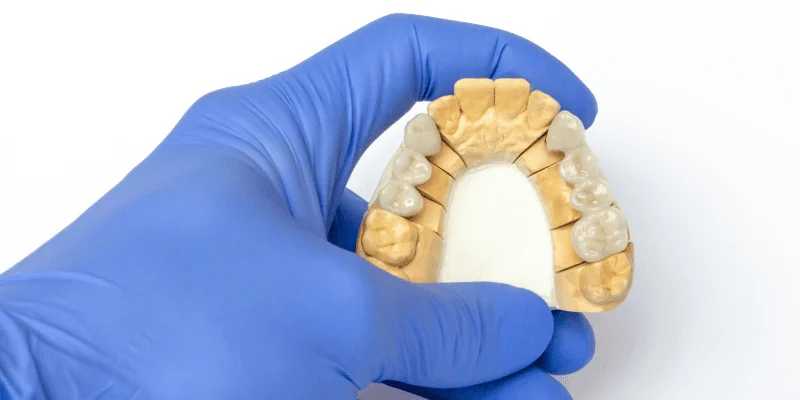
When you look into dental implants, you quickly see that not all implants use the same material. Implant dentistry relies on strong, biocompatible materials that bond with your jaw and support a crown that looks like a natural tooth.
Dental implants are usually made from titanium or zirconia, and each material offers different benefits for strength, appearance, and long-term success.
Titanium has a long record of durability and strong bone bonding, while zirconia offers a metal-free option with a tooth-colored look.
You also need to think about the crown that sits on top of the implant. The material you choose can affect how well you restore your smile, how natural your tooth looks, and how long your implant lasts.
When you understand your options, you can make a clear and confident choice for your oral health.
Key Takeaways
- Dental implants use strong materials like titanium or zirconia to replace missing tooth roots.
- The right material depends on your goals, health, and the location of the implant.
- Care, planning, and material choice all affect how long your implant lasts.
Schedule a dental implant consultation in Champaign, IL to choose the right material.
What Are Dental Implants Made Of?
Dental implants use strong, body-safe materials to replace missing teeth. Each part—the fixture, abutment, and crown—uses specific implant materials to support chewing and long-term stability.
Key Components: Fixture, Abutment, and Crown
A dental implant has three main parts. Each one plays a clear role in how your new tooth looks and functions.
- Implant Fixture
The implant fixture sits in your jawbone. Dentists usually make it from titanium or titanium alloys because these metals bond well with bone through osseointegration. Some fixtures use zirconia, a strong ceramic that is metal-free.
Titanium remains the most common choice because it is durable and resists corrosion. You can read more about common materials used in dental implants from the Association of Dental Implantology.
- Abutment
The abutment connects the fixture to your dental crown. It often uses titanium, zirconia, or a gold alloy. Your dentist may choose zirconia for front teeth because it blends better with natural enamel. - Dental Crown
The dental crown is the visible part of your tooth. Dental implant crowns often use porcelain, ceramic, or porcelain fused to metal. These materials match your natural teeth and handle normal biting force.
Role of Materials in Tooth Replacement
Implant materials affect how well your dental implants perform over time. The right material supports bone healing, chewing strength, and gum health.
Titanium supports strong osseointegration. This process allows your bone to grow around the implant fixture and hold it firmly in place.
According to a detailed review of dental implant materials and design, implant materials must provide strength, corrosion resistance, safety, and proper function for chewing.
Zirconia offers a metal-free option. Some patients prefer it for aesthetic reasons or metal sensitivity. It also resists wear and blends well with natural teeth.
Your dentist selects implant materials based on bone quality, bite force, and tooth location. Back teeth often need stronger materials due to higher chewing pressure, while front teeth focus more on appearance.
Visit our Rantoul, IL dental team to compare titanium and zirconia implants.
Types of Dental Implant Materials
You will most often choose between titanium and zirconia, but other options exist. Each material affects strength, healing, appearance, and long‑term stability in different ways.
Titanium Dental Implants
Dentists have used titanium dental implants for decades. Most implant posts today use pure titanium because it bonds well with bone through a process called osseointegration.
Titanium is one of the most studied dental implant materials. It resists corrosion and handles strong bite forces. Research reviews note that titanium remains the most common choice due to its stable bond with bone and long history of use.
You should know that titanium has a gray color. If your gums are thin, the metal may show slightly at the edge. Still, many dentists prefer titanium implants because they offer:
- High strength
- Long clinical track record
- Strong bone integration
- Wide availability
Zirconia Dental Implants
Zirconia dental implants use zirconium dioxide, a white ceramic material. Dentists often call them ceramic implants because they do not contain metal.
If you care about appearance, zirconia implants can blend better with natural teeth. The white color reduces the risk of a dark line near the gum. Many patients choose zirconia when they want a metal‑free option.
Zirconia also resists corrosion and plaque buildup. However, it can be more brittle than titanium. That means it may not handle extreme bite pressure as well in some cases.
When comparing options, dentists often review differences between titanium and zirconia. Your bone density, bite force, and cosmetic goals all matter in this decision.
Titanium Alloy Implants
Some implants use titanium alloys instead of pure titanium. A common example is Ti‑6Al‑4V, which blends titanium with aluminum and vanadium.
These titanium alloy implants offer higher strength than pure titanium. Dentists may use them in cases where you need extra durability, such as in the back of your mouth where chewing forces are stronger.
Titanium alloys remain biocompatible materials. They still support bone integration while improving mechanical performance.
You may not notice a visible difference between pure titanium and titanium alloy implants. The choice often depends on your specific case and the implant system your dentist uses.
Alternative and Emerging Materials

Researchers continue to test new dental implant materials. Some include advanced ceramics, surface‑treated metals, and experimental compounds designed to improve healing.
Gold dental implants are rare today, but gold alloys may appear in abutments or in porcelain‑fused‑to‑metal crowns placed on top of implants. These parts affect how your final tooth looks and functions, even though they are not the implant post itself.
New ceramic blends and surface coatings aim to speed up bone attachment. Some designs also focus on reducing inflammation around the implant.
When you review your options, ask your dentist which material suits your bone quality, health history, and cosmetic needs. The right choice depends on how your body responds and how much force your implant must handle each day.
Book a consultation to find the best implant material for your needs.
Types of Dental Implants and Material Selection
You have several types of dental implants to choose from, and each one works best in certain bone and health conditions. The material used in the implant plays a direct role in strength, healing, and long-term stability.
Endosteal vs. Subperiosteal Implants
Dentists place endosteal implants directly into your jawbone. These are the most common types of dental implants.
They usually look like small screws and are often made of titanium because it bonds well with bone and resists corrosion, as explained in this review of dental implant materials and design.
During dental implant surgery, your dentist inserts the implant into the bone and waits for it to fuse through a process called osseointegration. This fusion creates a strong base for a crown or bridge.
Subperiosteal implants sit on top of your jawbone but under the gum. Dentists may suggest them if you do not have enough healthy bone and cannot undergo bone grafting.
These implants use a metal framework, often titanium, that rests over the bone and supports replacement teeth.
All-on-4 and Mini Dental Implants
The All-on-4 system supports a full arch of teeth using four implants. Your dentist places two implants in the front of your jaw and two at an angle in the back. This design increases contact with the bone and often avoids bone grafting.
Titanium remains the most common material for All-on-4 because it offers strength and reliable bone bonding. Some systems may use zirconia for visible parts when appearance matters.
Mini dental implants are smaller in diameter than standard implants. Dentists often use them to stabilize dentures or in areas with limited bone width.
Their small size allows less invasive implant placement, but they may not handle heavy biting forces as well as larger implants.
How Material Choice Impacts Implant Type
Material choice affects how your implant heals and performs under pressure.
Most implants use titanium or titanium alloys because they are strong, corrosion resistant, and highly biocompatible. Titanium forms a stable connection with bone, which supports long-term implant success.
Some implants use zirconia, a ceramic material. Zirconia offers a tooth-colored appearance and works well for patients who prefer metal-free options. However, it behaves differently under stress and may not suit every implant design.
Your bone quality, bite force, and treatment goals all shape the best match between implant type and material. A careful exam helps your dentist choose the safest and most stable option for your implant placement.
Dental Implant Crown Materials
Your dental crown is the part of the implant you see and use every day. The material you choose affects strength, appearance, and how well the crown handles chewing forces and bite force over time.
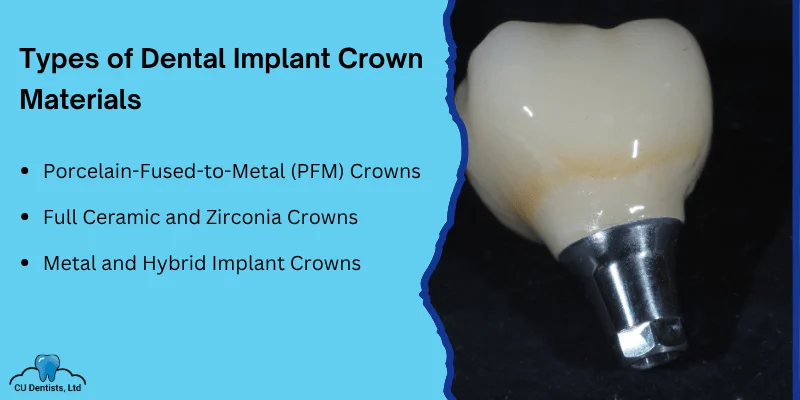
Porcelain-Fused-to-Metal (PFM) Crowns
A porcelain-fused-to-metal (PFM) crown uses a metal base covered with tooth-colored porcelain. The metal adds strength, while the outer layer helps the dental crown blend in with nearby teeth.
Dentists often place PFM implant crowns in the back of your mouth. Molars handle strong chewing forces, so the metal core helps prevent bending or breaking under heavy bite force.
You should know that the porcelain layer can chip in some cases. Over time, a thin dark line may also show near the gum if the metal edge becomes visible.
PFM crowns balance durability and cost. They usually cost less than some all-ceramic options, which makes them a practical choice for many patients.
Full Ceramic and Zirconia Crowns
Full ceramic implant crowns contain no metal. Dentists often use materials like lithium disilicate or zirconia to create a strong, natural-looking dental crown.
If you need a crown for a front tooth, full ceramic often gives you the best color match. These materials reflect light in a way that looks closer to natural enamel.
Zirconia stands out for strength. It resists cracks and handles high bite force better than many older ceramic materials. Many dentists choose zirconia for patients who grind their teeth.
Metal and Hybrid Implant Crowns
Metal implant crowns use gold or other dental alloys. These crowns rarely chip or crack, and they manage strong chewing forces very well.
Dentists usually place metal crowns on back teeth where people cannot see them. The metallic color does not match natural teeth, but the material lasts a long time and wears gently against opposing teeth.
Hybrid implant crowns combine materials. For example, a strong inner structure may support a ceramic outer layer. This design aims to improve strength while keeping a natural look.
Some dental implants use titanium or zirconia as the base material for the implant post itself. The crown material works with that base to create a stable and functional restoration.
Factors Influencing Material Selection
When you choose a dental implant material, you need to look at how your body will react to it, how strong your jawbone is, and how the final tooth will look and function. These factors shape long-term comfort, stability, and gum health.
Biocompatibility and Osseointegration
You want a material that your body accepts without irritation. Biocompatibility means the implant does not trigger harmful reactions in your gum tissue or bone.
Titanium stands out because it supports strong osseointegration, which is the direct bond between the implant and your jawbone.
Many experts note that titanium promotes a stable connection with bone and resists corrosion, which supports long-term function.
Good osseointegration lowers the risk of implant failure. It also helps protect against bone loss around the implant.
Your oral hygiene also plays a role. Even the most biocompatible material can fail if plaque builds up and harms your gum health.
Jawbone Density and Bone Grafting
Your jawbone density affects which material and implant design will work best. If you have strong bone density, your implant has a better chance of staying stable from the start.
If you have bone loss, your dentist may suggest bone grafting before placing the implant. In these cases, the implant material must support healing and bond well with the new bone.
Implant success depends on factors like material choice, bone quality, and how well the implant integrates with surrounding bone.
If your bone is softer, your dentist may choose a design that increases surface contact. This helps improve stability while your bone heals and fuses to the implant.
Aesthetics, Durability, and Personal Preferences
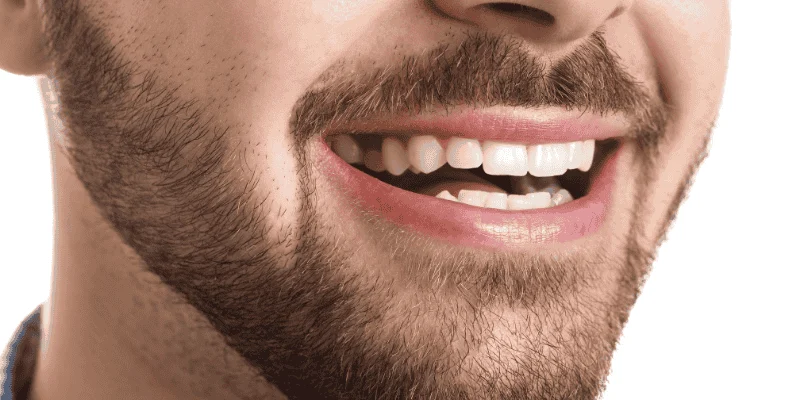
You also care about how your new tooth looks. If the implant sits near the front of your mouth, color matters more.
Zirconia offers a tooth-colored option. This can reduce the chance of a gray tint showing through thin gum tissue. Some patients prefer it for cosmetic reasons.
Durability matters just as much. Materials must handle chewing pressure, resist wear, and stay strong in a moist oral environment.
Your personal preferences also count. You may weigh cost, appearance, and your comfort level with metal or ceramic materials when making your decision.
Material Longevity and Implant Success
The material you choose affects how long your implant lasts and how well it bonds with your jaw. Strength, bone integration, and daily care all shape your risk of implant failure.
Durability and Risk of Implant Failure
You need an implant material that can handle years of biting force. Chewing creates steady pressure, and weaker materials can wear down or crack over time.
Most implants use titanium because it forms a stable bond with bone. This process, called osseointegration, anchors the implant in your jaw.
Zirconia also offers good strength and does not contain metal. Some patients prefer it for cosmetic reasons, especially in the front teeth.
Implant failure often happens when the implant does not fuse well with bone. Poor bone quality, smoking, and uncontrolled health issues increase this risk.
The material cannot fix these problems, but a strong, biocompatible option lowers mechanical failure.
Long-Term Care and Oral Health
Even the best material fails without proper care. You protect your implant by brushing twice a day and cleaning between teeth with floss or interdental brushes.
Plaque buildup around the implant can lead to gum inflammation. If untreated, this can progress to bone loss and increase the risk of implant failure.
Research on the longevity of implant-supported prostheses shows that maintenance needs vary based on patient factors and prosthetic design. Regular dental visits help your dentist check bone levels and adjust the crown or bridge if needed.
If you have a history of periodontal disease, you face a higher risk of complications. Your dentist may suggest more frequent cleanings to protect the bone around the implant.
Potential Complications
Every implant surgery carries some risk. Swelling, minor bleeding, and discomfort are common in the first few days.
More serious problems include infection around the implant site. Bacteria can collect if healing does not go well or if oral hygiene slips.
Material choice also plays a role. An ideal implant material must resist corrosion, wear, and chemical breakdown in saliva.
In rare cases, the implant may loosen if bone integration fails. Early treatment gives you the best chance to correct the problem and avoid full implant loss.
Frequently Asked Questions
Dental implants rely on specific materials that affect strength, healing, appearance, and cost. Your choice can change how long the implant lasts and how natural your new tooth looks.
What are the most commonly used materials for dental implants?
Dentists most often use titanium and zirconia for implant posts. Titanium has a long history of safe use and strong bonding with bone. Zirconia offers a metal‑free option with a white color that blends well with teeth.
For crowns, dentists often use porcelain, ceramic, or full zirconia. These materials focus more on appearance and bite strength than bone bonding.
How do different materials affect the longevity of dental implants?
Material choice affects how well the implant bonds with your jaw and handles chewing force. Titanium has decades of data that show high long‑term success rates.
Zirconia also bonds with bone, but it is more rigid. In high‑pressure areas like back molars, your dentist may prefer titanium for added strength.
Surface treatments also matter. Many modern implants use textured or treated surfaces to help bone attach faster and more securely.
What should one consider when choosing a material for dental implant crowns?
You should look at location, bite force, and appearance. Front teeth need strong color matching, while back teeth must handle heavier pressure.
Porcelain and ceramic crowns match natural enamel well. Full zirconia crowns offer strong durability for molars.
Your budget also plays a role. Some crown materials cost more due to lab work and customization.
What are the advantages and disadvantages of titanium implants?
Titanium stands out for strength and reliable bone bonding. It resists corrosion and handles daily chewing forces well.
It can, however, show a slight gray tone under thin gums. A small number of people report metal sensitivity.
How does the osseointegration process work for dental implants?
Osseointegration happens when your jawbone grows around the implant post. The bone cells attach directly to the implant surface.
This process usually takes a few months. During that time, the implant becomes stable enough to support a crown.
Titanium and zirconia both support osseointegration, but surface design and your bone health strongly affect the outcome.
Can you explain the price variation between different types of dental implants?
Cost varies based on material, design, and lab work. Titanium implants are widely available and often cost less than zirconia systems.
Zirconia implants may cost more because they require specialized manufacturing and training. Crown materials also affect the final price.