


Dental implants are one of the most successful tooth replacement options available today, but like any surgical procedure, they come with potential risks you should understand.
The main risks of dental implant surgery include infection, nerve damage, implant failure, bone loss, and damage to nearby teeth or blood vessels, though these complications occur in only a small percentage of cases when proper care is taken.
Most dental implants have success rates between 95-97%, which means the vast majority of people who choose this tooth replacement option will have excellent results.
Understanding what can go wrong and how to prevent problems will help you feel confident about your decision to get dental implants.
The good news is that many complications can be prevented through careful planning, choosing an experienced implant dentistry professional, and following proper care instructions before and after your procedure.
Whether you’re considering dental implant surgery or already have it scheduled, knowing the risks and how to minimize them puts you in control of your treatment outcome.
This guide will walk you through everything you need to know to protect your investment and enjoy your new smile for years to come.
Key Takeaways
- Most dental implant complications like infection and implant failure can be prevented with proper planning and good oral hygiene
- Working with an experienced dentist and controlling health conditions like diabetes significantly improves your success rate
- Following postoperative care instructions and attending regular checkups helps catch problems early before they become serious
Schedule a dental implant risk evaluation in Champaign, IL before your procedure.
Most Common Risks of Dental Implant Surgery
While dental implants have high success rates, you should know about the main dental implant complications that can occur.
Infections, implant failure, and bone integration problems are the primary concerns you’ll want to understand before your procedure.
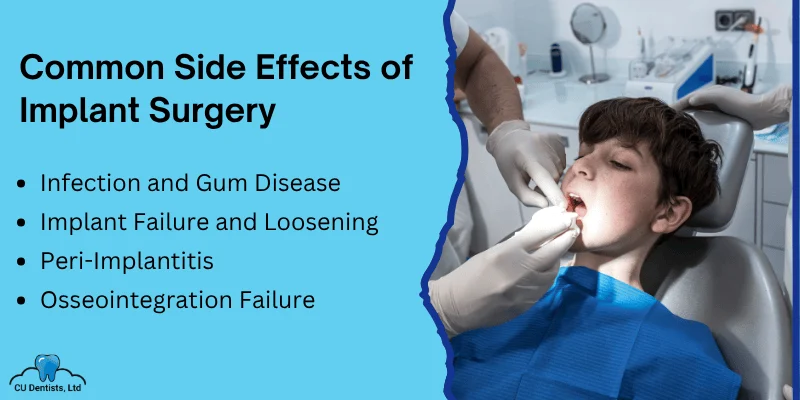
Infection and Gum Disease
Infection is one of the most serious risks of dental implants you need to watch for after surgery. Bacteria can enter the surgical site during or after the procedure, leading to swelling, pain, and discharge around your implant.
A gum infection near your implant can spread to surrounding tissues if not treated quickly. You might notice redness, tenderness, or bleeding around the implant site as early warning signs.
Your risk of infection increases if you smoke, have diabetes, or don’t maintain good oral hygiene. Taking antibiotics as prescribed and following your dentist’s cleaning instructions can significantly reduce this risk.
Most infections occur within the first few weeks after surgery. If you experience fever, persistent pain, or unusual swelling, contact your dentist right away for evaluation and treatment.
Implant Failure and Loosening
Implant failure happens when your implant doesn’t stay securely in place or needs to be removed. Early implant failure typically occurs within the first few months, while late failure can happen years after placement.
You may experience dental implant failure due to insufficient bone quality, improper placement, or excessive force on the implant before it fully heals. Implant loosening often feels like movement or wiggling when you touch the crown or bite down.
Common signs of implant failure include:
- Movement or shifting of the implant
- Pain when chewing or applying pressure
- Swelling or inflammation around the implant
- The implant becoming visible through your gum tissue
Choosing an experienced dental surgeon with specialized training dramatically reduces your chances of experiencing implant complications.
Modern imaging technology helps ensure proper placement and reduces the risk of mechanical problems.
Peri-Implantitis
Peri-implantitis is an inflammatory condition that destroys the bone supporting your dental implant. This serious complication resembles gum disease but specifically affects the tissues around dental implants.
You’ll typically notice bleeding when brushing, gum recession, and deepening pockets around your implant. The bone loss from peri-implantitis can eventually lead to complete dental implant failure if left untreated.
Poor oral hygiene is the main cause of this condition. Bacteria accumulate on the implant surface, triggering an immune response that breaks down bone tissue over time.
Risk factors for peri-implantitis include:
- History of gum disease
- Smoking or tobacco use
- Inadequate home care
- Skipping regular dental cleanings
Regular professional cleanings and thorough daily brushing and flossing help prevent this condition. Your dentist can detect early signs during checkups and provide treatment before serious damage occurs.
Osseointegration Failure
Osseointegration failure happens when your jawbone doesn’t properly fuse with the titanium implant. This process normally takes three to six months and is essential for long-term implant success.
Several factors can prevent proper bone integration. Insufficient bone density, premature loading of the implant, or movement during healing can disrupt the fusion process.
Medical conditions like uncontrolled diabetes or osteoporosis increase your risk of osseointegration failure. Smoking reduces blood flow to your jaw and significantly decreases the chances of successful bone integration.
Modern surgical techniques and planning improve the accuracy of implant placement and promote better healing. Your surgeon may use bone grafts to strengthen weak areas before placing your implant, which helps ensure proper fusion.
Visit our Rantoul, IL dental team to plan a safe and successful implant treatment.
Potential Surgical and Anatomical Complications
Dental implant placement involves working near delicate nerves, sinuses, and gum tissue.
Understanding these potential complications after dental implant surgery helps you recognize warning signs early and seek prompt treatment if problems develop.
Nerve Damage and Symptoms
Nerve damage can occur during implant placement if the implant comes too close to or contacts nerves in your jaw. This risk is higher in the lower jaw where the inferior alveolar nerve runs through the bone.
The neurological risks during implant placement in both upper and lower jaws require careful planning before surgery.
Common symptoms of nerve damage include:
- Numbness or tingling in your lips, chin, or tongue
- Loss of sensation in your gums or teeth
- A pins-and-needles feeling that doesn’t go away
- Difficulty speaking or tasting food
Most nerve injuries are temporary and heal within a few weeks to months. Permanent nerve damage is rare but can happen in severe cases.
Your dentist uses CT scans and careful measurements to map nerve locations before placing implants, which significantly reduces this risk.
Sinus Issues with Upper Jaw Implants
Upper jaw implants can penetrate the sinus cavity if your bone isn’t thick enough. Your sinuses sit right above your upper back teeth, leaving limited bone for implant placement.
When implants extend into the sinus, you may experience pain, pressure, or chronic sinus infections.
A sinus lift procedure adds bone to create enough space between your sinus and jaw. This surgery is often done before placing upper jaw implants to prevent complications.
Signs of sinus problems after implant surgery include persistent congestion, facial pain, and drainage from your nose. Contact your dentist immediately if you notice these symptoms, as early treatment prevents more serious issues.
Gum Recession and Soft Tissue Problems
Gum recession exposes the metal parts of your implant, creating both functional and aesthetic concerns. Poor oral hygiene, thin gum tissue, or improper implant placement can cause your gums to pull away from the implant.
You might notice the implant crown looks longer or see metal showing near the gumline.
Swollen gums around your implant signal possible infection or inflammation. Healthy gum tissue should fit snugly around the implant crown without redness or puffiness.
A soft tissue graft can restore receded gums by transplanting tissue from another area of your mouth. This procedure covers exposed implant surfaces and protects the bone supporting your implant.
Proper brushing techniques and regular dental cleanings help prevent gum recession before it starts.
Book a consultation to assess your dental implant risks and candidacy.
Contributing Risk Factors
Several factors can increase your chances of complications with dental implants. Your bone quality, overall health, and daily habits all play important roles in whether your implant will succeed or fail.
Insufficient Bone Density and Bone Grafting
Your jawbone needs to be strong enough to support a dental implant. If you don’t have enough bone density, your dentist may not be able to place the implant safely.
Bone loss often happens after you lose a tooth. The jawbone in that area starts to shrink because it’s no longer being used. This process can make it harder to get implants later.
Bone grafting is a common solution when you lack sufficient bone. Your dentist adds bone material to your jaw to build it up. This procedure takes extra time and healing before you can get your implant.
Some conditions that affect bone density include:
- Osteoporosis
- Long-term tooth loss
- Gum disease
- Previous infections
The grafting process adds months to your treatment timeline. Your new bone needs time to grow and become stable before it can hold an implant.
Systemic Health Issues
Your overall health directly impacts your body’s ability to heal after implant surgery. Certain systemic disorders can affect implant success rates.
Diabetes is one of the biggest concerns. High blood sugar slows down healing and increases infection risk. If you have diabetes, you’ll need to keep your blood sugar well controlled before and after surgery.
Other health conditions that may increase dental implant risks include:
- Heart disease
- Autoimmune disorders
- Blood clotting problems
- Cancer treatments or radiation therapy
Some medications also create challenges. Blood thinners, steroids, and drugs that suppress your immune system can interfere with healing. Tell your dentist about all medications you take.
Lifestyle Habits Impacting Implant Success
Your daily habits can make or break your implant’s success. Smoking is the most serious lifestyle risk factor for dental implants.
Tobacco use reduces blood flow to your gums and slows healing. Smokers face much higher rates of implant rejection and failure. Many dentists won’t perform implant surgery unless you quit smoking first.
Poor oral hygiene also threatens your implant’s survival. Bacteria buildup around the implant can cause infections. You need to brush, floss, and visit your dentist regularly.
Other habits that increase long-term risks of dental implants include:
- Grinding or clenching your teeth
- Chewing hard foods or ice
- Skipping dental checkups
- Heavy alcohol consumption
Making positive lifestyle changes before surgery gives your implant the best chance of lasting for years.
How to Minimize Risks and Support Implant Success
The dentist you choose and the planning steps taken before surgery play major roles in whether your implants succeed.
Proper imaging, precise placement, and careful evaluation of your bone and health help create the best conditions for your implant to integrate with your jawbone.
Choosing an Experienced Implant Dentist

Finding the right dentist matters more than you might think. An experienced implant specialist uses advanced imaging to avoid placing implants near nerves or into sinus cavities. They also know how to work with different bone types and can tell if you need extra procedures first.
Ask potential dentists about their training in implant dentistry. Find out how many implant procedures they perform each year. A dentist with specialized training will understand the details of implant placement and can spot problems before they happen.
You should also look at before-and-after photos of their work. Read reviews from other patients who had implants placed by that dentist.
Choosing a skilled dental surgeon helps ensure the procedure is carried out safely and reduces the chance of nerve injury or other complications.
Pre-Surgical Planning and Evaluation
Good planning starts with a complete exam of your mouth and medical history. Your dentist will take X-rays or 3D scans to check your jawbone density and locate important structures like nerves and sinuses.
This step helps prevent implant rejection and other problems.
Be honest about your health conditions and medications. Certain issues like diabetes or osteoporosis can affect how well your bone heals. Smoking is especially harmful because it limits blood flow and can increase failure rates.
Your dentist may recommend a bone graft if your jawbone is too thin or soft. While this adds healing time, it creates a stronger foundation for your implant.
Some patients also need a sinus lift procedure if there’s not enough bone height in the upper jaw.
Optimal Implant Placement Techniques
The way your dentist places the implant affects how well it integrates with your bone. Strategic risk management involves careful planning combined with flexibility during the procedure.
Your dentist should use precise measurements to position the implant at the correct depth and angle.
Modern technology helps improve placement accuracy. Computer-guided surgery systems allow dentists to follow a digital plan created from your scans. This reduces human error and helps avoid damage to nearby teeth, nerves, and blood vessels.
The implant must have good contact with healthy bone for proper integration. Your dentist will check stability during placement and may adjust the treatment plan if bone quality is different than expected.
Taking these steps during surgery gives your implant the best chance to heal correctly.
Best Practices for Postoperative Care and Maintenance
The first 72 hours after implant placement set the stage for long-term success, but your commitment to proper care must continue well beyond the initial healing phase. Staying alert to infection warning signs and maintaining excellent oral hygiene around your implants will protect your investment for years to come.
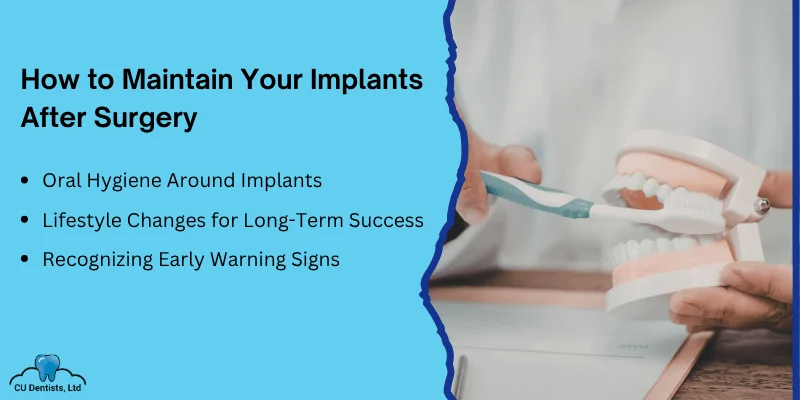
Oral Hygiene Around Implants
You should continue brushing and flossing the rest of your mouth normally while being very gentle around the surgical site during the first few days.
Avoid brushing directly over the implant area initially and use any prescribed antimicrobial rinse as directed to control bacteria.
Once your dentist clears you, use a soft-bristled toothbrush carefully around the site without applying pressure or scrubbing.
Cleaning around the implant with interdental brushes designed specifically for implants helps remove plaque from hard-to-reach areas.
The key is staying consistently clean without disturbing the healing tissue. Neglecting hygiene poses a greater infection risk than gentle, controlled cleaning.
Water flossers can provide additional support if your dentist recommends them for your specific situation.
Lifestyle Changes for Long-Term Success
You need to avoid smoking completely as it dramatically increases your risk of implant failure and infection. Control systemic conditions like diabetes through proper medication and monitoring since these affect healing.
Don’t use straws during the first 48 to 72 hours as the suction could disrupt blood clots. Avoid strenuous activity and anything that increases pressure or contamination in the surgical area so the implant can stabilize properly.
Take all prescribed medications, including antibiotics and anti-inflammatories, exactly as directed. Regular dental checkups and professional cleanings are critical so early inflammation can be detected and treated before it progresses to peri-implantitis.
Recognizing Early Warning Signs
Mild tenderness, slight bruising, and minor oozing during the first few days are normal and should gradually improve. However, you should watch for specific warning signs that indicate a potential problem.
Contact your dentist immediately if you notice:
- Increasing pain after the third day
- Spreading swelling or swollen gums
- Pus discharge from the surgical site
- A foul taste or odor in your mouth
- Fever or persistent bleeding
- Any implant mobility or looseness
If symptoms intensify instead of steadily improving, don’t wait it out.
Responding quickly to any bleeding or soreness around the implant will dramatically reduce the risk of developing a serious gum infection or peri-implantitis that could compromise your implant.