



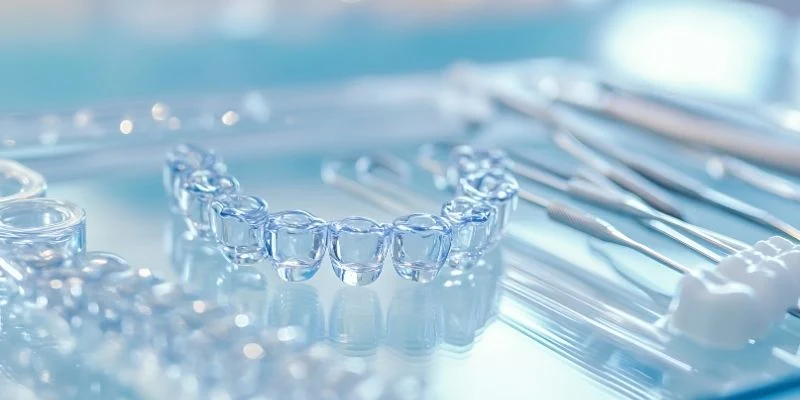
Clear aligners are a popular way to straighten your teeth without the look or feel of traditional braces. They work by using custom-made, clear plastic trays that fit snugly over your teeth and gently shift them little by little.
You wear each set of trays for about a week. They apply steady pressure to guide your teeth into the right position.
The process is simple and flexible because you can take the aligners out when you eat or clean your teeth. Over time, your smile changes as you switch to new trays made for the next stage of your treatment.
Clear aligners are designed to treat many common problems like gaps, crowding, and bite issues. You’ll want to check with your orthodontist to see if they’re the best fit for your needs.
Key Takeaways
- Clear aligners use gentle pressure to move your teeth gradually.
- Treatment involves wearing a series of custom trays for a comfortable fit.
- They are a discreet and removable option for many teeth straightening needs.
The Science Behind How Clear Aligners Move Teeth
Clear aligners use careful design and natural body processes to shift your teeth smoothly. They apply gentle forces that work with your bone and tissues, moving teeth step by step.
The way this happens involves a mix of biology and smart engineering to keep your treatment effective and comfortable.
Tooth Movement and Bone Remodeling
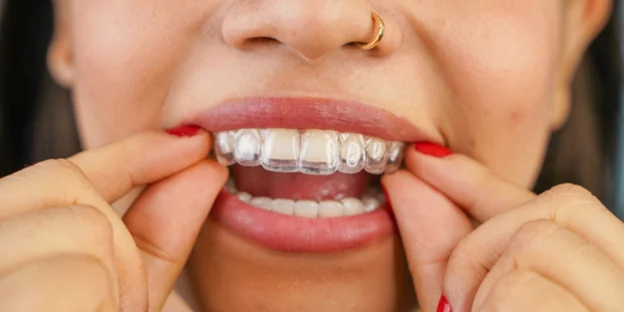
When you wear aligners, they press lightly on your teeth, pushing them in the direction planned by your orthodontist. This pressure affects the bone around your teeth.
On the side where your tooth is pushed, the bone slowly breaks down in a process called bone resorption. At the same time, on the opposite side, new bone forms to fill the space left behind.
This process is called bone remodeling. It lets your teeth move without damaging their roots or the surrounding jawbone.
A special tissue called the periodontal ligament connects your teeth to the bone and acts as a cushion during this shift. The remodeling takes time, which is why aligners need to be worn steadily, usually 20 to 22 hours a day.
Controlled Pressure and Gradual Adjustments
Each aligner in your treatment plan is made from clear thermoplastic, a flexible but strong material shaped to fit snugly over your teeth. These custom aligners apply just the right amount of pressure, enough to encourage movement but gentle enough to keep discomfort low.
You swap aligners every one to two weeks. Each new tray changes what teeth are pressed and how much, guiding your teeth along a small, planned path.
A comparative study found that patients with clear aligners experience significantly less pain than those with fixed braces, especially in the early stages of treatment.
This was based on self-reported pain, using tools like the Visual Analog Scale (VAS). However, skipping time with your aligners can delay movement or yield less effective results.
Role of Attachments and Auxiliaries
Sometimes, clear aligners alone can’t apply enough precise force, especially for tricky tooth movements like rotations or lifting. In these cases, your orthodontist adds small tooth-colored bumps called attachments.
These attachments act like handles that the aligners grip to apply more complex pressure. They are bonded to your teeth and work with the aligner to push, pull, or rotate teeth in ways plastic trays alone can’t manage.
Other tools, called auxiliaries, such as elastics (rubber bands), may also be used to help align teeth or adjust your bite. These extras improve the ability of clear aligners to achieve effective and accurate tooth movement while keeping your smile looking natural throughout the treatment.
Clear Aligner Treatment Process Explained
Your journey to straighter teeth starts with precise steps designed to fit your needs. From capturing accurate images of your teeth to creating custom-fit trays, every stage uses dental technology to guide your treatment.
You’ll see how each phase works together to move your teeth comfortably and keep your smile aligned after treatment.
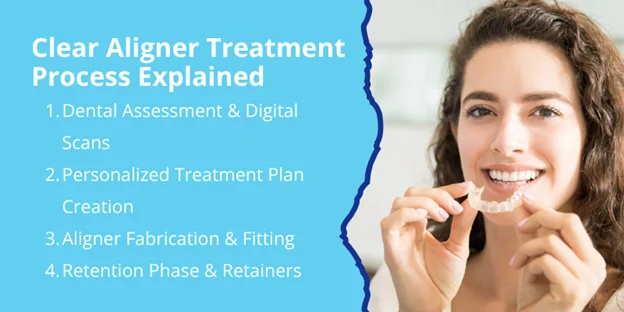
Dental Assessment and Digital Scans
The first step is a thorough dental assessment. Your orthodontist will check your teeth, gums, and bite to see if clear aligners are right for you.
This exam helps spot any dental issues that might need attention before treatment. Next, digital scans or 3D scanning of your mouth are done.
This process captures detailed images of your teeth in seconds. Unlike traditional dental impressions with putty, digital impressions are faster and more comfortable.
These scans serve as a precise map for your treatment, showing exactly where your teeth are and where they need to move.
Personalized Treatment Plan Creation
Once the scans are complete, your orthodontist creates a custom treatment plan just for you. Using specialized computer software, they map out your teeth’s movement step by step.
This digital plan shows how your teeth will shift over time and estimates how long treatment will take. You can even see a visual preview of your smile after treatment.
The plan guides the fabrication of your aligners, ensuring each tray applies the right amount of pressure to specific teeth.
Aligner Fabrication and Fitting
After your plan is ready, your custom-fit trays are made using clear, thin plastic. Each set of aligners fits snugly over your teeth and is designed to move them slightly.
You’ll usually wear each aligner for about one to two weeks, removing them only to eat, drink, and clean your teeth. It’s important to wear your aligners at least 22 hours a day for the best results.
Your orthodontist will check the fit and give you instructions on how to use and care for your aligners. They’ll provide several sets, which you’ll change in order as your teeth gradually shift.
Retention Phase and Retainers
Once your teeth reach the desired position, the treatment phase ends. But to keep your teeth in place, you’ll enter the retention phase.
This involves wearing retainers, which are devices made to hold your teeth steady after aligner treatment. Retainers can be clear plastic or wire-based, depending on your needs.
Your orthodontist will guide you on how often to wear retainers. Following this phase is key to preventing your teeth from moving back to their old position.
Retainers help protect your new smile for years to come.
Ready for a straighter smile? CU Dentists offers comfortable, clear aligner solutions tailored to you, with fast scans and friendly care.
Types of Clear Aligners and How They Differ
Clear aligners come in different styles and delivery methods. Some require visits to a dental office, while others let you manage your treatment from home.
The choices impact your experience, costs, and how closely a professional supervises your progress.
In-Office Clear Aligners
With in-office clear aligners, you visit an orthodontist or dentist who guides your treatment. The process starts with detailed scans or molds of your teeth to create custom-fit trays.
You get regular check-ups to ensure your teeth are moving as planned. Popular brands like Invisalign and ClearCorrect use advanced technology for precise movements.
Your aligners are made of clear, smooth plastic that fits snugly over your teeth. The professional guidance helps treat more complex cases.
You’ll wear a series of aligners, switching to a new set every one to two weeks. Since your provider monitors your progress, they can adjust your plan if needed.
This option usually costs more but offers close support.
At-Home Clear Aligners
At-home clear aligners send you an impression kit, or you visit a partner lab to get molds. You create your teeth straightening kit yourself or with minimal professional contact.
Your aligners are then shipped directly to you. This option is often less expensive and more convenient, but you won’t have regular in-person checks.
Brands like AlignerCo and SmileDirectClub focus on mild to moderate corrections that can be managed remotely. You wear clear, near-invisible trays daily, changing them as scheduled.
However, you must be diligent about following instructions since you don’t have frequent professional supervision. This choice fits busy people who prefer managing treatment on their own.
Major Brands and Options
You’ll find several well-known brands offering clear aligners, each with different features:
| Brand | Treatment Type | Key Features | Best For |
| Invisalign | In-Office | Custom advanced scans, broad range | Complex cases, full supervision |
| ClearCorrect | In-Office | Precise trays, similar to Invisalign | Professional care, moderate cases |
| AlignerCo | At-Home | Affordable, online support | Mild to moderate corrections |
| SmileDirectClub | At-Home | Easy testing kits, direct mail trays | Simple alignment needs |
Each brand uses transparent, custom aligner trays that gently shift your teeth. Your choice depends on your budget, the complexity of your case, and the level of professional support you want during treatment.
What Clear Aligners Can Treat and Limitations
Clear aligners work well for many common orthodontic issues. They can gently fix crooked teeth, spacing problems, and some bite concerns.
However, aligners are not always the best fit for severe or complex cases that need stronger control.
Suitable Orthodontic Issues
Clear aligners can treat a variety of mild to moderate problems. These include crowded teeth, where there isn’t enough space for teeth to fit normally.
They also work for gaps between teeth or mild spacing issues. You can expect aligners to help with different bite issues like overbite, underbite, crossbite, and open bite, as long as these are not too severe.
Aligners gently move your teeth step-by-step to improve alignment and correct mild malocclusions. If your orthodontic issues are mostly cosmetic or moderate in severity, clear aligners offer a discreet and flexible option.
They are custom-made to fit your teeth and should be worn about 22 hours a day for best results.
Cases That May Need Braces Instead
Some orthodontic problems require more than what clear aligners can handle. Severe misalignment or complex malocclusions often require fixed appliances, such as traditional braces.
If your teeth require strong rotations or large movements, or if you have a severe bite issue, braces give your orthodontist better control. Cases with severe crowding or complex jaw relationships may not respond well to aligners alone.
Braces can also be paired with elastics or other devices to fix these complex cases more predictably. Your orthodontist will help decide whether clear aligners are right for you or if another orthodontic treatment is better, based on your specific needs.
Ready to find out which option is right for your smile? Visit our CU Dentists clinic, for a personalized evaluation and treatment plan.

Key Benefits and Drawbacks of Clear Aligners
Clear aligners offer a mix of advantages and some challenges. They focus on being comfortable, easy to use, and less noticeable.
However, they also rely on your commitment to wearing them properly and keeping good oral care habits.
Discreet Appearance and Comfort
One of the biggest benefits of clear aligners is their nearly invisible look. Because they’re made from BPA-free clear plastic, you can wear them without drawing much attention.
This makes them a popular alternative to metal braces, especially if you want to avoid the “metal mouth” look. The plastic trays are smooth and custom-made by your orthodontist to fit your teeth snugly.
This reduces irritation to your cheeks and gums compared to brackets and wires from traditional braces. Many people find clear braces much more comfortable to wear daily.
Because the aligners fit closely and don’t have sharp parts, you avoid some common problems like cuts or soreness. But comfort varies, especially during the first days when your teeth are starting to shift.
Removability and Oral Hygiene
Clear aligners are removable, which gives you more freedom than metal braces. You can take them out to eat, drink (anything but water), and brush your teeth.
This means you can keep your oral health in better shape because you can clean your teeth and gums as usual. Removing the aligners before meals also reduces food getting trapped and lowers plaque buildup, which is a common issue with fixed braces.
A cross-sectional study shows that Invisalign (clear aligner) patients showed better gingival health measures and lower plaque/bleeding indices than fixed-appliance patients, a result attributed in part to the ability to remove aligners for cleaning and eating.
Another meta-analysis indicates that clear aligners are associated with improved periodontal outcomes (lower plaque index and gingival inflammation) compared with fixed appliances, plausibly because removable trays allow more effective toothbrushing and flossing.
Remember, poor oral hygiene with braces can lead to cavities or gum disease. It’s important to clean your aligners every day with lukewarm water and a soft toothbrush.
You should store them safely in their case when not in use to avoid damage or loss. Good daily care protects the trays and keeps your smile healthy.
Patient Compliance and Potential Challenges
To get the best results, you must wear your clear aligners for 20 to 22 hours a day. They only work if you keep to this schedule and switch to the next set of trays every 1-2 weeks as your orthodontist directs.
Because they are removable, some patients may forget to wear them or leave them out longer than recommended. This can slow progress or make treatment less effective.
Aligners don’t work well for very complex dental issues that need metal braces or special orthodontic care. Also, aligners can stain if you eat or drink with them on, so avoiding everything but water is important.
Treatment Duration, Costs, and Lifestyle Considerations
Clear aligners usually fit into busy lives with a balance of manageable treatment times, costs, and daily routines. Understanding these details helps you plan your orthodontic journey better and know what to expect as you straighten your teeth.
Typical Treatment Times and Wear Requirements
Most clear aligner treatments take between 6 and 18 months to complete. The exact time depends on how complex your teeth movements are.
You’ll wear each set of aligners for about 1 week, then switch to the next one. It’s important to wear your aligners for at least 22 hours a day.
The trays gradually move your teeth by tiny amounts. Skipping wear time can slow progress or extend treatment length.
Compared to braces, aligners often offer a shorter or similar treatment time, especially for mild to moderate cases. Fewer dental visits may be needed since you often get several sets of aligners at once.
Cost Considerations and Insurance
Treatment costs vary widely based on your case’s complexity and how long treatment lasts. Clear aligners tend to cost between $3,000 and $7,000.
Some providers offer payment plans that break costs into monthly installments. If you have dental insurance, check whether it covers orthodontics.
Many plans cover aligners similarly to braces. You might also use a Health Savings Account (HSA) or Flexible Spending Account (FSA) to help pay.
Ask your orthodontist about financing options and possible discounts. This helps you find a plan that fits your budget.
Daily Life With Clear Aligners
Clear aligners are removable, so you can eat and drink what you want by taking them out. You need to brush and floss after every meal before putting your aligners back in, which means more consistent oral hygiene.
Wearing aligners for the required time might feel like an adjustment at first. Some people notice slight pressure or speech changes for a few days with each new tray.
Generally, aligners are more comfortable than braces. Since they are clear, most people won’t notice you’re wearing them.
This makes them popular if you want a less visible way to straighten teeth.
Thinking about whether clear aligners fit your lifestyle? Explore your options and see what works best for you at our CU Dentists clinic in Champaign or Rantoul, IL.
Frequently Asked Questions
You might wonder how clear aligners compare to braces, what kinds of dental issues they fix, and how much they cost. Treatment time and options for different brands can also make a big difference.
Here are clear answers to some of the most common questions about clear aligners.
What are the benefits of clear aligners compared to traditional braces?
Clear aligners are nearly invisible and can be removed when you eat, brush, or floss. They are often more comfortable since they don’t have metal wires or brackets that can irritate your mouth.
This makes them a popular choice if you want a less noticeable treatment.
Can clear aligners effectively close gaps between teeth?
Yes, clear aligners can close gaps by gently shifting your teeth over time. They work well for mild to moderate spacing issues.
Your orthodontist will plan your treatment so the aligners apply the right amount of pressure to move your teeth safely.
How long does the clear aligner treatment process usually take?
Treatment often lasts between 12 and 18 months, depending on the complexity of your case. You typically wear each set of aligners for about one week, at least 22 hours a day, to gradually move your teeth.
Are there any notable differences between Invisalign and other clear aligner brands?
Invisalign is one of the most well-known brands and offers custom treatment plans with advanced technology. Other brands may differ in cost, treatment time, or fit. Your orthodontist can help you decide which option suits your needs best.
What is the expected cost range for undergoing clear aligner treatment?
Costs vary based on location, provider, and treatment length. Usually, clear aligners are similar in price to traditional braces and can range from $3,000 to $7,000.
Check your dental insurance for coverage details as some plans include orthodontics.
Is it possible to correct an overbite with the help of clear aligners?
Yes, clear aligners can correct many cases of overbite, especially mild to moderate ones. Your orthodontist will evaluate your bite and may use aligners along with other tools to achieve the best results.