



Dental implants have a success rate above 95%, but they can still fail without the right care. You can prevent most dental implant failures by maintaining good oral hygiene, attending regular dental checkups, and avoiding harmful habits like smoking.
The good news is that implant failure is often preventable when you know what to watch for and how to protect your investment.
Many people think dental implants don’t need as much attention as natural teeth. This belief leads to poor oral hygiene and implant care that can cause infections and bone loss around the implant. Taking care of your implants is easier than you might think, and small daily habits make a big difference.
This guide will show you how to keep your dental implants healthy for years to come. You’ll learn the warning signs of implant problems, the best daily care routine, and lifestyle changes that protect your smile.
Key Takeaways
- Good oral hygiene and regular dental visits are the most important steps to prevent implant failure
- Warning signs like swollen gums, pain when chewing, or implant loosening require immediate dental attention
- Avoiding smoking, wearing a night guard if you grind your teeth, and eating a balanced diet help your implants last longer
Prevent Dental Implant Failure in Champaign, IL – Schedule an Implant Checkup Today
Understanding Dental Implant Failure
Dental implants can fail when they don’t properly bond with your jawbone or when complications develop after placement. Knowing the difference between early and late failures helps you spot warning signs and take action quickly.
What Is Dental Implant Failure?
Dental implant failure happens when your implant doesn’t integrate with your jawbone or becomes loose after placement. Dental implant failure can occur due to loose implants, gum infection, or excessive pressure on the implant site.
Your body might reject the implant as a foreign object in rare cases. Poor healing can prevent the titanium post from fusing properly with your bone. Infection around the implant site can also cause failure by damaging the surrounding tissue and bone.
Other factors include inadequate bone density to support the implant. If you grind your teeth or put too much pressure on a healing implant, you risk displacement. Medical conditions like diabetes can slow healing and affect how well your body accepts the implant.
Types of Implant Failure: Early vs. Late
Early implant failure happens within the first few months after surgery. This type occurs when your jawbone doesn’t fuse properly with the implant during initial healing. Poor surgical technique, infection at the placement site, or insufficient bone quality can trigger early failure.
Late implant failure develops months or years after successful placement. This usually results from poor oral hygiene leading to infection around the implant. Teeth grinding, excessive biting force, or bone loss from gum disease can also cause late failure.
The timing matters because early failures often require complete removal and replacement. Late failures might be treatable if you catch them quickly through regular dental visits.
The Importance of Osseointegration
Osseointegration is the process where your jawbone grows around and fuses with the titanium implant. This bone integration creates a stable foundation that mimics a natural tooth root. Without successful osseointegration, your implant will remain loose and eventually fail.
The process typically takes three to six months to complete. During this time, your bone cells attach directly to the implant surface. Dental implants have a success rate of around 95%, which shows how well osseointegration works when conditions are right.
Several factors affect osseointegration success. Smoking restricts blood flow to the surgical site and slows bone healing. Certain medications and health conditions can interfere with your body’s ability to build new bone around the implant.
Concerned About Dental Implant Failure in Rantoul, IL? Get Expert Implant Care
Common Causes and Risk Factors
Several factors can lead to implant complications, from bacterial infections around the implant site to inadequate bone support. Understanding these risks helps you take steps to protect your investment in your smile.
Peri-Implantitis and Infections
Peri-implantitis is a bacterial infection that attacks the gum and bone tissue surrounding your implant. This condition mimics gum disease and represents one of the most common causes of implant failure, affecting up to 22% of implants.
The infection starts when plaque builds up around the implant site. Your gums become inflamed and begin pulling away from the implant. Without treatment, the bone supporting your implant gradually breaks down.
Signs of peri-implantitis include:
- Red or swollen gums around the implant
- Bleeding when you brush or floss
- Pus or discharge at the implant site
- Loosening of the implant
You can reduce your risk by brushing twice daily and flossing around your implants. Regular dental cleanings help remove bacteria before they cause damage.
Insufficient Bone Density and Bone Grafting
Your implant needs adequate bone to fuse properly with your jaw. Insufficient bone density prevents this fusion process, called osseointegration, from happening correctly. This accounts for 5-10% of early failures.
Several factors contribute to low bone density. You may have experienced bone loss from missing teeth, gum disease, or osteoporosis. Age also plays a role as bone naturally becomes less dense over time.
A bone graft can solve this problem before implant placement. Your dentist adds bone material to areas where you lack sufficient density. This creates a stronger foundation for your implant to integrate with your jaw.
The grafting process typically takes 3-6 months to heal before implant surgery. While this extends your treatment time, it significantly improves your chances of long-term success.
Improper Implant Placement
Surgical errors or inexperience during implant placement can lead to serious complications. When your implant is positioned incorrectly, it may fail to integrate with the bone or damage nearby structures.
Poor placement happens when the implant angle is wrong or it’s inserted too close to nerves or sinuses. Overheating the bone during drilling also damages tissue and prevents proper healing.
Choosing an experienced implant specialist matters. Ask about your dentist’s training, certification, and how many implant procedures they perform annually. A skilled provider uses advanced imaging to plan exact placement before surgery.
Medical and Lifestyle Risks
Your overall health and daily habits directly impact implant success. Uncontrolled diabetes slows healing and increases infection risk. Autoimmune disorders can interfere with your body’s ability to integrate the implant.
Smoking restricts blood flow to your gums and bone, nearly doubling your risk of implant failure. If you quit smoking before surgery, you give your implant a much better chance of success.
Bruxism, or teeth grinding, puts excessive force on your implant. This constant pressure can loosen the implant or damage the crown. A custom nightguard protects your implant from grinding damage while you sleep.
You should share your complete medical history with your dentist before surgery. They can adjust your treatment plan to address specific risk factors and improve your outcome.
Worried About Your Dental Implant? Learn How to Prevent Failure Early
Recognizing Warning Signs Early
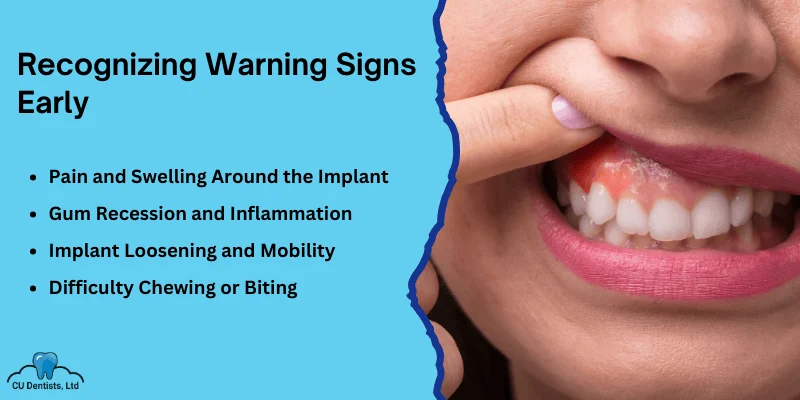
Catching problems with your dental implant early can make the difference between a simple fix and a more serious issue. Key warning signs include ongoing pain or swelling, changes in your gums, any movement of the implant, and trouble with normal eating.
Pain and Swelling Around the Implant
Some discomfort right after getting an implant is normal. But pain that lasts more than a few weeks or gets worse over time is one of the main warning signs of implant failure.
You should watch for swelling that doesn’t go down or comes back after healing. This kind of swelling often means infection or inflammation around the implant site.
Signs that need attention include:
- Pain when you bite down or chew
- Throbbing or aching that doesn’t respond to pain medication
- Swelling that spreads to your cheek or jaw
- A bad taste in your mouth near the implant
If you notice any discharge or pus around the implant area, contact your dentist right away. This is a clear sign of infection that needs treatment.
Gum Recession and Inflammation
Healthy gums around your implant should look pink and fit snugly against the base. Gum recession happens when the tissue pulls away from the implant, exposing more of the metal post underneath.
Red, swollen, or tender gums signal inflammation. Your gums might bleed when you brush or floss around the implant area. These are early signs of dental implant failure that shouldn’t be ignored.
Gum inflammation can lead to peri-implantitis, which is like gum disease but affects the tissue and bone around implants. You might notice:
- Gums that look puffy or darker than usual
- Bleeding during cleaning
- A small bump or pimple on the gum near the implant
- Deep pockets forming between the gum and implant
Regular dental checkups help catch gum problems before they damage the bone supporting your implant.
Implant Loosening and Mobility
A properly healed implant should feel completely solid, just like a natural tooth root. Any movement is a serious sign of implant problems.
Sometimes the crown (the visible tooth part) becomes loose, which is different from the actual implant moving. Your dentist can tighten a loose crown easily. But if the implant itself shifts or wiggles, the bone integration has failed.
Test for implant looseness by noticing:
- Movement when you press on the crown with your tongue
- A clicking or shifting sensation when chewing
- The implant feeling different than it did before
- Changes in how the implant sits compared to nearby teeth
Don’t try to wiggle the implant yourself to check it. If you suspect any loosening, schedule an appointment immediately. Recognizing dental implant failure at this stage gives you the best chance for correction.
Difficulty Chewing or Biting
Your dental implant should work just like a natural tooth once it heals. Problems with normal eating often point to underlying issues with the implant.
You might feel pain or pressure when biting down on certain foods. Hard or crunchy foods may cause more discomfort than soft ones. Some people notice their bite feels “off” or uneven.
These chewing problems can mean:
- The implant hasn’t fused properly with your jawbone
- Inflammation or infection is affecting the area
- The crown isn’t aligned correctly with your other teeth
- Bone loss is occurring around the implant
Changes in how your teeth fit together when you close your mouth can also signal signs of implant failure. If eating becomes uncomfortable or you start avoiding certain foods, talk to your dentist. Early treatment can often save the implant and prevent further complications.
Essential Daily Care for Implants
Taking care of your dental implants every day helps them stay healthy and work properly for many years. The right brushing techniques, regular flossing, and using the right mouthwash can prevent infections and keep your implants strong.
Brushing with Non-Abrasive Toothpaste
You need to brush your dental implants at least twice a day, just like you do with natural teeth. However, the type of toothpaste you use makes a big difference for implant care.
Regular toothpastes often contain rough particles that can scratch the surface of your implant. These scratches create tiny spaces where bacteria can hide and grow. Non-abrasive toothpaste protects your implants while still cleaning them well.
Use a soft-bristled toothbrush to gently clean around your implants. Hold your brush at a 45-degree angle where the implant meets your gum line.
Brush in small circular motions for at least two minutes. Pay extra attention to all sides of each implant, including the back surfaces that are harder to reach.
Flossing Daily and Using Interdental Brushes
Flossing removes food particles and plaque from areas your toothbrush cannot reach. You should floss daily around your implants to maintain good oral hygiene and prevent dental implant failure.
Regular floss works well for cleaning between implants and natural teeth. Slide the floss gently up and down along the sides of your implant. Be careful not to snap the floss, which could hurt your gums.
Interdental brushes are small brushes designed to clean between teeth and around implants. These brushes come in different sizes to fit various gaps. Many people find interdental brushes easier to use than traditional floss.
Insert the interdental brush gently between your implant and the next tooth. Move it back and forth a few times, then rinse the brush before using it in another space.
Antibacterial Mouthwash for Prevention
Using antibacterial mouthwash as part of your daily dental implant care routine helps kill harmful bacteria. These bacteria can cause infections that lead to implant problems.
Rinse with antibacterial mouthwash once or twice daily, especially after brushing and flossing. Swish the mouthwash around your mouth for 30 to 60 seconds. Make sure it reaches all areas around your implants.
Choose an alcohol-free formula if you have sensitive gums or dry mouth. Alcohol-based mouthwashes can sometimes irritate the tissues around your implants. Your dentist can recommend the best mouthwash for your specific needs.
Habits and Routine for Long-Term Implant Success
Building the right daily habits protects your investment and keeps your implants healthy for decades. Regular checkups, avoiding smoking, and managing teeth grinding are three key areas that directly impact implant success.
Attending Regular Dental Checkups
Your dentist needs to monitor your implants even after they’ve fully healed. Regular dental checkups allow your dental team to take X-rays, measure bone levels, and catch early signs of infection before they become serious problems.
Most patients need cleanings every six months. Some may need more frequent visits based on their risk factors.
During these visits, your dentist can remove plaque buildup that home care misses. They’ll also check for inflammation around the implant and make sure the tissues supporting it stay healthy.
What happens at implant checkup appointments:
- X-rays to monitor bone density and integration
- Professional cleaning around the implant crown and gumline
- Examination for signs of peri-implantitis or mucositis
- Assessment of bite alignment and implant stability
Skipping appointments means missing early warning signs. Problems caught early are usually easy to fix, while ignored issues can lead to implant failure.
Quitting Smoking and Healthy Lifestyle Choices
Smoking dramatically increases your risk of implant failure. Nicotine restricts blood flow, which slows healing and weakens the bone around your implant. It also raises your risk of peri-implantitis, an infection that can cause implant loss.
Even vaping affects your implant health. The best time to quit is before surgery, but stopping at any point improves your chances of long-term implant health.
Your diet matters too. Calcium, vitamin D, and protein support bone strength and help your implant stay stable. Limiting sugar reduces bacteria that irritate your gums.
Lifestyle factors that support implant success:
- Quit smoking at least two weeks before and after surgery
- Stay hydrated to maintain saliva flow and fight bacteria
- Eat nutrient-rich foods including dairy, leafy greens, and lean protein
- Limit alcohol during the healing period
These changes don’t just help your implants. They improve your overall oral health and general wellbeing.
Protecting Against Teeth Grinding (Bruxism)
Teeth grinding puts dangerous pressure on your implants. Unlike natural teeth, implants connect directly to bone without shock-absorbing ligaments. This makes them vulnerable to damage from clenching and grinding forces.
Bruxism often happens at night while you sleep. You might not even know you’re doing it. Common signs include jaw soreness, headaches, or worn teeth.
A custom nightguard protects both your implants and natural teeth. This device cushions the force and prevents microfractures in the bone around your implant. Your dentist can create one that fits comfortably and lasts for years.
If you grind your teeth during the day, stress management techniques can help. Being aware of the habit is the first step to preventing implant failure from grinding damage.
Partnering with the Right Implant Specialist
Your choice of implant provider plays a major role in preventing failure and ensuring long-term success. Working with a qualified specialist gives you access to advanced planning, precise surgical techniques, and ongoing care that protects your investment.

Choosing an Experienced Implant Provider
Not all dental professionals have the same level of training in implant placement. Periodontists and oral surgeons receive years of specialized education in bone biology, gum health, and surgical procedures.
This extra training matters when complications arise or when your case requires bone grafting or gum treatment before implants can be placed.
Look for providers who use advanced technology like 3D imaging and guided surgical systems. These tools help your dentist plan the exact angle, depth, and position of each implant before surgery begins.
An experienced implant provider will also evaluate your medical history, check for gum disease, and assess bone density to create a treatment plan tailored to your needs.
Ask potential providers about their success rates and how many implants they place each year. You want someone who regularly performs these procedures and stays current with the latest techniques.
Importance of Professional Monitoring
Your relationship with your implant specialist shouldn’t end after the crown is attached. Regular check-ups allow your provider to spot early warning signs like gum inflammation or bone loss around the implant. Professional monitoring during the healing phase helps ensure the implant fuses properly with your jawbone.
Most specialists schedule follow-up visits at specific intervals during the first year. These appointments include checking how the implant is integrating, evaluating your bite, and making sure your gums remain healthy.
After your implant heals completely, you’ll still need regular cleanings and exams to prevent infections and maintain stability for decades.
When to Seek Immediate Help
Contact your implant specialist right away if you notice any unusual symptoms. Pain that gets worse instead of better, swelling that doesn’t go down, or movement in the implant all require urgent attention. Bleeding, pus, or a bad taste in your mouth near the implant site can signal infection.
Don’t wait for your next scheduled appointment if something feels wrong. Early intervention can often save an implant that might otherwise need removal.
Your specialist can prescribe antibiotics, adjust your bite, or perform other treatments to address problems before they become serious. Quick action makes the difference between a minor complication and complete implant failure.
Frequently Asked Questions
Understanding the warning signs of implant problems and knowing how to care for your implants properly can help you keep them healthy for years to come. Here are answers to common questions about maintaining your dental implants and handling potential issues.
What are the common signs that may indicate a dental implant is failing?
You should watch for several warning signs that might mean your implant needs attention. If your implant feels loose or moves when you touch it, this is a clear sign something is wrong.
Pain that lasts longer than 10 days after your surgery is not normal. While some discomfort is expected right after the procedure, pain that continues or gets worse needs your dentist’s attention.
Swelling in your face or gums is another red flag. Some swelling is normal for the first 72 hours after surgery, but if it persists beyond that point, you need to call your dentist.
Watch for signs of infection around your implant. Red, swollen, or bleeding gums near the implant site can indicate peri-implant diseases. You might also notice pus or discharge from the area.
Difficulty chewing or speaking can mean your implant isn’t positioned correctly. If you notice gaps in your smile or your teeth feel out of alignment, these are also signs you should get checked.
Can you share some daily care tips for maintaining long-lasting dental implants?
Brushing your teeth at least twice a day is essential for keeping your implants healthy. Use a soft-bristled toothbrush to avoid damaging the gums around your implant.
Flossing once daily helps remove food particles and bacteria that can cause infection. Pay special attention to the areas around your implants where bacteria can build up.
You should avoid using tobacco products completely. Smoking significantly increases your risk of implant failure and slows down healing after surgery.
Limiting alcohol consumption also helps protect your implants. Alcohol can interfere with the healing process and contribute to gum disease.
Consider using an antimicrobial mouthwash to help control bacteria in your mouth. This can provide extra protection against infections that threaten your implants.
What regular dental check-up schedule is recommended for patients with dental implants?
You need to come back for all follow-up appointments after your surgery. These visits let your dentist monitor how well your implant is healing and integrating with your bone.
Regular check-ups and cleanings are crucial for long-term implant success. Your dentist can catch potential problems early before they become serious.
Most patients with dental implants should visit their dentist at least twice a year for routine cleanings. However, your specific situation might require more frequent visits.
During these appointments, your dentist will examine the tissues around your implants. They’ll look for signs of inflammation, infection, or bone loss that could threaten your implant.
Professional cleanings remove plaque and tartar buildup that you can’t eliminate at home. This prevents the bacterial infections that are a leading cause of implant failure.
How does smoking affect the health and success rate of dental implants?
Smoking is one of the biggest risk factors for dental implant failure. It reduces blood flow to your gums and bones, which slows down healing.
The chemicals in tobacco interfere with osseointegration. This is the process where your bone grows around and fuses with the implant post.
Smokers have a much higher risk of developing infections around their implants. The reduced blood flow weakens your immune system’s ability to fight bacteria in your mouth.
If you’re considering dental implants, quitting smoking before surgery gives you the best chance of success. Even reducing smoking can help, but complete cessation is ideal.
Continuing to smoke after getting implants puts your investment at risk. You’re more likely to experience complications and may need additional procedures to fix problems.
Could you explain the role of proper nutrition in the longevity of dental implants?
Your body needs adequate nutrients to heal properly after implant surgery. Protein helps rebuild tissues, while vitamins and minerals support bone health.
Calcium and vitamin D are particularly important for maintaining strong jawbone. Your bone needs to stay healthy to continue supporting your implant over time.
A balanced diet supports your immune system. This helps your body fight off infections that could threaten your implant.
Avoiding hard or sticky foods during the healing period protects your new implant. Once healed, you can eat normally, but being mindful of extremely hard foods prevents damage.
Staying hydrated helps maintain healthy saliva production. Saliva naturally cleanses your mouth and helps control harmful bacteria.
What should you do if you suspect a problem with your dental implant?
Call your oral surgeon or dentist immediately if you notice any warning signs of implant failure. Don’t wait to see if the problem resolves on its own.
Contact your dentist right away if you have difficulty speaking, chewing, or opening your mouth. These symptoms need professional evaluation.
Any persistent or worsening pain requires attention. Bad breath that doesn’t improve with brushing might also signal an infection.
If you see discharge or pus near your implant, this indicates infection. Swelling and pain in your gums around the implant also need prompt treatment.
Your dentist will examine the implant and may take X-rays to assess the situation. Early intervention often prevents minor issues from becoming major problems that require implant replacement.