




You can stay calm and comfortable during dental implant surgery without losing control. Sedation dentistry reduces anxiety, eases pain, and helps your dentist work more precisely so the procedure takes less time and feels easier.
Sedation options (from nitrous oxide to IV medications) let you pick the level of relaxation that fits your needs and health.
Knowing what each method does and how it affects recovery helps you make smart choices with your dental team. Whether you’re nervous about the drill or you need a longer procedure, sedation can make the whole experience smoother and safer.
Key Takeaways
- Sedation eases anxiety and pain during implant procedures.
- Different sedation types match different comfort and medical needs.
- Proper planning with your dental team improves comfort and recovery.
Experience Sedation Dentistry for Implant Comfort in Champaign, IL; Schedule a Consultation
Understanding Sedation Dentistry and Dental Implants
You will learn how sedation eases anxiety, what happens during implant surgery, and why fear can change your treatment choices. The details below explain how sedation works, what each implant step involves, and how anxiety affects outcomes.
What Is Sedation Dentistry?
Sedation dentistry uses medicines to calm you during dental care. Options range from nitrous oxide (laughing gas) that works and clears quickly, to oral pills you take before the visit, to intravenous (IV) sedation that keeps you very relaxed. Sedation does not always mean full unconsciousness; most implant cases use conscious or moderate sedation so you can respond but feel little or no anxiety.
Your dentist or anesthetist adjusts dose for your age, weight, health, and other medicines. Monitoring of heart rate and oxygen is standard. Sedation lowers gag reflex and movement, which helps the team work precisely during implant placement.
Overview of Dental Implant Procedures
A dental implant replaces a missing tooth root with a titanium post placed in your jawbone. Typical steps include: 1) a consultation and scans, 2) implant placement surgery, 3) a healing period for the bone to fuse (osseointegration), and 4) placement of the final crown. Most implant surgeries take 30–90 minutes per implant, depending on complexity.
Local anesthesia is used for numbness; sedation reduces anxiety and keeps you still. If you have bone grafting or multiple implants, your provider may recommend deeper sedation or longer monitoring. Clear pre-op instructions on eating, medicines, and rides home improve safety and comfort.
Dental Anxiety and Its Impact on Treatment
Dental anxiety can make you avoid care, which leads to worse oral health and more complex procedures later. About 36% of adults in the U.S. report dental anxiety, and 12% experience extreme dental fear, which can delay needed treatment like implants.
High anxiety raises your heart rate and blood pressure during surgery. That can increase bleeding and make it harder for the team to place implants safely.
Sedation reduces stress responses and helps you tolerate longer surgeries. It also improves your ability to sit still, so the surgeon can work more efficiently. If fear keeps you from starting implant treatment, tell your dentist; many practices offer sedation options and stepwise care to help you through.
Looking for Comfortable Dental Implants in Rantoul, IL? Ask About Sedation Options Today
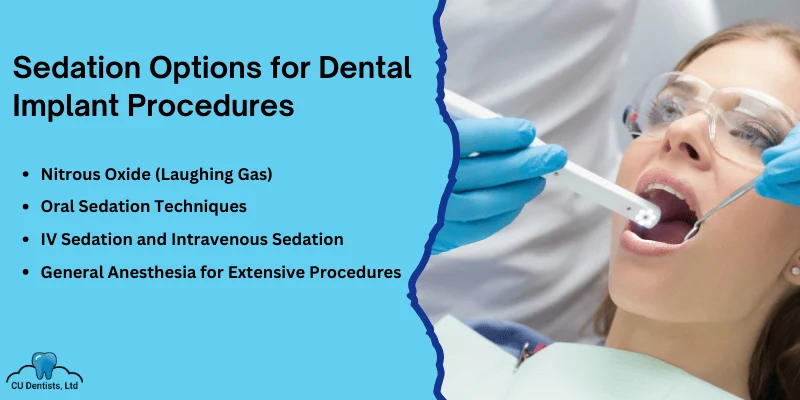
Sedation Options for Dental Implant Procedures
You can choose sedation to reduce anxiety, limit pain, and make long or complex implant surgeries easier to tolerate. Options range from mild relaxation to full unconsciousness, and each has different monitoring needs, recovery times, and risks.
Nitrous Oxide (Laughing Gas)
Nitrous oxide is an inhaled gas that helps you feel calm while you stay awake. The dentist fits a small nose mask and adjusts the mix of nitrous and oxygen so you feel relaxed but still responsive.
Effects start within minutes and wear off quickly after the mask is removed. That means you can usually drive yourself home and return to normal activities the same day. Nitrous is best for mild-to-moderate anxiety and short procedures, or as an add-on when local anesthesia alone isn’t enough.
Side effects are uncommon but can include lightheadedness or nausea. Tell your dentist about pregnancy, recent ear surgery, or respiratory problems, as nitrous may not be suitable. The gas requires minimal monitoring compared with deeper forms of sedation.
Oral Sedation Techniques
Oral sedation uses pills (commonly benzodiazepines) to reduce anxiety and cause drowsiness. You typically take the medication 30–90 minutes before your appointment so it reaches full effect by the time the implant work begins.
Oral sedation ranges from mild (you’re relaxed but awake) to moderate (you may doze and have limited memory of the procedure). You will need a responsible adult to drive you home because the sedative affects coordination for several hours.
Your dentist reviews medical history, other drugs you take, and liver or breathing problems before prescribing oral sedation. Dosage is tailored by weight, age, and anxiety level. Side effects include prolonged grogginess and, rarely, breathing slowdown; so careful screening and monitoring are important.
IV Sedation and Intravenous Sedation
IV sedation delivers sedative drugs directly into a vein for fast, controllable effects. You’ll usually be conscious but deeply relaxed; many patients recall little or nothing afterward. The dentist or anesthetist can adjust levels instantly during the procedure.
IV sedation is useful for multiple implants, bone grafts, or patients with high dental fear. Continuous monitoring of heart rate, blood pressure, and oxygen is required. You will need someone to drive you home and stay with you until the drugs wear off.
Risks include breathing depression and drops in blood pressure, so providers screen for heart, lung, and medication issues. IV sedation often produces deeper sedation than oral pills and allows shorter total procedure time because it keeps you still and relaxed.
General Anesthesia for Extensive Procedures
General anesthesia puts you fully unconscious and is reserved for very complex, lengthy surgeries or patients who cannot tolerate lighter sedation. An anesthesiologist or qualified provider administers and monitors the drugs throughout the operation.
You will have an IV or breathing tube, and recovery takes longer than other methods. Providers perform a full pre-op assessment to check for medical conditions, allergies, and medications that raise risk. Hospitals or surgical centers commonly handle general anesthesia for dental implants.
Because general anesthesia carries higher risks (such as airway complications and longer recovery) careful planning and post-op monitoring are essential. It gives complete immobility and no memory of the procedure, which can be critical for extensive implant cases.
Talk to a Dentist About Comfortable Implant Surgery With Sedation
Benefits of Sedation Dentistry During Dental Implant Placement
Sedation helps you stay calm, comfortable, and still during implant placement. It also helps your dentist manage pain, blood pressure, and procedure time when placing one or multiple implants.
Reduces Dental Anxiety and Phobia
If you feel panic or dread at the dentist, sedation can reduce that fear. Oral sedatives (like a pill) or IV medications make you relaxed and often cause partial memory loss of the visit. That means you are less likely to relive a traumatic memory afterward.
Your care team checks your medical history and vital signs before giving sedation. They match the drug and dose to your age, medications, and heart health so your anxiety is lowered safely. For severe dental phobia, deeper sedation makes it possible to complete implant placement in one visit rather than stopping and rescheduling.
Minimizes Discomfort and Pain
Local anesthesia still numbs the surgical site, but sedation reduces the height of pain signals and your awareness of them. Drugs such as midazolam, propofol, or newer options can make you feel drowsy while local anesthetic controls bleeding and nerve pain at the implant site.
Sedation also helps keep your heart rate and blood pressure steadier during the drilling and implant insertion. That reduces the risk of sudden spikes tied to pain or fear. Your dentist may use longer‑acting local agents or nerve blocks with sedation for extended comfort during complex placements.
Improves Experience for Sensitive Gag Reflex
A strong gag reflex can stop precise implant placement and make you tense. Sedation calms your throat muscles and lowers the gag response so your dentist can work with steady hands. You will likely feel little or no urge to retch while the team places implants.
Gentle positioning, topical numbing, and mild sedatives combine to keep your airway safe and the reflex suppressed. If you have a chronic sensitive gag reflex, mention it during planning so your dentist can pick the best sedation level and techniques to keep the procedure smooth.
Facilitates Multiple Implants and Extensive Dental Work
When you need more than one implant or several procedures in one session, sedation lets your dentist work without repeated breaks. That reduces total time in the chair and the number of separate appointments you must schedule.
Sedation plus long‑acting local anesthetic or ultrasound‑guided nerve block can provide extended pain control for multi‑implant cases. Your team monitors breathing and vitals throughout so they can safely complete full-arch or multi‑site implant placement in a single visit when appropriate.
Tailoring Sedation Levels for Individual Needs
You’ll learn how your health, anxiety, and the procedure shape the sedation plan. The right plan balances comfort, safety, and how long the implant work will take.
Assessing Patient Medical History and Preferences
You should give your dental team a complete health history before implant surgery. Mention heart disease, sleep apnea, liver or kidney problems, current medications, and any allergies. These details affect which sedatives are safe and how your body will process them.
Tell your dentist about past reactions to sedation or anesthesia, and about your typical anxiety level during dental visits. Share habits like smoking and alcohol use, plus any pregnancy or breastfeeding concerns. Your dentist may ask for a list of prescription and OTC drugs to avoid dangerous interactions.
Your team may use simple tests like pulse oximetry or ask for recent lab results if you have complex health issues. Be honest about your preferences: some people want to be semi-awake with local anesthesia and light sedation, while others prefer deeper IV sedation for less memory of the procedure.
Determining Sedation Levels
Sedation ranges from minimal (awake, relaxed) to deep (near sleep) and general anesthesia (unconscious). For many dental implants, options include nitrous oxide, oral sedatives like triazolam, IV sedation, plus local anesthesia at the implant site.
Your dentist will match sedation level to procedure length and complexity. For a single implant, local anesthesia plus nitrous oxide or oral medication may be enough. For multiple implants or bone grafts, IV sedation offers steadier control and deeper relaxation.
Expect clear dosing plans and instructions. You’ll get fasting rules for stronger sedatives and guidance on who will drive you home. The plan should state which local anesthetic will numb the site and how it pairs with the chosen sedation to block pain while keeping you comfortable.
Patient Safety and Continuous Monitoring
Your safety team will monitor your breathing, oxygen levels, blood pressure, and heart rate throughout the procedure. This monitoring continues until you return to baseline and are safe to go home. Ask which devices they use and who monitors you.
Trained staff must be present to manage airway or emergency needs. The clinic should have reversal drugs (like flumazenil for benzodiazepines) and oxygen on hand. Confirm that the dentist and team have current sedation and life-support certifications.
Follow pre- and post-op instructions exactly. Bring a responsible adult to drive you home, and plan for rest that day. Report any unusual symptoms after you leave, such as prolonged dizziness or trouble breathing, so the team can respond quickly.
How Sedation Dentistry Enhances Comfort and Recovery
Sedation lowers anxiety, controls pain, and helps your body stay calm during and after implant surgery. This can make the procedure easier to tolerate and support better healing.

Smooth and Relaxed Recovery Experience
Sedation reduces the stress response that raises heart rate and blood pressure during surgery. Lower stress means less bleeding and swelling right after treatment. You’ll likely feel drowsy and comfortable as the local anesthetic wears off, so pain is easier to manage with fewer strong pain meds.
Expect staff to monitor your vitals until you meet safety criteria for discharge. If you had oral or IV sedation, plan for a ride home and at least 24 hours of rest. Follow clear post-op instructions (cold packs for 24–48 hours, soft foods for a week, and gentle oral rinses) to keep the site stable and avoid complications.
Sedation’s Role in Osseointegration Success
Keeping still and relaxed during implant placement improves surgical precision. Precise implant positioning reduces micro-movement at the bone-implant interface, which supports osseointegration; the process where bone bonds to the implant.
When you’re calm, the surgeon can place implants more accurately and finish procedures faster. Less surgical time and fewer adjustments lower the chance of micro-trauma to bone and soft tissue. That decreases inflammation and creates a more favorable environment for bone cells to attach to the implant surface.
Accelerated Healing and Reduced Stress
Stress hormones like cortisol slow healing and can increase inflammation. Sedation blunts that stress response, helping your immune system work more efficiently after surgery. This may lead to less swelling, less pain, and a smoother recovery timeline.
Follow prescribed antibiotics and anti-inflammatories if given, and avoid smoking or heavy exercise for the recommended period. These actions, combined with a calmer physiological state from sedation, help tissue repair and support faster, more predictable healing. For more on how sedation aids implant procedures, read about sedation options for implants at Precision Dental.
Choosing Sedation Dentistry for Your Dental Implants in Orlando
You’ll pick a sedation plan that fits your health, anxiety level, and the number of implants. You should also verify provider credentials, sedation options offered, and how they monitor patients during surgery.
Personalized Sedation Plans
Your dentist will review your medical history, current meds, and past reactions to sedation. Expect questions about heart, lung, and sleep apnea issues, plus whether you smoke or use recreational drugs. This helps match you with nitrous oxide, oral sedation, IV sedation, or general anesthesia.
Talk about the procedure length and number of implants. For a single implant, nitrous oxide or oral sedation may suffice. For multiple implants or bone grafting, your team might recommend IV sedation or general anesthesia. Ask how long sedation effects last and whether you need a ride home.
Confirm pre-op instructions: fasting times, which meds to stop, and whether to bring a list of prescriptions. Make sure your plan includes vital-sign monitoring during the procedure and a detailed recovery plan you can follow afterward.
Finding the Right Dental Professional
Choose a provider in Orlando who lists sedation dentistry for implants and who has specific training in dental anesthesia. Look for credentials such as board certification in oral surgery or a dental anesthesiologist on staff. Ask if the clinic uses dedicated anesthesia professionals for IV or general cases.
Check that the office uses standard monitoring: blood pressure, pulse oximetry, and oxygen supply. Verify emergency equipment and written sedation policies. Read recent patient reviews about comfort and safety during implant procedures.
Before you book, request a consultation to discuss sedation choices, risks, and costs. Bring your medical records and ask about follow-up care. If anything feels unclear, seek a second opinion from another Orlando practice.
Frequently Asked Questions
This section answers practical questions about what to expect, which sedation options exist, how the procedure flows, and how sedation helps control pain and anxiety. It also explains who usually qualifies and what your dentist will check before recommending sedation.
What does sedation dentistry involve when getting a dental implant?
Sedation dentistry uses medicines to help you relax during the implant surgery. You stay calm and feel less pain, while local anesthesia still numbs the implant site.
Your dentist or anesthetist gives the sedative by gas, pill, IV, or a full anesthetic when needed. Staff monitor your breathing, heart rate, and oxygen levels throughout the visit.
Is sedation necessary for all dental implant procedures, or are there exceptions?
Sedation is not always required for every implant. Simple single-tooth implants for calm patients often use local anesthesia only.
You may need stronger sedation if you feel anxious, need several implants, or will have extractions or bone grafts at the same visit. Health issues can also change the plan.
Can you walk me through the steps of a sedated dental implant procedure?
You arrive with a responsible adult if you’ll receive oral, IV, or general sedation. The team reviews your medical history and places monitors.
If using nitrous oxide, they fit a nasal mask and adjust the gas. For oral or IV sedation, they give medication and wait until you’re relaxed. The dentist numbs the area with local anesthesia and places the titanium implant into your jawbone.
After placement, they may attach a healing cap or temporary crown. You rest in recovery while staff watch your vitals until the sedative wears off enough for safe discharge.
How does sedation during dental implant surgery enhance patient comfort?
Sedation reduces anxiety, so you stay still and the dentist can work precisely. It also lowers your awareness of pain and the length of the procedure.
Some sedatives produce little or no memory of the visit, which helps patients who fear dental procedures. Sedation plus local anesthesia controls both emotional stress and physical pain.
What are the different types of sedation available for dental implant procedures?
Common options include local anesthesia, nitrous oxide (laughing gas), oral sedatives (pills), IV sedation, and general anesthesia. Each gives a different depth of relaxation and recovery time.
Nitrous oxide acts quickly and wears off fast. Oral sedatives take longer to start and leave you drowsy afterward. IV sedation works fast and is adjustable during the procedure. General anesthesia puts you fully unconscious and needs an anesthesia professional.
How do I know if I’m a good candidate for sedation dentistry during a dental implant?
Your dentist will review your medical history, current medications, and any breathing or heart conditions. They will also ask about past reactions to sedation or anesthesia.
If you have severe dental fear, need multiple implants, or expect a long surgery, you are often a good candidate. Pregnant patients, certain uncontrolled medical conditions, or inability to safely fast may make some sedation types unsafe.