




Losing a tooth affects more than just your smile. It can change how you eat, speak, and feel about yourself. When it comes to replacing a missing tooth, you have two main options: a dental implant or a tooth-supported bridge.
A dental implant is a titanium post placed into your jawbone that acts like a tooth root, while a tooth-supported bridge relies on your neighboring teeth for support by placing crowns on them to hold a replacement tooth in the gap.
The main difference between a dental bridge and a dental implant lies in how they’re secured and how they impact your surrounding teeth. Each option has its own benefits and drawbacks based on your specific situation.
Understanding the key differences between these two solutions can help you make the right choice for your oral health, budget, and lifestyle. From how long each option lasts to what the process involves, there are several important factors to consider before moving forward with treatment.
Key Takeaways
- Dental implants stand alone and preserve jawbone while bridges depend on adjacent teeth for support
- Implants typically cost more upfront but can last 25+ years compared to bridges lasting 5-15 years
- Your best choice depends on your bone health, budget, timeline, and whether neighboring teeth are already damaged
Key Differences Between Dental Implants and Tooth-Supported Bridges
Dental implants and tooth-supported bridges work in completely different ways to replace missing teeth, with implants anchoring directly into your jawbone while bridges depend on your neighboring teeth for support.
What Is a Dental Implant?
A dental implant is a titanium post surgically placed into your jawbone to act as an artificial tooth root. After your dentist inserts the metal post, your bone grows around it over several months in a process called osseointegration.
Once the implant fuses with your jawbone, a crown is attached to the top to complete your tooth replacement.
The entire process happens in stages. You’ll need to wait for healing between steps, which means getting an implant can take 8 to 14 months from start to finish.
Dental implants stand alone and don’t affect your other teeth. They provide a permanent solution that mimics both the visible part of your tooth and the root structure beneath your gums.
What Is a Tooth-Supported Bridge?
A tooth-supported bridge uses your healthy teeth on either side of the gap to hold a false tooth in place. Your dentist will reshape the adjacent teeth and cap them with crowns, then attach the replacement tooth between these crowned teeth to bridge the space.
The process is much faster than getting an implant. Most bridges can be completed within one to three weeks.
Traditional bridges typically last 5 to 15 years before they need replacement. The bridge depends entirely on your natural teeth for support, which means those neighboring teeth must be strong enough to handle the extra stress.
How They Address Missing Teeth
The main difference lies in how each option is supported. A tooth implant replaces your missing tooth independently by creating a new root structure in your jawbone. A dental bridge relies on filing down your healthy adjacent teeth to anchor the replacement.
Impact on Surrounding Teeth:
- Dental implants preserve your natural teeth completely
- Dental bridges require permanent alteration of two healthy teeth
Bone Health:
- Implants stimulate your jawbone like natural tooth roots, preventing bone loss
- Bridges don’t address bone loss and can’t stop deterioration in your jaw
Your choice affects more than just the missing tooth. Bridges can increase your risk of cavities or fractures in the supporting teeth because of the added stress they bear.
Book a visit in Rantoul, IL to review dental implant and bridge options, costs, and timelines.
Benefits and Drawbacks of Each Solution
Both options offer reliable ways to replace missing teeth, but they work differently and come with distinct advantages. Implants integrate with your jawbone while bridges rely on neighboring teeth for support.
Advantages of Dental Implants
Dental implants provide a permanent tooth replacement solution that can last 25 years or longer with proper care. The titanium post fuses with your jawbone through a process called osseointegration, which creates a stable foundation that mimics a natural tooth root.
This integration helps preserve your jawbone and prevents the bone loss that often happens after tooth loss. Unlike bridges, implants don’t rely on adjacent teeth for support, so your healthy teeth remain untouched.
Your custom crown sits on top of the implant and looks just like your natural teeth. You can brush and floss normally without any special tools or techniques.
Implants also protect your oral health long-term by maintaining proper spacing between teeth and preventing shifting. They provide the strongest bite force of any tooth replacement option, letting you eat your favorite foods without worry.
Advantages of Tooth-Supported Bridges
Bridges offer a faster solution if you need quick results. The entire process typically takes just 2-3 dental visits over a few weeks, compared to several months for implants.
The upfront cost is lower, usually ranging from $2,000 to $5,000. Insurance companies are more likely to cover at least part of the expense for a bridge.
You avoid surgery entirely, which matters if you have health conditions that make surgical procedures risky. Bridges work well even if you don’t have enough bone density for an implant.
If your adjacent teeth already have large fillings or need crowns anyway, a bridge makes practical sense since those teeth will be prepared with crowns to support the bridge.
Disadvantages to Consider
Bridges require grinding down healthy teeth on both sides of the gap to fit crowns, which permanently alters those teeth. Those supporting teeth take on extra pressure and face higher risk of decay or damage over time.
Implant drawbacks include:
- Higher initial cost ($3,000-$6,000 per tooth)
- Longer treatment timeline
- Surgical procedure required
- Not suitable for everyone
Bridge drawbacks include:
- Shorter lifespan (5-15 years typically)
- Doesn’t prevent jawbone loss
- More difficult to clean underneath
- May need replacement multiple times
The bridge vs implant decision depends on your specific situation, budget, and timeline. Your dentist can evaluate your bone health, gum condition, and overall oral health to recommend the best option for your needs.
Longevity, Maintenance, and Oral Health Impact
Bridges typically last 10 to 15 years while implants can last 25 years or more with the crown needing replacement every 10 to 15 years. Daily care differs between the two options, and only implants help prevent bone loss in your jaw.

Expected Lifespan of Each Restoration
A well-made bridge lasts about 10 to 15 years on average. The lifespan depends on how well you care for it and the health of the anchor teeth supporting it. If one of those anchor teeth develops tooth decay or structural problems, the entire bridge fails.
Dental implants last much longer. The titanium post in your jawbone can last 25 years or longer, often for life. Success rates exceed 95% in healthy patients. The crown attached to the implant wears down from chewing and needs replacement every 10 to 15 years, but you’re only replacing the crown, not the entire system.
The key difference is that bridges depend on other teeth staying healthy while implants stand alone. When a bridge reaches the end of its life, you need a completely new restoration. When an implant crown wears out, you just replace the crown on top of the existing post.
Cleaning and Aftercare Differences
You can’t floss between the teeth of a bridge normally because they’re connected as one piece. You need special floss threaders or water flossers to clean under the false tooth portion. This takes extra time and effort every day.
Implants clean just like natural teeth. You brush twice daily and floss normally around them. There’s no special equipment needed for daily care.
Both options require regular dental checkups and professional cleanings. Your dentist will check for problems around the restoration and clean areas you can’t reach at home. The anchor teeth supporting a bridge need extra monitoring for signs of tooth decay under the crown margins.
Effects on Jawbone and Surrounding Teeth
Bridges don’t stimulate the jawbone under the missing tooth area. Without that stimulation from chewing forces, you experience gradual bone loss in that spot. This happens slowly over years but continues as long as the bridge is in place.
Implants preserve jawbone density by transferring chewing forces directly into the bone. This mechanical pressure signals your body to maintain the bone volume. Implants prevent bone loss that would otherwise occur with missing teeth.
Bridges require reshaping two healthy teeth permanently. Those anchor teeth face higher risk of problems compared to untouched teeth. Some patients eventually need root canals on anchor teeth from the added stress.
Implants don’t affect neighboring teeth at all. They stand independently and don’t create additional risk for surrounding teeth. If you need bone grafting before implant placement due to existing bone loss, that adds several months and $300 to $1,200 to your treatment.
Cost Comparison and Additional Considerations
The cost of dental implants typically ranges from $3,000 to $4,500 per tooth, while a dental bridge generally costs between $2,000 to $5,000 for multiple teeth. Beyond the initial price tag, you’ll need to think about insurance coverage, how long each option lasts, and how much time you’ll spend in treatment.
Upfront Costs and Insurance
A traditional dental bridge costs around $700 to $1,500 per unit. For a three-unit bridge (one false tooth and two anchor crowns), you’ll pay between $2,100 and $4,500. A Maryland bridge runs from $1,100 to $2,300.
The cost of dental implants is higher upfront at roughly $4,000 per tooth, including the crown and abutment. This price can vary based on your location, the dental clinic you choose, and your dentist’s experience level.
Insurance makes a big difference in what you’ll actually pay. Most dental insurance plans cover bridges, so you can reclaim a good portion of the bridge cost. Implants are rarely covered by insurance, though you might be able to claim part of the crown cost. Check with your insurance provider before making your decision.
Long-Term Value and Potential Hidden Expenses
Bridges need replacement every 5 to 7 years, though they can last up to 10 years with excellent care. Each replacement means paying the bridge cost again. You’ll also need special floss and cleaning tools to maintain your bridge properly.
Dental implants last 15 years or longer, often becoming permanent for patients 45 and older. The crown needs replacement every 10 to 15 years due to normal wear, but the implant itself stays in place. This makes implants more cost-effective over time despite the higher implant cost upfront.
Hidden expenses can pop up with both options. Bridges may require root canals if the anchor teeth develop decay. Implants might need bone grafts or sinus lifts, adding to the cost of dental implant procedures.
Treatment Duration and Recovery Time
A bridge takes just two or three visits over a few weeks. Your dentist prepares your teeth at the first visit, takes impressions, and places a temporary bridge. At your second visit, they cement the permanent bridge in place. This quick treatment time appeals to people who want fast results.
The implant procedure takes 3 to 6 months from start to finish. You’ll need surgery to place the titanium post, then wait for it to fuse with your jawbone.
After healing completes, your dentist attaches the abutment and crown. Additional procedures like bone grafts extend this timeline further, requiring more visits to your dental clinic.
Types of Dental Bridges and Implant Options
Bridges come in several designs that attach to your mouth differently, while implants can support single teeth or entire rows of replacement teeth. The right choice depends on which teeth you’re replacing and the condition of your surrounding teeth and jawbone.
Traditional, Maryland, and Cantilever Bridges
A traditional dental bridge uses crowns placed over the teeth on both sides of the gap to hold an artificial tooth (called a pontic) in the middle. Your dentist reshapes these support teeth to make room for the crowns. This type works well when you have healthy teeth on both sides of the missing tooth.
A Maryland bridge (also called a bonded bridge) attaches to the back of your adjacent teeth using metal or porcelain wings. Your natural teeth don’t need to be reshaped as much, which keeps more of your tooth structure intact. Maryland dental bridges work best for front teeth that don’t handle heavy chewing forces.
A cantilever bridge connects to a tooth on only one side of the gap. Dentists use this option when you only have one adjacent tooth available for support. These bridges put more stress on the supporting tooth, so they’re typically used in areas of your mouth with less biting pressure.
Single Tooth vs. Implant-Supported Bridges
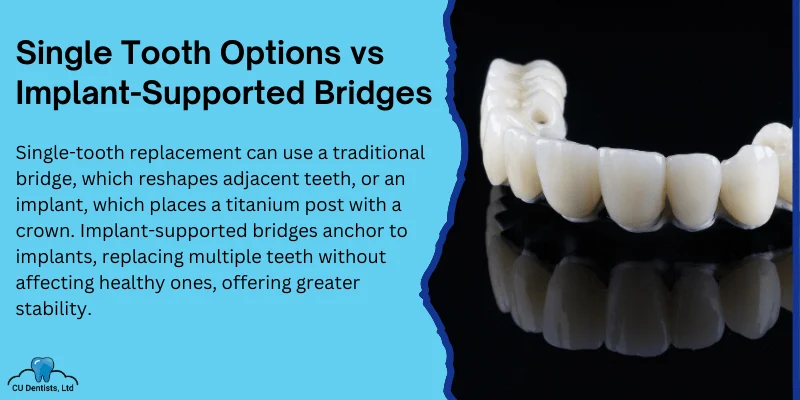
Single tooth replacements can use either a traditional bridge or an implant. A traditional approach requires shaping two healthy teeth to support one replacement tooth. An implant replaces just the missing tooth by placing a titanium post in your jawbone with a crown on top.
Implant-supported bridges use dental implants as anchors instead of your natural teeth. This option works well when you’re missing multiple teeth in a row. The implants go into your jawbone at each end of the bridge, and the replacement teeth sit between them.
These bridges offer more stability than traditional options and can replace more teeth at once. They also protect your existing teeth since nothing needs to be attached to them.
Specialized Solutions: All-on-4, Partial Dentures, and Space Maintainers
All-on-4 uses four dental implants to support a full arch of replacement teeth on your upper or lower jaw. This solution helps people who are missing most or all of their teeth in one arch. The implants are placed at specific angles to maximize support without needing a bone graft.
Removable partial dentures clip onto your remaining teeth and can be taken out for cleaning. These cost less than bridges or implants but feel less stable when eating. Implant-supported dentures attach to implants for better stability while still being removable.
Space maintainers are temporary devices that hold the gap open after tooth loss, especially in children. They prevent nearby teeth from shifting into the empty space while you wait for a permanent solution or for adult teeth to grow in.
How to Choose: Factors to Help Decide Your Best Option
Your choice between a dental implant and a tooth-supported bridge depends on your specific dental health, budget, and lifestyle needs. Several key factors can guide you toward the right tooth replacement option.
Who Is a Good Candidate for Each Treatment?

Dental implants work best if you have good overall health and strong jawbone density. Your oral surgeon will need to place a metal post into your jawbone, so you need enough bone to support it. People with conditions like diabetes or leukemia that slow healing may face challenges with implant surgery.
Tooth-supported bridges are ideal when you have strong, healthy teeth on both sides of your missing tooth. These neighboring teeth will support the bridge, so they need to be in good condition. If you’re missing several teeth in a row, a bridge can replace multiple teeth at once without needing surgery for each gap.
You might not be a good candidate for implants if you smoke heavily, have untreated gum disease, or take certain medications that affect bone healing. Bridges offer a non-surgical alternative in these situations.
Medical and Dental Considerations
Your overall health plays a major role in determining which tooth replacement option works best for you. Dental implants require surgery, which means your body needs to heal properly afterward. The healing process typically takes 2 to 6 months.
Medical conditions that may affect your choice:
- Uncontrolled diabetes
- Autoimmune disorders
- Blood clotting problems
- Recent radiation therapy to the jaw area
The condition of your surrounding teeth matters too. Bridges require filing down the adjacent teeth to place dental crowns, which permanently changes those healthy teeth. Implants don’t affect your other teeth at all.
Your jawbone density is critical for implants. If you’ve had tooth loss for a long time, your jawbone may have shrunk. An oral surgeon can evaluate if you need a bone graft before getting an implant.
Personal Preferences and Lifestyle Factors
Time commitment varies significantly between these options. A bridge takes about two weeks and two dental visits to complete. Implants require several months from start to finish, including healing time between procedures.
Your budget affects your decision too. Bridges typically cost $500 to $1,200 per tooth, plus $500 to $2,500 for each dental crown. Implants cost $3,000 to $4,500 per tooth but last longer and don’t need replacement as often.
Daily maintenance differs between options. Bridges require special flossing tools to clean underneath. Implants clean just like natural teeth with regular brushing and flossing.
Consider how important longevity is to you. Implants can last 20 years or more with proper care. Bridges typically need replacement every 5 to 15 years.
Frequently Asked Questions
Dental implants replace your tooth root with a titanium post and don’t affect neighboring teeth, while bridges use adjacent teeth as anchors.
Most implants last 20-25 years or longer, bridges typically need replacement after 10-15 years, and your choice depends on factors like bone health, budget, timeline, and whether neighboring teeth already need dental work.
What are the main differences between dental implants and tooth-supported bridges?
The main difference between implants and bridges comes down to how your replacement tooth gets supported. A bridge connects to your natural teeth on both sides of the gap. Your dentist reshapes these neighboring teeth to hold crowns, and the replacement tooth sits between them as one connected piece.
An implant works completely differently. The dentist places a titanium post into your jawbone where your tooth root used to be. This post bonds with your bone over several months, then a crown attaches to the top.
Your neighboring teeth stay untouched with an implant. With a bridge, you permanently alter two healthy teeth to replace one missing tooth. That’s a key difference that affects long-term outcomes.
Implants also preserve your jawbone better. When you chew, the force transfers through the implant post into your bone, which signals your body to maintain bone density. Bridges don’t stimulate the bone under the replacement tooth, so that area gradually shrinks over time.
How long can I expect a dental implant or a tooth-supported bridge to last?
Dental implants typically last 20-25 years or more with proper care. The titanium post rarely fails once it bonds with your bone, with success rates over 95% in healthy patients. The crown on top needs replacement every 10-15 years due to normal wear, but the implant foundation stays stable.
Bridges generally last 10-15 years before needing replacement. The bridge itself can last longer, but the anchor teeth experience increased stress and higher risk for problems. Decay under crown margins or structural issues with anchor teeth are common reasons bridges fail earlier than expected.
Your personal habits affect how long either option lasts. Good oral hygiene, regular dental visits, avoiding hard foods, and not grinding your teeth all help maximize lifespan. Your overall health matters too, especially conditions like diabetes that can affect healing and bone health.
What factors should I consider when choosing between an implant and a bridge?
Your bone health plays a major role in whether implants work for you. You need adequate bone volume to support an implant post. If you’ve been missing your tooth for years, you might have experienced bone loss that requires grafting before implant placement.
The condition of your neighboring teeth matters a lot. If those teeth already have large fillings or need crowns anyway, a bridge makes sense because you’re addressing multiple problems at once. If your neighboring teeth are healthy, many dentists recommend preserving them and choosing an implant instead.
Your timeline affects your decision too. Bridges take 2-3 weeks from start to finish, while implants require 4-7 months for the complete process. If you need your tooth replaced quickly for work or a special event, a bridge delivers faster results.
Your budget and insurance coverage come into play. Implants cost more upfront, though they often cost less over 20 years when you factor in replacements. Your dental insurance is more likely to cover bridges than implants.
Medical conditions can affect which option works best. Uncontrolled diabetes, certain medications, or conditions affecting bone healing might make bridges a safer choice until your health stabilizes.
Are there any specific care requirements for dental implants compared to bridges?
You care for implants almost exactly like natural teeth. Brush twice daily, floss once daily, and see your dentist for regular cleanings. The crown can’t get cavities, but the gum tissue around your implant needs attention to prevent infection.
Bridges require slightly different flossing technique. You need to clean under the replacement tooth where it doesn’t touch your gum. Special floss threaders or water flossers help you get under the bridge to remove food and bacteria.
Both options need professional cleanings every six months. Your hygienist pays special attention to crown margins where your restoration meets natural tooth or gum tissue. These areas collect plaque more easily than natural tooth surfaces.
You should avoid very hard or sticky foods with both options, especially in the first few weeks after placement. Chewing ice, hard candy, or using your teeth as tools can damage either restoration.
How does the cost and insurance coverage compare for implants vs. bridges?
Bridges typically cost $2,500-$5,000 for a three-unit bridge replacing one tooth. Implants usually cost $3,000-$6,000 from start to finish. The implant price includes the surgical placement, abutment, and final crown.
Your dental insurance covers bridges more often than implants. Many plans consider implants cosmetic or elective, even though they provide medical benefits. When insurance does cover implants, it might only pay for the crown portion, not the surgical placement.
Looking at costs over 20 years changes the picture. A bridge might need one replacement at year 12, plus potential root canal work on anchor teeth. Total estimated costs could reach $8,500. An implant might only need crown replacement at year 15, with total costs around $5,700.
Additional costs can arise with implants if you need bone grafting before placement. Grafting adds $300-$1,200 and extends your treatment timeline by several months.
Ask your dental office about payment plans if the upfront cost seems too high. Many practices offer financing options that spread payments over 12-24 months.
What is the typical recovery time after getting a dental implant or a bridge?
Bridge recovery is minimal. Your teeth might feel sensitive for a few days after your dentist prepares them for crowns. This usually goes away within a week. Once your permanent bridge gets cemented, there’s no healing period and you can use it normally right away.
Implant surgery requires more recovery time. Most people experience moderate discomfort for 2-3 days after placement, manageable with over-the-counter pain medication. Swelling peaks around day two or three, then gradually improves over the next week.
You’ll stick with soft foods for about a week after implant surgery while the surgical site heals. Avoid hard, crunchy, or very hot foods during this time. Your surgeon might prescribe antibiotics to prevent infection