

Getting full mouth dental implants changes your life, but the work doesn’t stop when you leave the dental office. The weeks after surgery play a big role in how well your implants heal and how long they last. Many people feel nervous about recovery, but knowing what to do makes the process much easier.
The first few weeks after surgery require careful attention to your diet, oral hygiene, and daily habits to help your implants bond properly with your jawbone.
Proper aftercare following dental implant surgery protects your investment and helps you avoid problems down the road. Simple steps like eating soft foods, keeping your mouth clean, and following your dentist’s instructions make a real difference in your results.
Understanding the recovery timeline week by week helps you know what’s normal and when to expect improvements. This guide walks you through everything you need to do to care for your new implants and keep them healthy for years to come.
Key Takeaways
- Follow specific diet and hygiene rules during the first weeks to support healing and prevent infection
- Your implants need several weeks to months to fully bond with your jawbone through a process called osseointegration
- Long-term success requires daily cleaning routines and regular dental checkups to maintain your implants
Schedule a post-implant checkup in Champaign, IL to monitor healing and protect your results.
What to Expect After Full Mouth Dental Implant Surgery
Your recovery experience will involve several distinct phases over the coming weeks. Swelling and discomfort are normal responses your body has to the procedure, while knowing when bleeding becomes a concern helps you stay on track with healing.
Phases of Recovery and Healing Timeline
The first week after dental implant surgery is the most critical healing phase. You’ll experience swelling, minor bleeding, and tenderness around the implant sites. During this time, you need to stick to soft foods like smoothies, broth, and mashed foods.
By week two, most of your initial swelling should go down. You’ll feel more comfortable and may return to work if your job doesn’t involve physical labor.
Week three brings early signs of stability. Your implants begin osseointegration, which is when the titanium posts fuse with your jawbone. This process is essential for long-term success.
Around week four, you’ll transition back to normal activities. Minor tenderness may stick around, but sharp discomfort should be rare. Your dental team will check your progress through exams and imaging.
Recovery Milestones:
- Weeks 1-2: Managing swelling and initial healing
- Weeks 3-4: Early stabilization begins
- Weeks 5-8: Bone integration progresses
- Month 3-6: Preparing for permanent teeth
Understanding Discomfort, Swelling, and Bruising
Some discomfort after dental implant surgery is completely normal. Most patients describe it as similar to having a tooth extracted. Your dentist will prescribe pain medication to keep you comfortable during the first few days.
Swelling typically peaks around 48 to 72 hours after your procedure. You can reduce it by applying a cold compress to your face for 20 minutes on and 20 minutes off during the first two days. Keep your head elevated when lying down, even while sleeping.
Bruising may appear on your face, neck, or jaw. This happens because blood pools under the skin during healing. The bruises often look worse before they get better, changing from purple to yellow as they fade over 7 to 14 days.
Light discomfort can last up to two weeks, but severe pain isn’t typical. If your pain gets worse instead of better after a few days, contact your dental team right away.
Managing Bleeding and Signs of Complications
Minor bleeding or oozing is expected for the first 24 to 48 hours. You can control it by biting gently on gauze pads for 30 to 45 minutes. Avoid spitting forcefully, as this can dislodge blood clots and restart bleeding.
When to Call Your Dentist:
- Bleeding that doesn’t stop after applying pressure for an hour
- Swelling that gets worse after day three
- Fever above 101°F
- Severe pain not relieved by medication
- Pus or discharge from the surgical site
- Numbness lasting more than 24 hours
Infection is rare but requires immediate attention. Watch for increased warmth, redness that spreads, or a bad taste in your mouth that doesn’t improve with rinsing. Taking prescribed antibiotics exactly as directed helps prevent infection.
If an implant feels loose or you notice it moving, don’t wait to seek care. Early intervention can often save the implant and prevent additional complications during your dental implant recovery journey.
Visit our Rantoul, IL dental team for expert guidance after full mouth implant surgery.
Immediate Post-Surgery Care Guidelines
The first 24 to 48 hours after dental implant surgery are critical for your recovery and healing. Proper medication use, adequate rest, and effective management of bleeding and swelling will protect your surgical site and support stable osseointegration.

Taking Prescribed Medications and Pain Management
Your dentist will prescribe medications to manage discomfort and prevent infection after your full mouth dental implant surgery. Take pain relievers for pain management exactly as directed, whether they are prescription medications or over-the-counter NSAIDs.
Start taking pain medication before the local anesthesia wears off. This prevents pain from building up and makes it easier to control.
If you receive antibiotics, finish the entire course even if you feel better. Stopping early can lead to infection at the implant sites.
Common medications include:
- Pain relievers (ibuprofen or prescription options)
- Antibiotics to prevent infection
- Anti-inflammatory drugs to reduce swelling
Contact your dental surgeon if pain gets worse after a few days or if standard doses don’t provide relief. Increased pain may signal a problem that needs attention.
Resting and Avoiding Physical Strain
Your body needs energy to heal properly, so limit physical activity for at least the first 24 hours. Avoid heavy lifting, intense exercise, or any activity that raises your blood pressure during this time.
Keep your head elevated, even while sleeping. Use two or three pillows to prop yourself up. This position reduces blood flow to your head and minimizes swelling.
Skip the gym for at least a week after surgery. Exercise increases blood pressure and can cause bleeding or disruption of the surgical site.
Take time off work if your job involves physical labor or talking extensively. Most people need 2-3 days of rest, but your specific recovery time depends on how many implants you received.
Controlling Bleeding and Swelling
Some bleeding is normal during the first few hours after dental implant surgery. Apply gentle pressure with sterile gauze for 30 to 60 minutes as needed. Don’t spit or use straws, as this can dislodge blood clots.
Ice therapy works best in 15-minute intervals during the first 48 hours. Place a cold compress on your cheek near the surgical area, then remove it for 15 minutes before applying again.
Swelling typically peaks around 48 hours after surgery. This is normal and should gradually decrease over the next few days.
To minimize swelling:
- Apply ice packs during the first two days
- Keep your head elevated at all times
- Avoid bending over or lying flat
- Don’t apply heat to your face
Call your dentist if bleeding doesn’t slow down after an hour of pressure or if you notice excessive swelling that continues to worsen after three days.
Book a follow-up visit to ensure your implants are healing properly.
Oral Hygiene and Infection Prevention
Keeping your mouth clean after dental implant surgery protects against infection and supports proper healing. The right brushing technique, rinsing habits, and gradual return to flossing all play important roles in your recovery.
Gentle Brushing with a Soft-Bristle Toothbrush
You need to clean your teeth carefully in the days after your procedure. Use a soft-bristle toothbrush to gently clean the visible surfaces of your teeth while staying away from the surgical sites.
Brush with light pressure and slow movements. Hard or fast brushing can disturb the healing tissue around your implants. Your dentist will tell you when you can start brushing closer to the surgical areas.
Proper dental implant care requires you to be patient during the first few weeks. You might not be able to reach every spot in your mouth right away, but that’s normal. As your mouth heals, you’ll gradually return to your regular brushing routine.
Salt Water Rinses and Mouthwash Recommendations
Salt water rinses help keep the surgical area clean without causing irritation. Mix warm water with salt and let the solution roll around in your mouth gently. Don’t swish hard or spit forcefully because this can disrupt the healing sites.
Use these rinses several times a day, especially after meals. The salt helps reduce bacteria and keeps the area clean during early recovery.
When you’re ready to use mouthwash again, choose a non-alcoholic formula. Alcohol-based mouthwashes can dry out your mouth and irritate sensitive tissue. Your dentist will guide you on when to add mouthwash back into your dental implant care routine.
When and How to Resume Flossing
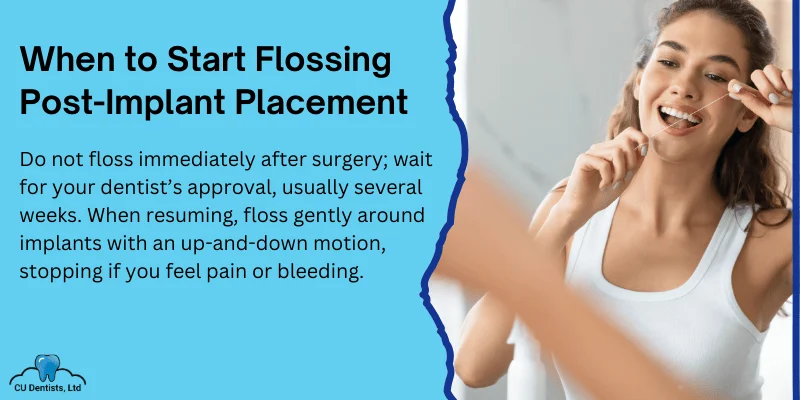
You can’t floss right after surgery. Your gums and surgical sites need time to heal before you introduce flossing back into your routine.
Wait for your dentist’s approval before you start flossing again. This usually takes several weeks, but the exact timing depends on how your mouth is healing. When you do start flossing, be extra gentle around the implant areas.
Use a careful up-and-down motion rather than snapping the floss between your teeth. Take your time and pay attention to how the tissue feels. If you notice bleeding or pain, stop and contact your dentist for guidance on proper technique.
Optimal Diet and Hydration for Healing
Your body needs specific nutrients and plenty of fluids to heal properly after getting full mouth dental implants. What you eat and drink in the weeks following your procedure directly affects how quickly you recover and how comfortable you’ll feel.
Recommended Foods After Implant Surgery
Start with liquids and very soft foods for the first few days after dental implant surgery. Protein shakes, bone broth, and Greek yogurt are excellent choices because they provide essential nutrients without requiring any chewing.
As you progress through the first week, you can add scrambled eggs, mashed potatoes, and soft-cooked fish to your diet. These protein-rich options help accelerate tissue repair at your implant sites. Aim for 25-30 grams of protein daily to support healing.
Soft fruits like bananas and avocados give you vitamins without irritating your surgical sites. You can also enjoy applesauce, smoothies, and pureed vegetables. Week two allows for more texture, including soft pasta, well-cooked vegetables, and tender ground meat in sauces.
Focus on foods rich in vitamin C, calcium, and zinc. These nutrients support bone integration and help your implants fuse properly with your jawbone.
Foods and Drinks to Avoid

Hard, crunchy, and sticky foods can damage your healing implant sites. Stay away from nuts, seeds, hard candies, raw vegetables, and crusty bread for at least two weeks after your dental implant procedure.
Avoid spicy foods, hot peppers, and acidic items like citrus fruits and tomato sauce. These can cause pain and irritation at your surgical sites. Skip alcohol during the first week because it slows healing and can interact with pain medications.
Don’t eat foods at extreme temperatures. Very hot soup or ice-cold drinks can cause discomfort and potentially disrupt the healing process. Let hot beverages cool to a comfortable temperature before drinking them.
Never use straws for the first week. The suction can dislodge blood clots and cause complications at your implant sites.
Staying Hydrated for Recovery
Drink 8-10 glasses of water daily to support your healing process. Proper hydration maintains blood flow to your surgical sites, helps transport nutrients to healing tissues, and reduces swelling.
Water is your best choice, but you can also drink mild herbal teas once they’ve cooled to room temperature. Avoid carbonated beverages and anything with caffeine for the first few days, as these can interfere with healing.
Keep a water bottle nearby and sip throughout the day rather than drinking large amounts at once. Proper hydration supports healing by preventing dry mouth and helping your body flush out bacteria. If you’re taking pain medications, extra water helps prevent constipation and keeps you comfortable during recovery.
Lifestyle Adjustments to Promote Successful Healing
Your daily habits directly affect how well your full mouth dental implants heal and integrate with your jawbone. Making smart choices about smoking, physical activity, and paying attention to your body’s warning signs can mean the difference between successful osseointegration and complications that delay your recovery.
Avoiding Smoking and Alcohol
Smoking is one of the biggest threats to your dental implant success. When you smoke, it reduces blood flow to your gums and jawbone, which slows down healing and makes it harder for your implants to fuse properly with the bone.
Nicotine also weakens your immune system. This puts you at higher risk for infections around the surgical sites.
You should stop smoking at least two weeks before your surgery and stay smoke-free for at least eight weeks after. Many surgeons recommend quitting permanently since your lifestyle impacts your post-surgery results in lasting ways.
Alcohol can also interfere with healing. It thins your blood, which can cause more bleeding and swelling. Alcohol also interacts badly with pain medications and antibiotics your dentist prescribes.
Skip all alcoholic drinks for at least 72 hours after surgery. It’s better to avoid alcohol for the first week or two while your body focuses energy on healing the surgical sites.
Limiting Strenuous Activity
Your body needs extra energy for healing after full mouth dental implant surgery. Heavy exercise pulls that energy away from the healing process and can cause problems.
Avoid intense workouts, heavy lifting, or any activity that raises your heart rate significantly for at least one week. When your heart pumps faster, it increases blood pressure in your head and jaw, which can cause bleeding at the implant sites.
Bending over or lying flat too soon can also increase blood flow to your head and cause throbbing pain. Stick to light walking after the first day or two. This gentle movement helps with circulation without putting stress on the surgical areas.
Most people can return to normal exercise after two weeks, but ask your oral surgeon first. Everyone heals at different speeds based on how extensive the surgery was.
Listening to Your Body’s Signals
Your body sends clear messages when something isn’t right during recovery. Pain that gets worse instead of better after a few days might signal infection or a problem with osseointegration.
Watch for these warning signs:
- Severe pain that doesn’t improve with prescribed medication
- Excessive bleeding that continues beyond the first 24 hours
- Swelling that increases after the third day
- Fever above 101°F
- Pus or bad smell from the surgical sites
- Implants that feel loose or move when touched
Don’t ignore these symptoms or try to tough it out. Contact your oral surgeon right away if you notice any of these issues. Proper post-surgery care means being proactive about problems before they become serious.
Rest when you feel tired. Your body does most of its healing work while you sleep, so give yourself permission to nap and go to bed early during the first week.
Long-Term Care and Maintaining Your Dental Implants
Your dental implants can last for decades with proper care and attention. Success depends on daily cleaning habits, regular professional visits, and avoiding activities that could damage your implants.
Daily Oral Hygiene for Implant Longevity
Brushing and flossing are essential for dental implant care just like they are for natural teeth. You should brush at least twice daily using a soft-bristled toothbrush to avoid scratching the implant surfaces or irritating your gums.
Use gentle circular motions around each implant and the surrounding gum tissue. Don’t press too hard, as this can damage healing tissue.
Flossing daily removes plaque and food particles from areas your toothbrush can’t reach. Consider using implant-specific floss or interdental brushes designed to clean around your implants safely. Water flossers work well for cleaning hard-to-reach spots between implants and can be gentler on sensitive gums.
Choose an alcohol-free antimicrobial mouthwash to rinse away bacteria without causing irritation. Avoid abrasive toothpastes that contain harsh ingredients, as these can scratch the implant crowns and create spots where bacteria can collect.
Regular Dental Check-Ups and Professional Cleanings
Schedule dental visits every six months to monitor your implant health and catch potential problems early. Your dentist will examine the implants, check the surrounding bone and gum tissue, and look for signs of infection or loosening.
Professional cleanings remove tartar buildup that regular brushing and flossing miss. Tartar around implants can lead to inflammation and bone loss if left untreated.
During these visits, your dentist may take X-rays to ensure the bone is properly supporting your implants. These images reveal issues beneath the gum line that aren’t visible during a regular examination. Your dental team can also adjust your home care routine based on what they observe during your checkup.
Protecting Implants from Harmful Habits
Certain behaviors can shorten the lifespan of your dental implants or cause damage. Never chew on hard objects like ice, pens, or hard candy, as this can crack the implant crowns or damage surrounding tissue.
Smoking slows healing and weakens the bone that supports your implants. If you smoke, quitting significantly improves your chances of long-term implant success.
If you grind your teeth at night, talk to your dentist about getting a custom night guard. Grinding puts excessive pressure on your implants and can cause them to fail over time. A night guard protects both your natural teeth and your implants from this harmful habit.
Limit sugary foods and drinks, as sugar feeds bacteria that can cause gum disease around your implants. Staying hydrated and eating a balanced diet supports overall oral health and keeps your implants strong.
Frequently Asked Questions
Managing your recovery involves understanding pain control, diet changes, and proper cleaning methods. You also need to know what symptoms require attention and how long healing takes.
How can I best manage pain after getting full mouth dental implants?
Your dentist will prescribe medication to help control pain and reduce swelling after surgery. Take these medications exactly as directed to stay ahead of any discomfort.
Using a cold compress on your face during the first 48 hours helps reduce swelling. Apply it for 15 to 20 minutes at a time with breaks in between.
Most patients find that pain decreases significantly after the first week. If your pain gets worse instead of better, contact your dental team right away.
What should I eat and avoid eating following my dental implant surgery?
You should stick to soft foods like smoothies, broth, yogurt, and mashed potatoes during the first week. These foods won’t put pressure on your healing implants.
By week two, you can add more soft options like scrambled eggs, pasta, and cooked vegetables. Avoid hard, crunchy, or spicy foods until your dentist says it’s safe.
Stay away from anything that requires heavy chewing for at least the first month. Foods like nuts, popcorn, raw vegetables, and tough meats can damage your implants during healing.
Could you guide me through the daily cleaning routine for new dental implants?
Gentle saltwater rinses help keep your mouth clean during the critical healing phase of the first week. Mix a half teaspoon of salt in warm water and rinse carefully.
After the first few days, you can gently brush around the implant area with a soft-bristled toothbrush. Avoid putting direct pressure on the surgical sites.
As healing progresses, your dental hygiene routine will shift towards a more standard approach. Your dental team will show you proper techniques for cleaning around your implants.
What are the signs of infection to watch out for after implant surgery?
Some swelling, minor bleeding, and tenderness are normal after surgery. But certain symptoms mean you should call your dentist immediately.
Watch for increased pain that gets worse instead of better after a few days. Fever, pus around the implant sites, or a bad taste in your mouth are warning signs.
Excessive bleeding that doesn’t stop with gentle pressure also needs attention. Your dental team can provide comprehensive post-surgery care if problems develop.
How long does the healing process typically take for full mouth implants?
The first week is the most intense recovery period. Most initial swelling goes away by the second week, and you’ll start feeling more comfortable.
Your implants need time to fuse with your jawbone through a process called osseointegration. This critical phase starts around week three and continues for several months.
By weeks seven to eight, you’ll be ready for your permanent teeth. The complete healing and bone integration process can take several months total, but you’ll function normally much sooner.
Are there specific activities I should avoid to ensure proper healing of my implants?
Avoid heavy lifting and strenuous physical activities during the first week. Rest is critical for proper healing right after surgery.
Don’t smoke or drink alcohol during your recovery period. These habits slow down healing and can lead to implant failure.
Skip using straws for at least a week since the suction can disturb the surgical sites. Also avoid touching the implant areas with your fingers or tongue.