




You will want clear, gentle foods that protect the implant site and give your body the nutrients it needs to heal. Choose soft, high-protein options and stay hydrated to cut pain, limit swelling, and support bone repair. Stick to soft, nutrient-rich foods and liquids in the first weeks to protect the surgical area and speed recovery.
You can start with smoothies, broths, yogurt, and mashed vegetables, then slowly add tender fish, soft pasta, and well-cooked vegetables as soreness fades. Follow simple eating rules and avoid hard, crunchy, sticky, or spicy items until your dentist says it’s safe.
Key Takeaways
- Eat soft, protein-rich foods and stay hydrated to support healing.
- Progress to gentle solids as soreness decreases and bite strength returns.
- Avoid hard, sticky, or spicy foods until your clinician clears you.
Get Personalized Dental Implant Recovery Guidance in Champaign, IL
Why Nutrition Matters for Dental Implant Recovery
Good nutrition helps control swelling, fight infection, and give your body the building blocks it needs to fuse the implant to bone. Eating soft, high-protein, and nutrient‑dense foods makes daily recovery easier and protects the surgical site.
The Role of Diet in Implant Healing
What you eat affects blood flow, inflammation, and tissue repair. Protein provides amino acids for new tissue and collagen. Aim for soft protein sources like Greek yogurt, mashed beans, and smooth protein shakes to avoid biting or pressure on the implant site.
Vitamins and minerals help too. Vitamin C supports collagen formation, vitamin D and calcium help bone remodeling, and zinc aids immune response. Include mashed bananas, avocado, and blended soups with leafy greens to boost these nutrients without chewing.
Avoid hard, sticky, or crunchy foods for at least two weeks. Also skip alcohol and smoking because they reduce blood flow and slow healing after dental implant surgery. Use gentle textures and small portions to limit stress on the surgical area.
Understanding Osseointegration and Implant Integration
Osseointegration is the process where your jawbone grows tightly around the implant. Dental implants show success rates above 95% when osseointegration occurs under healthy healing conditions.
This takes months, and good nutrition speeds bone formation. You need steady protein, calcium, vitamin D, and phosphorus to support bone cells during implant integration.
Inflammation control matters early. Excessive inflammation can disturb the blood clot and delay osseointegration. Choose anti-inflammatory foods like cooked salmon or blended turmeric soups, and avoid spicy or acidic foods that can irritate healing gums.
Follow your surgeon’s timeline before applying bite force to the implant. Even if the gum looks healed, bone remodeling continues beneath the surface. Eat soft, nutrient-rich meals so your body can focus on stable implant integration.
Nutrition and Recovery After Dental Implant Surgery
In the first 72 hours, prioritize liquids and smooth foods to protect stitches and reduce chewing. Try broths, protein shakes (no straw), and lukewarm blended soups. Cold foods like applesauce and yogurt can also ease swelling.
From days 4–14, add soft solids: scrambled eggs, mashed potatoes, cooked oats, and well-steamed vegetables. Keep portions small and chew on the opposite side if needed. Continue protein and calcium sources to support ongoing bone healing after dental implant surgery.
Monitor signs of infection (fever, increased pain, or pus) and contact your dentist if they appear. Maintain hydration and steady protein intake through the full recovery period to help healing after dental implant procedures and support long-term dental implants success.
Recovering From Dental Implant Surgery in Rantoul, IL? Get Expert Aftercare Advice
Immediate Post-Surgery Food Choices
Choose soft, easy-to-swallow items that protect the surgical site, give protein and fluids, and avoid chewing or suction that could disturb healing.
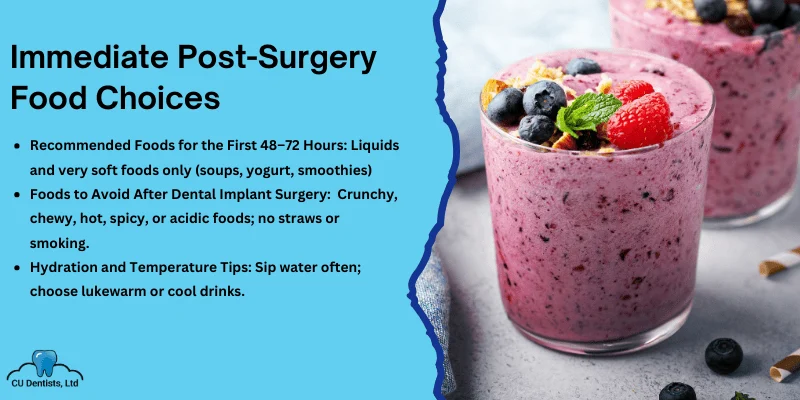
Recommended Foods for the First 48–72 Hours
Focus on liquids and very soft purees that need no chewing. Good choices: lukewarm broths, blended vegetable soups, protein shakes, plain yogurt, applesauce, and mashed bananas. These provide calories and some protein without pressure on the implant.
Keep portions small and eat slowly. Use a spoon, not a straw, to avoid suction that can dislodge a blood clot. If you take pain medicine, coordinate eating so you don’t feel nauseous; bland options like plain rice pudding or oatmeal made thin can help.
Aim for 20–30 grams of protein each day from shakes, Greek yogurt, or protein-fortified smoothies. Include soft fats (avocado or nut butters blended into a smoothie) for calories and healing support. Avoid anything crunchy, stringy, or chewy in this window.
Foods to Avoid After Dental Implant Surgery
Avoid hard, crunchy, sticky, or sharp foods that put pressure on the implant area. Say no to nuts, chips, popcorn, crusty bread, chewy candy, and tough meats. These can irritate sutures or shift the healing tissue.
Also avoid hot spicy dishes, citrus juices, and highly acidic foods. They can sting sensitive gums and increase swelling. Do not use straws, and do not smoke or vape; both reduce blood flow and raise the risk of implant failure.
If a food causes pain or you feel pressure near the implant, stop immediately and switch back to liquids or very soft foods. Contact your dentist if you see persistent bleeding, severe pain, or signs of infection.
Hydration and Temperature Tips
Hydration matters: sip water throughout the day to keep tissues moist and support healing. Aim for small, frequent sips rather than large gulps to avoid strain.
Pay attention to temperature. Choose lukewarm or cool items for the first 72 hours. Very hot drinks or soups can dissolve clots and irritate the surgical site. Cold items like smoothies or chilled yogurt often feel soothing and reduce swelling.
Keep beverages nonalcoholic and noncarbonated. Alcohol delays healing and carbonated drinks can be acidic and uncomfortable. If you need electrolytes, choose a low-sugar oral rehydration drink or dilute fruit juice with water.
Not Sure What to Eat After Implant Surgery? Learn the Best Recovery Diet
Transitioning Your Diet During Recovery
Start with soft, nutrient-rich foods that cause no pressure on the implant site. Gradually add firmer textures when pain, swelling, and bleeding have stopped and your dentist gives the go-ahead.
Soft Foods to Eat After Dental Implant Surgery (Days 3–14)
Focus on protein, vitamins, and easy-to-chew options to support tissue repair. Good choices include scrambled eggs, Greek yogurt, cottage cheese, smooth hummus, mashed avocado, and well-blended smoothies with protein powder. Cooked cereals like oatmeal or cream of wheat give energy without chewing strain. Soups and purees (chicken broth, butternut squash soup, or blended lentil soup) keep you hydrated and fed. Soft-cooked fish or finely shredded chicken can work if you chew on the side away from the implant.
Avoid crunchy chips, seeds, sticky candy, and hot beverages that can irritate the site. Keep portions small and eat slowly to limit pressure near the implant. Rinse gently with salt water after meals if your clinician recommends it.
Introducing More Texture: Weeks 2 and Beyond
At two weeks, you can usually try semi-soft foods if swelling and pain have decreased. Test foods by chewing away from the implant and using small bites. Try soft pasta, well-cooked rice, mashed potatoes, ripe banana, and soft-cooked vegetables like steamed zucchini or carrots. Ground meats or flaked fish are okay if tender and easy to chew.
Keep avoiding very hard, crunchy, or sticky foods until your provider confirms healing. Pay attention to sensations: increased pressure, pain, or movement of the crown means stop and return to softer foods. Continue to prioritize protein and vitamin C; soft beans, tofu, and pureed fruit help tissue recovery.
When to Return to Regular Foods
Your dentist will usually clear you for a normal diet between 6–12 weeks, depending on grafts and implant stability. Before that clearance, avoid nuts, hard candies, popcorn, and beef jerky. Once cleared, reintroduce firmer foods slowly: start with baked fish, tender chicken, and soft raw fruits like apple slices, then progress to chewier items.
If you feel sudden pain, loose sensation, or persistent swelling, stop and contact your dental team. Follow any specific timelines your clinician gave, because healing varies with bone grafts, smoking status, and overall health.
Key Nutrients for Healing and Osseointegration
Good nutrition speeds tissue repair, reduces swelling, and helps your jaw bone fuse to the implant. Focus on foods that give protein, calcium + vitamin D, and vitamins that support immunity and collagen.
Protein and Tissue Repair
Protein builds the new tissue your mouth needs after surgery. Aim for easy-to-eat, high-protein choices like Greek yogurt, protein shakes, scrambled eggs, and pureed lean chicken. These provide amino acids that your body uses to repair gum tissue and make collagen around the implant site.
Try to get 20–30 grams of protein at meals during early recovery. If you have trouble chewing, use whey or plant-based protein powders mixed with milk or dairy-free milk. Soft beans and smooth hummus add protein plus fiber without irritating the wound.
Avoid tough, chewy meats until your dentist clears you. Always pick moist, well-cooked, or pureed protein so you don’t stress the implant area while osseointegration begins.
Bone Health: Calcium and Vitamin D
Calcium and vitamin D support osseointegration, the process where your jaw bone bonds to the implant. Dairy foods like yogurt and cottage cheese are soft and provide calcium. Fortified milk or plant milks give both calcium and added vitamin D.
If you spend limited time in sunlight, a vitamin D supplement may be needed; check with your dentist or doctor. Aim for consistent daily calcium (about 1,000 mg for most adults) from soft foods and liquids during the first weeks of healing.
Eat small, frequent servings to keep calories and nutrients up without chewing hard. Smoothies made with fortified milk, yogurt, and powdered calcium can be an easy option while you follow a soft-food plan.
Vitamin C, Zinc, and Immune Support
Vitamin C and zinc help prevent infection and speed wound closure. Vitamin C helps make collagen, which strengthens gum tissue around the implant. Soft choices include mashed sweet potato, pureed berries, and citrus juices diluted and cooled.
Zinc supports cell repair and immune response. Smooth hummus, pureed legumes, and blended pumpkin add zinc without hard bits. If you use multivitamins, choose one with zinc and vitamin C at recommended doses; don’t exceed daily limits.
Drink cool, non-acidic fluids and avoid seeds, nuts, and crunchy textures that can irritate the site. These nutrients, combined with a soft-food plan, help your body manage inflammation and support safe healing after dental implant surgery.
Sample Meal Ideas and Practical Eating Tips
Plan soft, nutrient-rich meals that protect the implant site, keep you hydrated, and give protein, vitamins, and minerals for tissue repair. Favor lukewarm foods, cut bites small, and avoid straws or crunchy bits that can disturb healing.
Breakfast, Lunch, and Dinner Suggestions
Breakfast: Try scrambled eggs or Greek yogurt blended with mashed banana for protein and calories. Oatmeal made with milk or a protein shake warmed slightly offers easy digestion and extra protein. Avoid toast crusts and whole nuts.
Lunch: Choose pureed or blended soups such as creamy tomato, lentil (blended), or smooth chicken broth with soft shredded chicken. Add soft avocado or mashed cooked sweet potato for healthy fats and vitamin A. Eat from the side opposite the implant.
Dinner: Have well-cooked pasta with a mild, smooth sauce, soft flaked fish, or ground turkey simmered until very tender. Mashed potatoes or polenta make good starch bases. Cool hot dishes to lukewarm before eating.
Snack and Smoothie Recommendations
Keep snacks soft, high-protein, and easy to eat. Snack options include cottage cheese, hummus with soft pita (no crust), applesauce, pudding, or ricotta mixed with mashed berries. Avoid crunchy granola or seeds.
Smoothies: Blend Greek yogurt or protein powder with ripe banana, cooked frozen berries (no seeds), and spinach for iron. Use milk or a milk alternative for calories. Drink slowly from a cup (do not use a straw) to avoid suction that can disturb the surgical site.
Cold items like soft ice cream or chilled yogurt can soothe swelling but skip any mix-ins such as nuts or cookie pieces.
Meal Planning for Comfort and Healing
Plan meals ahead for the first 7–14 days and batch-cook soft items you can reheat. Make a list of easy proteins (eggs, canned tuna mashed, tofu), soft vegetables (steamed carrots, zucchini), and starches (mashed potatoes, soft rice, pasta). Keep ready-made soups and smoothies in single portions.
Prep tips: chop and mash ingredients before cooking, cool foods to lukewarm, and label containers with reheating instructions. If you have multiple implants or complex surgery, follow your dentist’s timing before adding firmer textures.
Long-Term Healthy Eating for Dental Implant Success
Healthy eating supports strong bone and gum tissue and helps prevent infection and inflammation. Focus on steady protein, calcium, vitamins, and gentle food choices while avoiding habits that stress your implant.
Maintaining Your Implant with a Balanced Diet
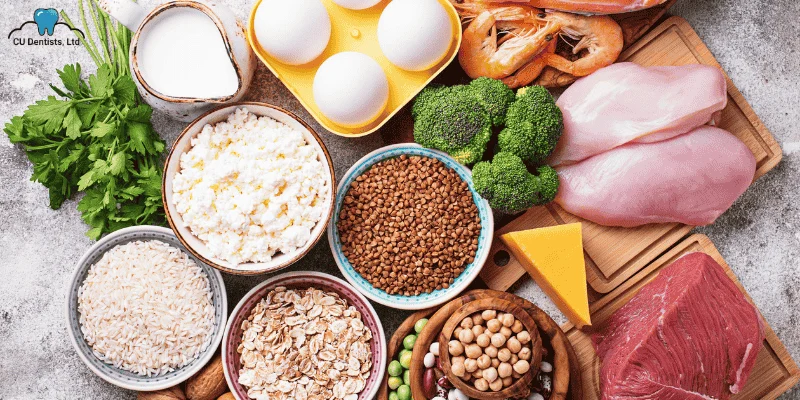
Eat protein at every meal to support tissue repair and bone health; lean meat, fish, eggs, dairy, beans, or tofu work well. Aim for 20–30 grams of protein at breakfast and lunch when you can. Include calcium-rich foods like low-fat milk, yogurt, fortified plant milk, and leafy greens to help keep jawbone density strong.
Get vitamin C daily from bell peppers, strawberries, or oranges to support gum healing. Vitamin D from sunlight, fatty fish, or fortified foods helps calcium absorption. Include zinc (nuts, seeds, whole grains) and omega-3s (salmon, flaxseeds) for lower inflammation and better healing. Drink water often and limit acidic drinks that can irritate gums.
Foods and Habits to Avoid for Lasting Results
Avoid hard, crunchy, or sticky foods that can place force on implants, such as nuts, popcorn, hard candy, and chewy caramels. These items can damage crowns, loosen abutments, or hurt surrounding gum tissue. Skip very hot or very cold extremes if your mouth is sensitive.
Stop using straws during early healing and avoid smoking or vaping long-term; both reduce blood flow and raise failure risk. Limit sugary snacks and sodas because plaque and decay around natural teeth can harm implant health. If you enjoy tough meats or crusty breads, cut them into small pieces and chew on the opposite side until your dentist clears full chewing.
Frequently Asked Questions
You will find clear, practical answers about safe foods, exact timeframes for soft and no-chew diets, and specific items to avoid or allow during healing. Each answer gives concrete steps you can follow after your implant surgery.
Which soft foods can I eat after dental implant surgery?
Eat foods that need no chewing and are smooth in texture. Good choices include scrambled eggs, Greek yogurt, blended soups, mashed potatoes, and smoothies without seeds.
Include protein to help tissue repair. Soft fish, cottage cheese, silken tofu, and protein shakes work well.
Avoid hard, crunchy, or sticky items that can irritate the wound. Do not eat chips, nuts, or crusty bread.
How long should I stick to a no-chew diet following my implant procedure?
For most single implant cases, follow a no-chew or very soft diet for 3–7 days. During this time focus on liquids and purees and avoid any forceful biting.
If you had a full-arch or multiple implants (like All-on-4), stay on a soft diet for 3–4 months. Chewing too soon can shift implants and harm osseointegration.
When can I expect to return to my normal diet after getting dental implants?
If you had one implant and healing goes well, you can usually start soft chewing on the opposite side after 2–3 weeks. Test firmer foods slowly and chew away from the surgical site at first.
Full restoration with regular chewing often takes 3–6 months, depending on your procedure and your dentist’s advice. Follow your clinician’s clear instructions before reintroducing tough foods.
Why should I avoid dairy products after my dental implant procedure?
Dairy can thicken mucus and sometimes increase congestion, which may make rinsing and gentle oral care harder. Thick, heavy dairy like full-fat milkshakes can also stick to the surgical area.
However, some dairy provides protein and calcium. Choose plain Greek yogurt and cottage cheese rather than sticky or very cold dairy desserts if your dentist approves.
Is it safe to eat rice after getting dental implants?
Avoid dry, loose rice in the first 1–2 weeks because small grains can get trapped in the wound. Trapped particles raise the risk of irritation or infection.
If you want rice later, choose very soft, well-cooked rice or rice porridge and rinse your mouth gently after eating. Wait until your dentist says the surgical site is stable.
Can chocolate be part of my diet post-dental implant surgery?
Plain chocolate in small amounts is usually fine once swelling and bleeding have stopped. Choose smooth chocolate without nuts, caramel, or sticky fillings that can pull at the wound.
Avoid hard or crunchy chocolate bars in the early weeks. If you take prescription pain meds, skip alcohol and be cautious with sugary treats to protect healing.