




Losing most or all of your teeth can affect how you eat, speak, and feel about your smile. Full-mouth dental implants offer a stable and natural-looking solution that helps you regain these important functions.
They are designed to restore your bite strength and give you back the confidence to smile and speak without worry.
These implants are anchored securely into your jawbone, unlike traditional dentures that can slip or cause discomfort. This means you get a strong, comfortable fit that feels more like natural teeth.
Choosing full-mouth implants can improve your quality of life by letting you enjoy your favorite foods and speak clearly again.
If you’re tired of dealing with loose dentures or missing teeth, understanding how full-mouth dental implants work can help you see why many people find them life-changing.
You’ll learn about the process, what to expect, and the benefits that can last for years to come.
Key Takeaways
- Full-mouth implants restore natural function for eating and speaking.
- They offer a secure fit that boosts your confidence in daily life.
- The treatment supports long-lasting oral health and appearance.
Ready for Full-Mouth Dental Implants in Champaign? Get Your New Smile Today!
How Full-Mouth Dental Implants Restore Function and Confidence
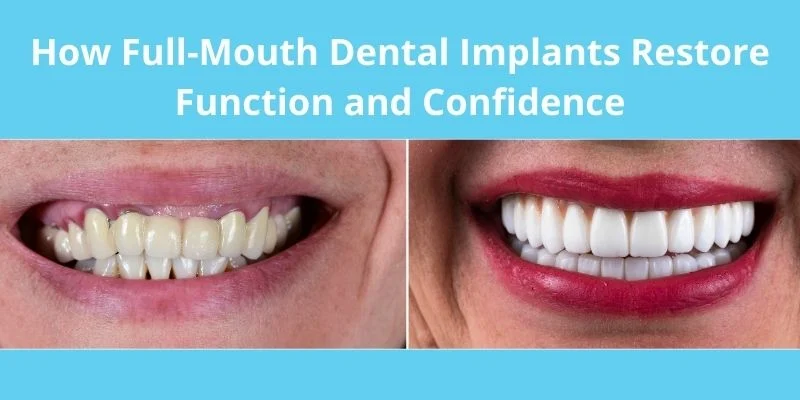
Full-mouth dental implants can change the way you live by giving you back your ability to eat comfortably, speak clearly, and smile naturally.
They help you enjoy everyday activities without worry, improving your oral health and how you feel about yourself.
Regaining Chewing Ability and Clear Speech
With full-mouth dental implants, you get strong, fixed prosthetic teeth that function almost like natural ones.
This means you can chew a wide variety of foods without pain or slipping, which is a big step up from traditional dentures.
Because implants are anchored into your jawbone, they restore full biting power.
This makes eating easier and lets you enjoy your favorite meals again without restrictions.
Implants also help with speech.
Missing teeth or loose dentures can cause mumbling or clicking sounds, but implants stay secure, so your pronunciation improves, making conversations smoother and more confident.
Enhancing Self-Esteem and Social Comfort
Having a complete set of teeth with full-mouth implants can boost your self-esteem.
When you don’t have to worry about missing or damaged teeth, you naturally feel more comfortable around others.
This comfort often leads to being more social and active.
You might find yourself smiling more and engaging in conversations without holding back.
Full-mouth implants give you freedom in public settings, whether you’re dining out, attending meetings, or simply chatting with friends.
This ease helps improve your overall quality of life.
Achieving a Natural-Looking Smile
One of the biggest benefits of full-mouth dental implants is how natural they look.
The prosthetic teeth are designed to match your healthy teeth in shape, size, and color.
Because the implants are fixed in your jawbone, there’s no shifting or discomfort like with dentures.
This stability helps keep your facial structure intact, preventing the sunken look that can happen with missing teeth.
The result is a fuller, youthful smile that you’ll feel proud to show.
This natural appearance plays a big role in rebuilding your confidence and improving how others see you.
Transform Your Smile with Full-Mouth Implants in Rantoul, Book Your Consultation!
Understanding Full-Mouth Dental Implants
Nearly 1 in 4 adults in the U.S. have lost all of their teeth, and full-mouth dental implants can restore function and confidence.
When you lose most or all your teeth, finding a solution that feels secure and natural matters.
Full-mouth dental implants provide a way to replace entire arches of teeth with stable, long-lasting options.
These choices support your ability to eat, speak, and smile with ease.
What Are Full-Mouth Dental Implants?
Full-mouth dental implants replace all teeth in your upper jaw, lower jaw, or both.
Unlike traditional dentures, these implants are anchored into your jawbone using titanium posts.
These posts act like natural tooth roots, holding your new teeth firmly in place.
Because they fuse with your bone, they create a stable foundation for prosthetic teeth.
You might hear terms like full mouth implants or implant-supported dentures.
Both mean your replacement teeth won’t slip or move when you eat or talk.
This helps you regain normal function and boosts your confidence.
Full-mouth implants can come with crowns, bridges, or dentures fixed on the implants, depending on your needs.
Key Differences from Removable Dentures
Removable dentures rest on your gums and can move or slip out of place, especially when eating or talking.
This can cause discomfort and affect your speech.
Full-mouth implants, however, are permanent and stable.
Because these implants are fixed in your jawbone, they stop bone loss that happens with missing teeth or with traditional dentures.
That helps keep your face looking fuller and supports your jaw’s health over time.
You won’t have to deal with denture adhesives or worry about your teeth slipping in public.
With full-mouth implants, you get better chewing power, so you can enjoy a wider variety of foods.
This improves your nutrition and overall well-being.
Types of Full-Mouth Implant Solutions
There are three common ways to restore a full mouth with implants:
- All-on-4 or All-on-6 Implants: These use 4 to 6 implants placed in specific spots to hold a full arch of teeth. This method is less invasive, often requires less bone grafting, and allows faster recovery.
- Individual Implants for Each Tooth: This involves placing a separate implant for every missing tooth. It offers the most natural look and feel but requires more surgery and healing time.
- Hybrid Implant Dentures: These combine implants with a fixed denture that remains secure but can sometimes be removed by your dentist for maintenance. They offer comfort and stability without the drawbacks of traditional dentures.
Choosing the right solution depends on your jawbone health, lifestyle, and budget.
Your dentist will guide you to the best option to restore your smile and oral function.
Restore Your Smile with Full-Mouth Dental Implants – Schedule a Consultation Today!
The Full-Mouth Implant Process
Getting full-mouth dental implants involves several clear steps designed to restore your smile and function.
From your first visit to the final fitting, each stage is carefully planned to ensure comfort and lasting results.
You’ll experience a mix of exams, surgery, healing, and final restoration, all tailored to your oral health.
Initial Consultation and Oral Health Assessment
Your journey starts with an initial consultation where the implant specialist examines your mouth closely.
They’ll use digital X-rays and 3D scans to check your jawbone’s health and density.
This shows if your bone is strong enough to support the implants or if you need additional treatments like bone grafting.
Your current oral health, any gum disease, or other dental issues will also be reviewed.
The specialist will discuss your dental goals and explain if full-mouth implants fit your needs.
This visit helps you understand the process, costs, and what to expect next.
Personalized Treatment Planning
Once your mouth is ready, your dentist will design a personalized treatment plan.
This includes how many implants you need and if any teeth need removal before surgery.
Your plan also covers the type of anesthesia (local anesthesia or sedation) to keep you comfortable during the implant placement surgery.
You’ll get details on how the prosthetic teeth will look and function.
Your input is important here, so the new smile fits your face and chewing needs.
This step sets you up for a smooth surgery and healing process.
Implant Placement Surgery
During implant placement surgery, titanium posts are carefully inserted into your jawbone.
These act as roots for your new teeth.
Depending on your case, you might get four, six, or more implants placed.
The procedure is done under local anesthesia or sedation to keep you pain-free.
You may feel some pressure but no sharp pain.
After the surgery, your mouth begins healing as the bone grows around the implants; a process called osseointegration.
This stage is vital for stable support of your prosthetic teeth.
Healing, Osseointegration, and Final Restoration
Healing time varies but usually takes three to six months.
During this time, you might wear temporary teeth so you can eat and speak naturally.
The osseointegration process fuses the implants firmly to your jawbone, creating a solid base for your permanent teeth.
Once healed, your implant specialist attaches the final prosthetic teeth.
These teeth look natural and are designed to fit your bite perfectly.
After this, you’ll follow care instructions to keep your implants healthy and your smile lasting many years.
If you are comparing treatment designs, see our guide on fixed vs removable full mouth implants.
Candidacy and Preparatory Procedures
Before getting full-mouth dental implants, you need a clear idea of your overall health and jawbone condition.
This ensures the implants will fit well and last a long time.
Some patients might also need extra procedures to prepare for implant placement.
Who Qualifies for Full-Mouth Dental Implants?
You’re a good candidate for full-mouth dental implants if you’ve lost most or all of your teeth due to decay, gum disease, or injury.
People who struggle with dentures that slip or cause discomfort often benefit, too.
Good general health is important, so if you have conditions like uncontrolled diabetes or are a heavy smoker, your chances might be lower.
Your implant specialist will evaluate your medical history carefully.
Age is less important than bone health and overall health.
You should be willing to commit to the healing process and long-term dental care.
If you want a permanent, stable solution over removable dentures, implants could be right for you.
Assessing Jawbone Density and Bone Health
Healthy jawbone density is crucial because implants need a strong foundation.
Your doctor will take 3D scans or X-rays to check if your jawbone is thick and dense enough to hold implants securely.
If your jawbone has deteriorated after tooth loss, it might not support implants well.
This can happen because bone shrinks when teeth are missing.
Poor jawbone health can lead to implant failure or poor fit.
Your implant specialist may recommend treatments to improve bone health if needed.
This step helps make sure your implants will be successful and stable.
Tooth Extraction and Bone Grafting
If you still have damaged or infected teeth, tooth extraction will be necessary before placing implants.
This creates space and removes any source of infection.
Sometimes bone loss occurs after extraction or long before.
To rebuild this, your doctor might suggest bone grafting.
This procedure adds bone material to strengthen weak areas of your jaw.
Bone grafting helps create a solid base for implants and improves your chances of long-lasting success.
Healing time varies but usually takes a few months before implants can be placed.
Your implant specialist will guide you through these steps, balancing care and timing for the best results.
Long-Term Benefits of Full-Mouth Dental Implants

Full-mouth dental implants offer many lasting advantages that go beyond just replacing missing teeth.
They help keep your face looking natural, make it easier to care for your mouth, and provide a strong, reliable solution that lasts for years.
These benefits work together to improve how you feel and function every day.
Preserving Jawbone and Facial Structure
When you lose teeth, your jawbone can start to shrink because it is no longer stimulated by tooth roots.
This shrinkage can change your facial structure, sometimes making your face look sunken or aged.
Full-mouth implants act like natural tooth roots, supporting your jawbone and stopping it from shrinking.
This support keeps your jawbone healthy and helps maintain your natural facial shape.
It can prevent the hollow look that sometimes comes with missing teeth.
Full-mouth dental implants can preserve up to 99% of jawbone density, preventing bone loss common with missing teeth.
Protecting your jawbone also helps keep your mouth strong and able to support your new teeth comfortably.
This is important for both your appearance and your oral health over time.
Supporting Lasting Oral Hygiene
Full-mouth implants are easy to care for.
Unlike bridges or dentures, they don’t require special cleaning routines or damage to nearby teeth.
You simply brush and floss them as you would natural teeth.
This helps you keep your mouth clean and reduces the risk of gum disease.
Good oral hygiene is key to making sure your implants last a long time.
Regular dental check-ups help catch problems early, keeping your implants secure and your gums healthy.
By supporting better daily hygiene, implants protect not just your smile but your overall oral wellness.
Durability and Improved Quality of Life
Full-mouth implants are built to last. With proper care, they can stay strong and function well for many years, often a lifetime.
This makes them a smart long-term investment compared to dentures or bridges that may need replacement. Because they are stable and secure, implants let you eat, speak, and laugh with confidence.
You don’t have to worry about slipping or discomfort. This leads to a better quality of life, as you can enjoy your favorite foods and social moments without hesitation.
Aftercare, Recovery, and Lifestyle Transformation
Your journey after getting full-mouth dental implants involves healing, daily care, and seeing real changes in how you eat, speak, and feel.
Taking the right steps during recovery and afterward can help you enjoy lasting benefits and a better quality of life.
Recovery Timeline and Managing Discomfort
During the first week after surgery, you’ll likely experience swelling, tenderness, and some bleeding. Stick to soft foods like smoothies, broths, and purees to avoid putting pressure on the implant sites.
Using cold compresses can reduce swelling in the first 48 hours. By weeks two to four, swelling decreases, and you can start eating a wider variety of soft foods such as cooked vegetables and scrambled eggs.
Your dentist will check on healing progress and may remove stitches if needed. Pain is usually managed with prescribed medication, but if you feel sharp or worsening pain, contact your dentist.
Around weeks five to eight, your gums firm up, and the implants bond with your jawbone. This process, called osseointegration, is critical for implant stability.
Temporary teeth will feel more secure as you prepare for your final restoration.
Daily Care for Long-Term Success
Keeping your implants healthy depends on good oral hygiene habits. You should brush gently around the implants twice a day, using a soft-bristled toothbrush.
Floss carefully or use interdental brushes to clean between teeth and implants. Rinsing with a warm saltwater solution helps keep your gums clean and supports healing, especially in the first few weeks.
Avoid smoking and alcohol because they can slow healing and increase the risk of implant failure. Regular dental visits are important to monitor your implants and make adjustments if needed.
Your dentist may recommend professional cleanings more frequently than usual to catch any problems early.
Renewed Confidence and Lifestyle Freedom
Full-mouth implants give you more than just a new smile. You’ll find eating your favorite foods easier and speaking without worry about slipping dentures.
With implant-supported dentures, you avoid many challenges of traditional dentures, like discomfort or difficulty chewing. You may notice improvements in your nutrition as you can enjoy a wider variety of foods.
This change often leads to a better quality of life, giving you freedom to enjoy social activities and smile without hesitation.
Frequently Asked Questions
Full-mouth dental implants offer several advantages, including restoring your ability to eat and speak well. They require care to keep them lasting a long time, and your dentist will check if you’re a good candidate before treatment.
Recovery involves some healing time but is usually manageable.
What are the benefits of choosing full-mouth dental implants?
They restore strong biting and chewing, letting you enjoy a wide variety of foods again. Implants also help keep your jawbone healthy by preventing bone loss.
Your smile will look natural, boosting your confidence.
How long do full-mouth dental implants typically last?
With good care, implants can last for decades. They are designed to be durable and stable, often outlasting traditional dentures and bridges.
What is the maintenance routine for full-mouth dental implants?
You should brush and floss daily, just like natural teeth. Regular dental checkups are important.
Avoid smoking, which can harm healing and implant health.
Can full-mouth dental implants help improve speech and eating abilities?
Yes, implants stay firmly in place, which helps you speak clearly and chew without discomfort. Unlike loose dentures, they won’t slip or cause irritation.
Are there any eligibility criteria for getting full-mouth dental implants?
You’ll need enough jawbone density or be willing to have bone grafting. Good overall oral health and commitment to hygiene are important too.
Your dentist will evaluate your situation before recommending treatment.
What does the recovery process look like after getting full-mouth dental implants?
After surgery, you can expect some swelling and soreness. Your dentist can help manage this with medication.
Healing time varies. Many patients return to normal activities fairly quickly.